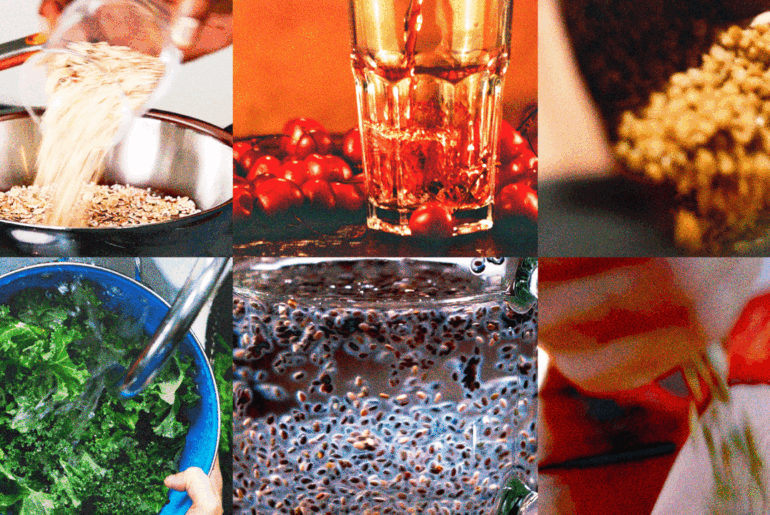
Are you getting enough resistant starch? Have you even heard of it? If you haven’t, you are certainly not alone. This particular type of fibre is now understood to be one of the best for gut health, for lowering blood sugar and cholesterol levels, reducing inflammation and lowering your risk of chronic diseases, and even for helping to shrink your waistline. Yet many people are unaware it exists and certainly wouldn’t expect it to crop up in some of the foods considered to be the best suppliers of it. So, yes, you’ll find resistant starch in the usual nutritionist favourites such as pulses, nuts, seeds and some wholegrains — but also in white toast, cold potatoes, overnight oats, under-ripe bananas and reheated white rice or pasta.
Most starchy carbs are digested in our small intestine. But resistant starch is different — named for its ability to “resist” digestion there and travelling further along the digestive tract to the large intestine where it is broken down by friendly gut microbes.
“Once in the large intestine, resistant starch ferments,” says Rhiannon Lambert, a registered nutritionist and author of The Fibre Formula. Its ability to bypass digestion and act as a prebiotic provides its many health benefits. “Gut microbes break down resistant starch into short-chain fatty acids [SCFAs] such as butyrate, which have a lot of positive health effects,” Lambert says. “These SCFAs nourish gut bacteria and reduce inflammation that is often a risk factor for disease, helping to reduce conditions such as heart disease and obesity.”
• Read more expert advice on healthy living, fitness and wellbeing
Its potential is vast. In a trial of almost 1,000 people with a high genetic risk of a wide range of cancers, known as Lynch syndrome, John Mathers, professor of human nutrition at Newcastle University, reported a significant preventive effect for some cancers from taking resistant starch for two years. The benefits were most pronounced for upper gastrointestinal cancers, including oesophageal, gastric, biliary tract and pancreatic cancers, reducing some by over 60 per cent.
According to Mathers and his team, it could be that resistant starch helps to reduce types of bile acids that damage DNA and eventually cause cancer. “The dose [of resistant starch] used in the trial was equivalent to eating a daily banana,” Mathers said. “Before they become too ripe and soft, the starch in bananas resists breakdown and reaches the bowel where it can change the type of bacteria that live there.”
Resistant starch also supports metabolic health and reduces hunger pangs. By making it difficult for digestive enzymes to break down carbs into glucose, blood sugar doesn’t rise in the same way after consuming foods rich in resistant starch as it would after eating cakes, biscuits or refined cereals. “The presence of this type of beneficial starch means sugars are released into the bloodstream more slowly,” Lambert says. “It helps us to feel fuller for longer and over time can lead to improved insulin sensitivity, making it a helpful tool for managing weight and type 2 diabetes.” But where do you find it?
Have overnight oats rather than porridge
The resistant starch stays intact as oats are soaked overnight
OLGA BUNTOVSKIH/GETTY IMAGES
Oats naturally contain resistant starch, but how we prepare them changes how much of it survives digestion. “When oats are cooked with heat and water, the starch granules swell and soften as a result of gelatinisation,” Lambert says. “This means more of the starch is broken down and absorbed as glucose.”
Soaking oats overnight instead of cooking them results in the resistant starch staying intact. “Cooked porridge is still a great source of fibre, but overnight oats retain slightly more resistant starch,” Lambert says.
Eat bananas when they are slightly underripe
When a banana is firm and green, much of its carbohydrate is still stored as resistant starch. The riper and browner it becomes, the more that starch is converted into sugar. “As the fruit ripens and turns yellow, natural enzymes begin converting that resistant starch into simpler sugars,” Lambert says. “By the time a banana is fully yellow with brown spots, most of that resistant starch has been converted into these sugars and is much lower in resistant starch.”
Serve potatoes and pasta cooled, not piping hot
You can create higher amounts of resistant starch in pasta and potatoes by first cooking and then cooling them in the fridge.
“When you cook these foods, the starch granules absorb water and burst, a process called gelatinisation, making them soft and easy to digest,” explains Alex Ruani, nutrition researcher at University College London and chief science educator at the Health Sciences Academy. “However, when you cool them after cooking, the starch molecules undergo retrogradation, meaning they realign into a tight, crystalline structure that is much harder for digestive enzymes to ‘unlock’.”
This cooking and cooling process converts a food with a high glycaemic index — one that causes blood sugar to spike — into a lower-glycaemic food and that is good news for blood-sugar management.” Cooling cooked potatoes can reduce their glycaemic index by up to 25 per cent, and rice by up to 20 per cent.
• The 27 healthiest food swaps to make in your supermarket
Put cooked white rice in the fridge for 24 hours
White rice is another example of a food that benefits from the “retrogradation” or cooking then cooling process. One team of scientists from Indonesia looked at amounts of resistant starch in white rice that was prepared in three ways. Freshly cooked white rice contained about 0.64g of resistant starch per 100g serving, but cooking and then cooling the rice at room temperature for ten hours produced roughly double that amount. The best returns came when white rice was cooked, cooled in a refrigerator for 24 hours and then reheated, resulting in 1.65g per 100g serving. Be cautious, though, as rice can harbour bacillus cereus spores, which survive cooking. “If rice is left at room temperature, these spores can multiply and produce toxins,” Ruani says. “To ‘retrograde it’ safely, you should cool rice within half an hour of cooking, ideally at a temperature of 4C in the fridge.” Never leave cooked rice out for longer than an hour at room temperature — you can keep it in the fridge for 3-4 days. When reheating, ensure the rice is piping hot all the way through.
Add pulses to casseroles, soups and salads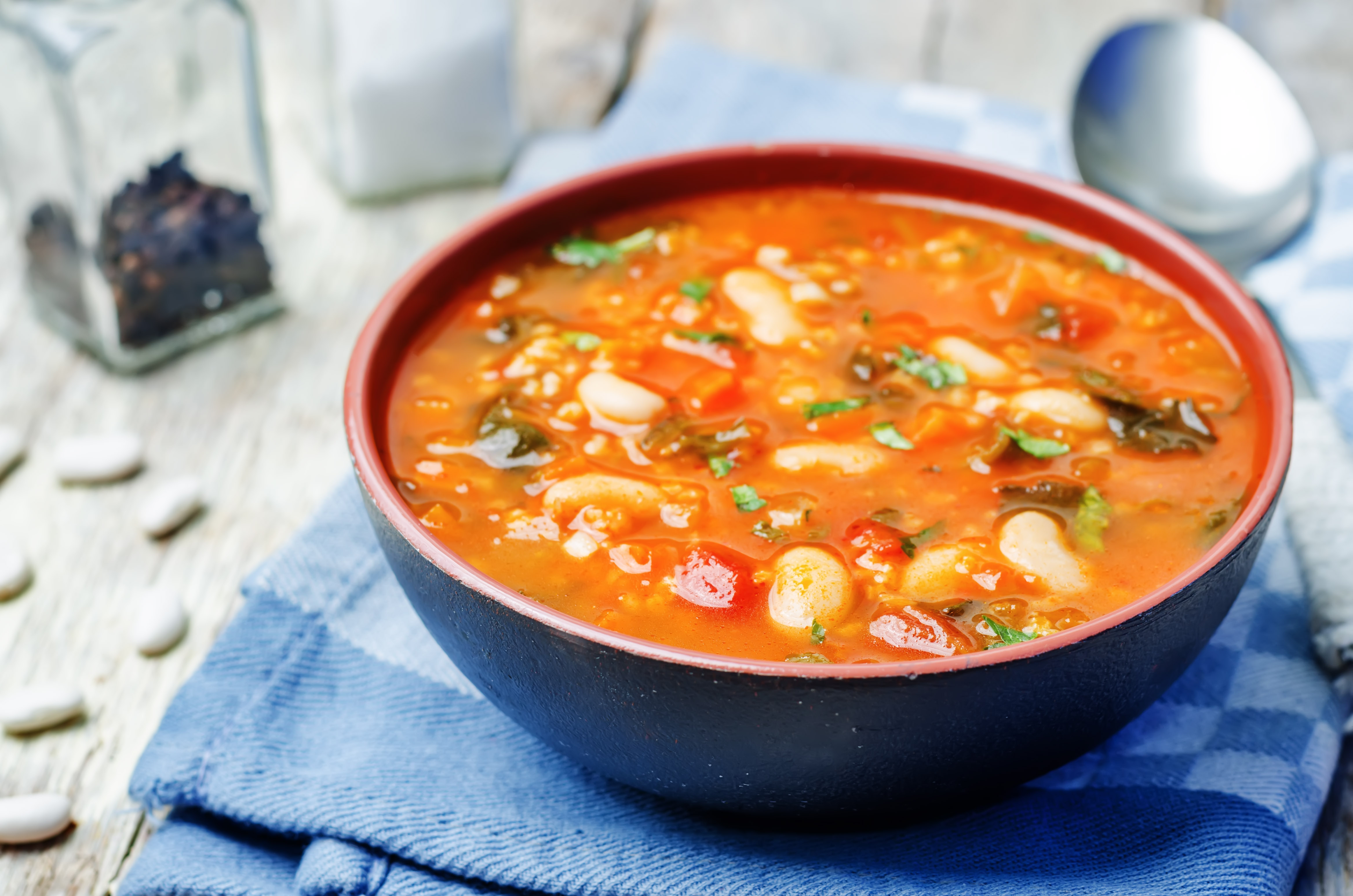
Resistant starch is built into the structure of beans, peas and lentils
NATA VKUSIDEY/GETTY IMAGES
Lentils, chickpeas, butter beans, kidney beans and other pulses are naturally rich in resistant starch. The starch inside a pulse is trapped within thick plant cell walls made from fibre. “Because the resistant starch is already built into the structure of these beans, peas and lentils, pulses do not rely on cooling to create it in the same way some foods do,” Lambert says. “Cooking and cooling pulses may slightly increase the amount of resistant starch but the difference is much less significant than it is for foods like rice or potatoes.”
Typically, beans and pulses contain about 1-5g of resistant starch per 100g after they have been cooked. “Fava beans contain the most with 8-12g per 100g, but we don’t tend to eat them a lot in the UK,” says Dr Linia Patel, a researcher in the department of clinical sciences and community health at the Universita degli Studi di Milano in Italy and a spokeswoman for the British Dietetic Association. “Heating up a variety of tinned or jar beans and then cooling them is the best option.”
Patel suggests making large bowl of dal or bean stew, refrigerating the leftovers and then eating with vegetables and some wholegrains in the week for a balanced meal.
Try chickpea pasta for an even bigger boost
Chickpea pasta contains fibre, protein and plenty of resistant starch, making it a great choice if you want to ramp up your total fibre intake. Last year researchers from Poland reporting in the journal Metabolites served chickpea pasta prepared two ways — freshly cooked, cooked and cooled for 24 hours at 4C and reheated before consumption — to 12 healthy participants. Results showed that cooked chickpea pasta had about 1.83g of resistant starch per 100g serving but when refrigerated for 24 hours and then reheated, the amount of resistant starch had roughly doubled to 3.65g per 100g serving.
“Processing reduces the amount of resistant starch in a food, so chickpea flour would have less than chickpeas for example,” Patel says. “But if you made a bread with the chickpea flour and then froze it, you can work to increase the resistant starch that way.”
• How on trend is your shopping basket?
Reheat your chilled potatoes, rice or pasta
If you don’t like eating cold potatoes or pasta, then reheating them is an option. When researchers at the University of Surrey’s department of nutritional sciences compared the blood-sugar responses of identical pasta meals — pasta, served with olive oil and tomato sauce — when freshly cooked, chilled, or chilled and then reheated, on a group of healthy people for a study in the European Journal of Clinical Nutrition, they found the blood-sugar peak was predictably smaller when the pasta was eaten cold than when it was piping hot. But the smallest sugar spike came after pasta had been chilled and then reheated.
“The ‘cool then reheat’ method, often called dual retrogradation, is highly effective,” Ruani says. “The cycle makes the starch even more resistant to digestive enzymes than a single cooling session alone.” It means that the foods release glucose more slowly into the bloodstream, helping with blood sugar and appetite control.
Freeze, thaw and then toast white bread
Freezing any variety of bread increases its resistant starch content. “The freezing causes the structural retrogradation changes which makes the bread less digestible to your gut bacteria and creates more resistant starch,” Patel says. “While the overall calorie impact is low, the health benefits for gut health and blood sugar are big.”
As you might expect, white bread isn’t the best provider of resistant starch, but freezing, defrosting and then toasting it improves levels significantly. Research from Oxford Brookes University showed that white bread prepared in this way had a 30-40 per cent reduction in glycaemic index, or its ability to send blood sugar soaring, compared with fresh bread.
“The toasting may help to stabilise the retrograded starch structures formed during freezing, adding to the GI-lowering effect,” Ruani says. “Toasting fresh bread that hasn’t been frozen also lowers by about 20 per cent, so not as much as the frozen-then-toasted sequence.”
• Joe Wicks’s five new recipes for the family — all packed with protein
Can resistant starch really help you to lose weight?
Resistant starch is a helpful addition for better appetite control and weight management. “It is lower in calories [than ordinary starch] because it isn’t fully absorbed,” Ruani says. “And it stimulates appetite-suppressing hormones like GLP-1 that help you feel full for longer.”
For a small 2024 study in Nature Metabolism, 37 overweight participants were given a sachet of either regular or resistant starch powder to consume daily with water. Everyone taking part in the experiment also consumed three well-balanced meals and had health monitored throughout the trial. After eight weeks, those given the resistant-starch supplement had lost an average of 2.8kg, while the regular starch powder made no difference to the readings on the scales. There were other benefits from taking the resistant starch, including better blood-sugar control after meals and higher amounts of bacterial species linked to weight reduction present in the gut.
How do we know if we are getting enough of it?
There are no official UK guidelines for how much resistant starch we should be getting in our diet. The best approach is to aim for the 30g fibre recommended daily. “Resistant starch is simply one component of that total fibre intake,” Lambert says. “Rather than trying to measure it in amounts, it is far more practical to include plenty of the foods that naturally provide it.”
Introduce foods high in resistant starch gradually to your diet. “The most important message is not to chase one source of resistant starch, but to build meals around pulses, wholegrains and plant foods, such as nuts and seeds,” she says. “When you do this, resistant starch naturally becomes part of your diet without needing to think about it.”
Is there anyone who shouldn’t more of it eat it?
Patel says it’s wise to add foods high in resistant starch gradually to your diet to avoid bloating and that people with IBS symptoms should probably seek the advice of a dietician. “Remember that beans, lentils and other foods high in fibre and resistant starch can cause bloating and flatulence so slow and steady is the way,” she says.
The Fibre Formula by Rhiannon Lambert (Dorling Kindersley £20). To order a copy go to timesbookshop.co.uk. Free UK standard P&P on orders over £25. Special discount available for Times+ members