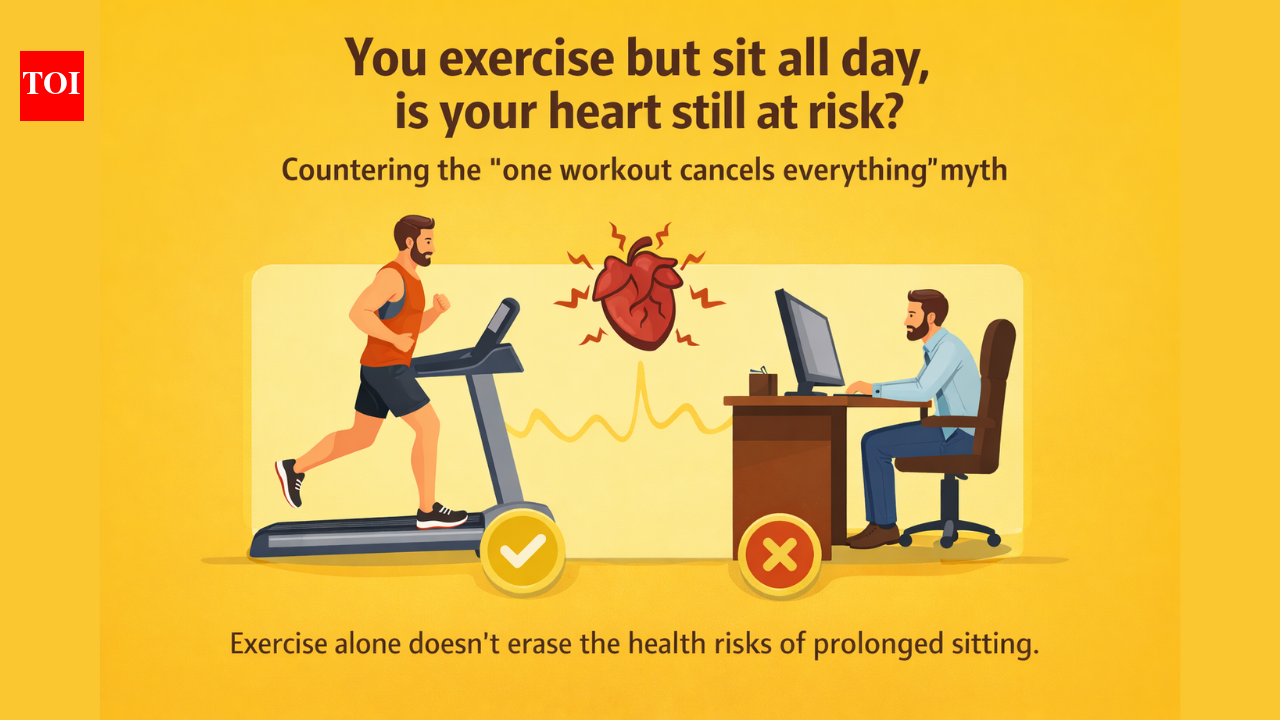
 We all know heart disease is common, but many still think it’s something that only happens to older people or those with bad genes. The truth is far more everyday and sneaky. Sitting for long hours, at desks, on couches, in cars, has become the norm, especially with digital work and entertainment taking over our lives. In fact, nearly 37 % of Indian adults don’t meet basic activity levels, and long spells of sitting have been linked with higher risk of major heart problems over time.So what does too much sitting actually do? When you stay inactive, your circulation slows, bad cholesterol builds up, and blood sugar and blood pressure levels can creep up. Over time, this makes the heart work harder and increases the chance of artery blockages, heart attacks, and stroke.Yet most people aren’t aware of this. Why? For one, it doesn’t feel dramatic. Sitting on a couch while watching TV feels harmless. And even people who hit the gym once a day may sit for the rest of their waking hours, which still raises heart risk.“Many people think that one workout may “cancel out” a lengthy time of not working out, according to cardiologists. Studies now show that sitting for lengthy periods of time is a risk factor for heart disease all by itself. This happens because it makes it more difficult for the body to process insulin, reduces blood flow, metabolism, and inflammation. Which means that people who are getting the right amount of exercise every day can still be at risk if they are sitting for 8 to 10 hours a day at work or on the way to work,” Dr. C. S. Aravind, Senior Consultant – Cardiology, SRM Global Hospitals, Chennai told TOI Health.Real‑life stories reflect exactly this blind spot. In many urban workplaces, professionals in their 30s and 40s are suddenly showing heart risk factors they never expected, not because of a family history, but because of long hours at desks, high screen time, and stress.
  Another example is the recent social media conversation around young, seemingly fit people collapsing from heart events, often with no obvious risk factors except a lifestyle that’s heavy on sitting, screens, and little movement.Dr. R. Guruparan, Consultant & Head of Emergency Medicine, Vs Hospitals, Chennai told TOI Health, “a common misconception is that one daily exercise session balances out the hours spent sitting – but it doesn’t. Long-term sitting on its own is a risk factor for heart disease, and this sedentary lifestyle worsens metabolism, blood sugar control and circulation, as well as heightening the risk of high blood pressure, diabetes and heart attacks.”“International studies have found that sitting for more than 8 hours a day increases the risk of cardiovascular events and death by 19–29 % compared to people who sit less than 4 hours a day, regardless of how much they exercise. Another study found that sitting for more than 10.6 hours a day was associated with a substantially increased risk of heart failure and cardiovascular death even among people who met recommended physical activity levels,” he warns. “Exercise prevalence 150 min of walk is crucial, however it does not completely negate the deleterious effects of prolonged sedentariness. The best protection for the heart is from moving throughout the day even getting up to stand, walk or stretch every 30-60 minutes can keep circulation going and reduce cardiovascular strain.” Most of us just don’t connect the dots between our daily routine and heart health. We assume exercise once a day cancels out hours of inactivity. But the science says it doesn’t. And until that idea sinks in, sedentary living will continue quietly wrecking heart health.Dr. C.S. Arvind urges, “we as doctors think that if you want to keep your heart healthy, it is very important to make a plan that includes lots of exercise. Taking a break every 30 to 45 minutes to stand or walk, trying to get 7,000 to 8,000 steps a day, and sitting less can all help a lot.”Medical experts consulted This article includes expert inputs shared with TOI Health by: Dr. C. S. Aravind, Senior Consultant – Cardiology, SRM Global Hospitals, ChennaiDr. R. Guruparan, Consultant & Head of Emergency Medicine, Vs Hospitals, Chennai Inputs were used to explain why long sitting hours can’t undo daily workouts and why regular physical activity and short bursts of movement is neccessary.
Related Posts