If a Hollywood celebrity recommended, say, a $150,000 highly invasive brain surgery as an anti-aging hack, most people would likely balk at the idea. Few would subject themselves to a high-risk neurosurgical procedure not endorsed by an independent physician. But, if a star were to sell a face cream loaded with “biomimetic plant peptides” for $105 per bottle, many more might consider that. The risk seems low: In the worst case, you’d be out some money, and in the best case, your skin could look amazing, according to the claims made about the product. When the apparent cost-to-benefit ratio seems favorable, we are susceptible to adopting a “worth a try” mindset. This approach seems relatively harmless, until we consider the actual costs to be more than our disposable income.
A worth-a-try product is one where perceived risk is low, potential benefit may be vague but enticing, and direct evidence of clinical benefit is questionable. My research interests in debunking misleading marketing claims led me to realize that consumers are keen to adopt a product even they are skeptical of, as long as it seems to have little risk besides financial cost.
Worth-a-try culture permeates the health, wellness, pet care, and sports markets. We are regularly inundated with new dietary products, wearable technology, and athletic equipment that claims to enhance our lives in new ways. Though clear or direct evidence behind their effectiveness is usually lacking, they are strategically marketed with an array of scientific buzzwords to provide credibility. Add press releases and uncritical media coverage containing authoritative quotes from company stakeholders and celebrity proponents, and worth-a-try products become convincing. When combined with positive user testimonials and moral framing, we are often left thinking “it would be unethical for me not to try this.”
Worth-a-try products thrive on a cocktail of psychological biases. With confirmation bias, we interpret ambiguous evidence as supporting what we already believe (for example, that a product works). Similarly, attribution bias leads us to credit positive outcomes to the product itself rather than to alternative explanations such as chance or natural progress. Once we’ve invested money, we want to believe it was the right decision, which is known as post-purchase rationalization. If evidence emerges that we were wrong, our personal judgment is called into question, so we seek validation instead. That psychological process is powerful when a product’s benefits are vague, delayed, or difficult to precisely measure. This is especially so for products that claim to reduce risk, since the absence of harm becomes default evidence of effectiveness.
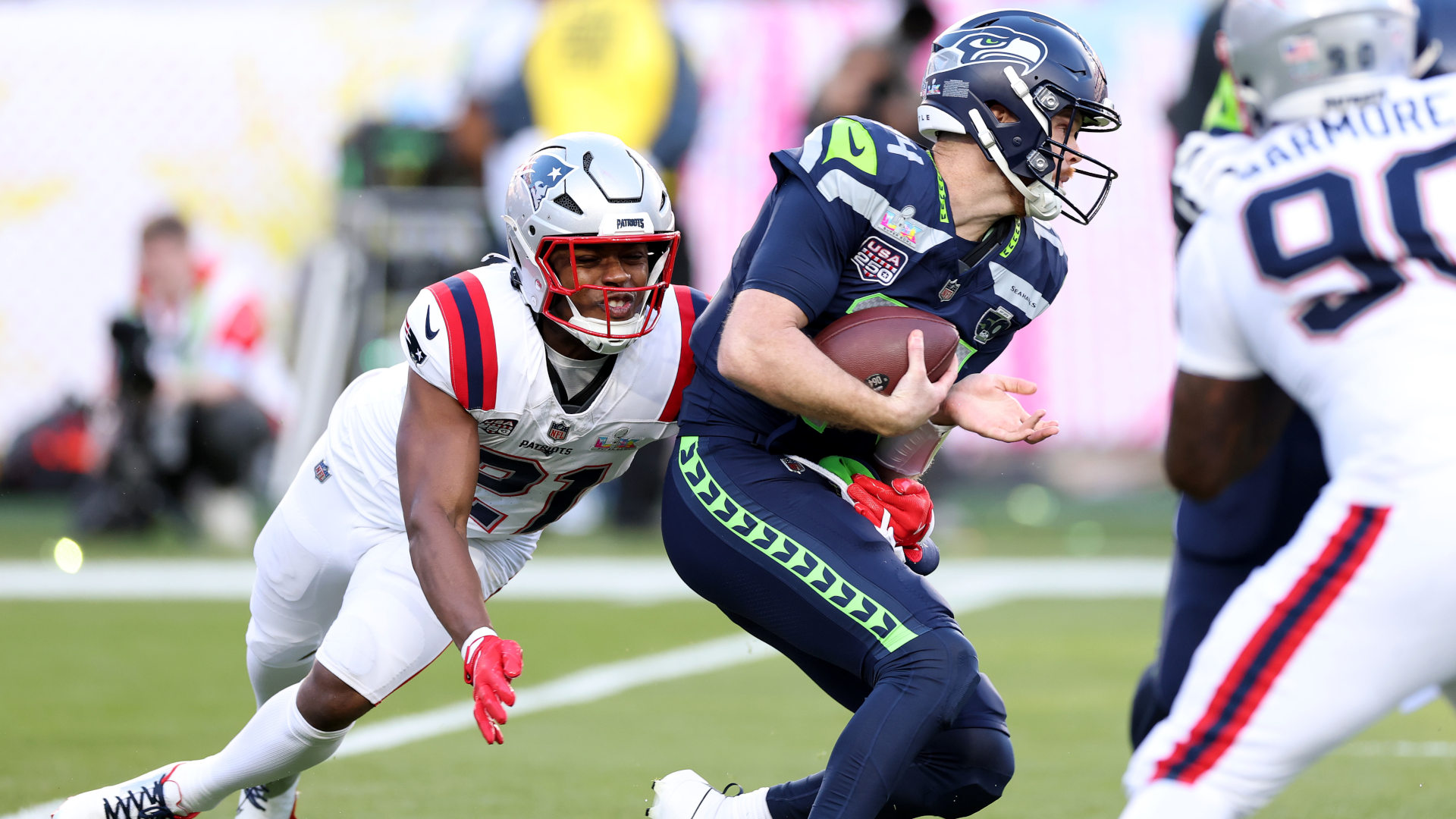
Countless examples exist, but one particular piece of sports tech provides a case study in worth-a-try culture. The Q-Collar claims to protect the brain from sports-related impacts by compressing the neck’s jugular veins — inspired by the physiology of woodpeckers. The company touts the product as “proven to achieve a 66 percent reduction in the likelihood of brain damage from contact sports over a season of play” and makes other impressive sounding claims backed by more than 25 peer-reviewed research studies. A few dozen NFL players wear the Q-Collar, including one player from each team that played in this year’s Super Bowl LX, according to the company.
Worth-a-try products thrive on a cocktail of psychological biases.
As public concern over concussions and chronic traumatic encephalopathy, or CTE, has grown, the Q-Collar commodifies that fear. For about $200, parents and coaches can buy “peace of mind” and a sense of agency that they’re doing everything they can to prevent an injury. Testimonials on the product’s website and on Facebook emphasize a message that “you can’t put a price on the brain.”
In 2025, my colleagues and I published an investigation in the BMJ which identified key weaknesses in the evidence supporting the Q-Collar. Through the Freedom of Information Act, we obtained internal Food and Drug Administration reviews that revealed concerns about its effectiveness and hesitation to authorize the device. These reservations were addressed by adding fine-print language indicating that it didn’t actually prevent concussions, as it was originally intended to do. The FDA noted that the clinical meaning of the research data it reviewed is questionable. We also identified data anomalies across multiple peer-reviewed papers, which remain under formal investigation. But those doubts don’t stop parents and athletes from giving the device a try or, in many cases, evangelizing it to others.
The company that makes Q-Collar, Q30 Innovations, responded to my BMJ publication and a Washington Post investigation in an October post on its website. Q30 maintains that the safety and effectiveness of its product is backed by rigorous, independent research. On the FDA’s authorization process, the company wrote “As you would expect during the evaluation of a novel medical device, there was healthy debate within the agency before it reached its final decision,” adding that “Q-Collar users face almost no risk and are provided likely benefit by increasing the brain’s stabilization inside the skull. This is not a controversial point.”

SIGN UP FOR NEWSLETTER JOURNEYS: Dive deeper into pressing issues with Undark’s limited run newsletters. Each week for four weeks, you’ll receive a hand-picked excerpt from our archive related to your subject area of interest. Pick your journeys here.
For the Q-Collar, parents cite lack of concussions as proof that it works. However, when users report concussions while wearing it, the company accurately responds that “no product can prevent all concussions” — after all, risk reduction isn’t risk elimination. Many reinterpret that outcome entirely, imaging how much worse their injury could have been had they not worn the collar.
When all outcomes lead to the same conclusion that a product works, we are relying on belief, rather than evidence. Positive anecdotes become the purported evidence base, because thousands of satisfied users can’t be wrong, and their stories feed into a self-reinforcing loop.
Marketing campaigns fuel these open-ended consumer interpretations and avoid accountability through carefully vague language. When a product is marketed as “an added layer of protection” or one that “helps protect the brain,” it is framed as just one component of a broader ecosystem of protective equipment. If an athlete remains uninjured, the product gets the credit. If they are injured, the defense is built in: It was only meant to help.
One worth-a-try product can be a gateway for others. Why not add a $135 soft-shell helmet cover (even if evidence on its effectiveness is questionable) and upgrade to a $990 state-of-the-art helmet? Perhaps add a $50 mouthguard that promises to reduce concussions and also somehow increases strength and balance? Or perhaps, as one school district did in 2016, budget $25,000 for brain-protective chocolate milk, since “there is nothing more important than protecting our student-athletes,” according to the district superintendent.
This mindset permeates sports culture. In one internal email I obtained through a public records request, a university athletic trainer evaluating whether to buy a Q-Collar for a student athlete explained the logic plainly: “If something will do no harm and it has the potential to help (even if placebo), then I’m open to trying it.” The trainer further wrote that “throwing the kitchen sink” at protecting athlete health is “ok with me.”
When all outcomes lead to the same conclusion that a product works, we are relying on belief, rather than evidence.
What makes this economy so unsettling is that the motivation is pure. The primary consumers are those who have genuine concerns about brain injury. For a price, these products offer the moral comfort of taking action without the burden of making tougher decisions such as limiting player contact or switching to lower-risk sports. Ironically, this leaves athletes exposed to continued head impacts — the leading risk factor for the concussions and CTE they’re desperate to avoid.
Football provides just one example where the cumulative cost of worth-a-try products quickly add up and may distract from other strategies. When worth-a-try mentality is applied across the various other sectors of health, wellness, and pet care, the costs could easily reach into billions.
Ultimately, we are left with a pipeline of pseudo-solutions marketed with hedging language that feels convincing but avoids accountability. Probiotics “help support the immune system.” A toilet camera “decodes your body’s signals” to “build habits for living better, healthier.” Wearable tech can help achieve “brighter moods, better energy, improved immunity.” These all sound beneficial, but how would we actually measure a clinical effect? Even FDA clearance can be a relatively low bar, requiring “reasonable assurance of safety and effectiveness” or “substantial equivalence” to other existing products.
If we invest in such products, we’ll never be able to prove they work but always hope that they do, which keeps the illusion alive. If they don’t work, the truth reveals itself only when it’s far too late. When evidence becomes suggestion rather than science, everyone sells reassurance, and no one guarantees results.
Medicine’s foundational ethic, “First, do no harm,” was never intended to promote unproven interventions just because they feel low risk. Yet worth-a-try mentality sends a message that evidence is optional or subjective. Families deserve better than optimism sold as biomedical progress. Before buying the next device that “may help,” it’s worth asking two simple questions: What measurable outcome can this actually improve, and compared to what? If the answers are vague, the benefits probably are too.
James Smoliga, D.V.M., Ph.D., is a professor at Tufts University School of Medicine who studies translational science, sports medicine, and how scientific evidence is applied in clinical practice and public health policy. He writes the Substack newsletters “Beyond the Abstract,” about the intersection of research, academia, and society, and “Human Limits,” focused on sports science.