The thing about transformation stories is that we often compress them. It’s all about the turning point, the clean arc that makes struggle feel temporary and success feel inevitable. Dane Carter’s story refuses that kind of editing. It’s messy, uncomfortable, and deeply human. It’s not about a single breakthrough but more about the accumulation of small, often brutal decisions made when no one is watching.
Before fitness became his profession–and before it became his therapy–Carter spent decades in active addiction and more than a decade in prison for drug and weapons charges. “I started using drugs and getting in trouble at an early age,” he told Muscle and Fitness. “Like, 10 years old.” What followed next was 13 years in prison, and an active addiction that spanned almost two decades.
Today, Carter is sober, running a global online coaching business, and helping others take control of their lives through fitness, discipline, and accountability. He’s careful not to frame his life as a miracle or himself an exception. What changed wasn’t his luck—it was his willingness to choose discomfort over destruction, and responsibility over blame.
What he’s built since then is proof of what happens when action becomes a daily practice.
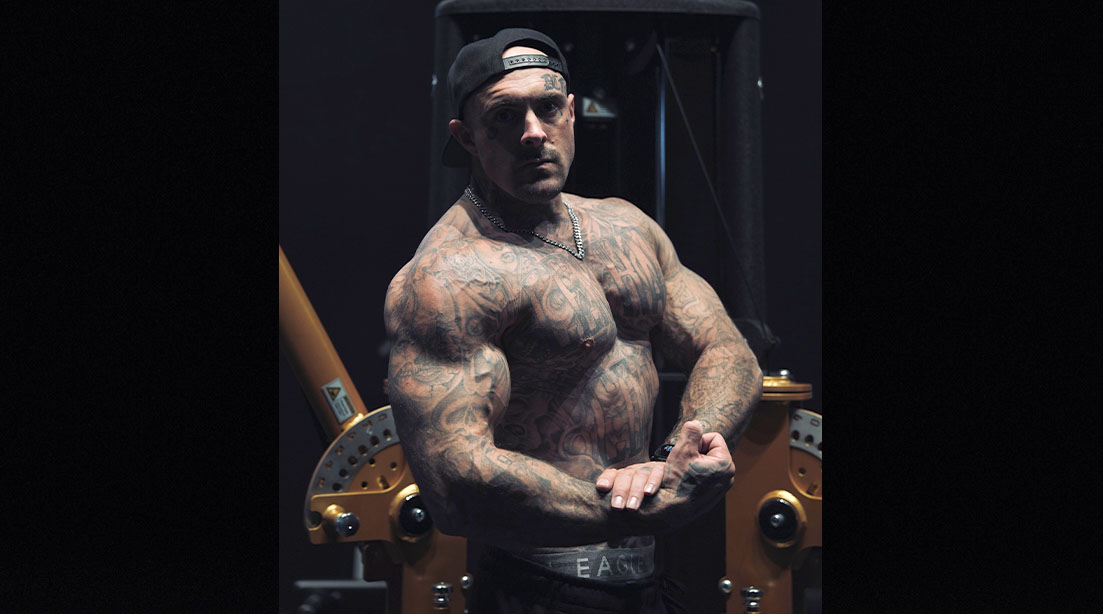 Dane Carter
The Turning Point That Sparked Dane Carter’s Transformation
The pivot in Carter’s story came in a motel room and after weeks of isolation and self-destruction. “I was doing, like, six to ten grams of fentanyl a day,” he said with a heavy clarity. “ I was using meth, fentanyl, heroin, coke… all the hard drugs you can think of.” Despite periods of stability—jobs, family—the addiction always seemed to pull him back in.
“Right up before the call came through, I was like, ‘I’m going to die. I want a better life.” He wasn’t scared but he had finally come to the needed realization that the lifestyle he’d accepted for decades was no longer survivable.
That realization didn’t immediately offer a solution. Carter spoke about feeling trapped in proximity to normal life without access to it. “The Denny’s was right down the street,” he said. “I had everything I needed to actually survive, but I wanted a way out. I couldn’t do it on my own.” Addiction had trained his body and mind to believe that survival required the very thing that was killing him.
Then came an interruption. “A blocked number called my phone one day,” Carter said. “It was a detox center asking me if I wanted to change my life.” The randomness of that call still strikes him. While he did want a way out, he hadn’t given his number to a facility. What mattered more is what he did next—he welcomed the help. “It saved my life for sure,” he said. “It gave me an opportunity to take action”
There is a distinction from being saved and choosing to act, and it runs through everything Carter has done since. Detox was relentless, and destabilizing. “I was in the hospital a few times with withdrawals and hallucinations,” he said. He explained how the body can turn against you when you remove what it has been conditioned to depend on. “Your body’s telling you one thing, and your mind is now telling you that this is what you need to survive. It’s a battle.”
A lot of people don’t make it past this stage because there’s a comfort in going back to what you’ve grown to know. Carter truly wanted differently for himself.
How Fitness Supported Dane Carter’s Path To Recovery
Carter says early sobriety was more about chaos management than it was clarity. When the drugs left his system, there was an initial surge of energy he received. “You feel like it’s a superpower,” he said. “You feel like you can do everything.” But without structure, that surge can fade fast, and depression sets in. Once that emptiness settles, a relapse can typically fill the void.
Carter began working out more to help fill this void. He began pursuing a sponsor who had refused him for about a month. His persistence paid off when that sponsor saw that he was indeed serious. Alongside that came the work of learning how to live–doing laundry, washing dishes, and responding to stress without a violent reaction. “Facing the hard s*** head on,” he said. “Instead of sticking a needle in my arm and taking the easy way out.”
Fitness was also a form of healing. “If you don’t have somewhere to push yourself, your mind is going to deteriorate,” he said. “Being in remand is easy. They feed you, you watch TV, but the real work starts when that structure is gone.”
The gym, by contrast, demanded effort and presence. There’s something about showing up every day when you want to that helps you get the most growth. Carter wasn’t in it for the aesthetics. It was about leaning into discomfort, while rewiring his brain without breaking.
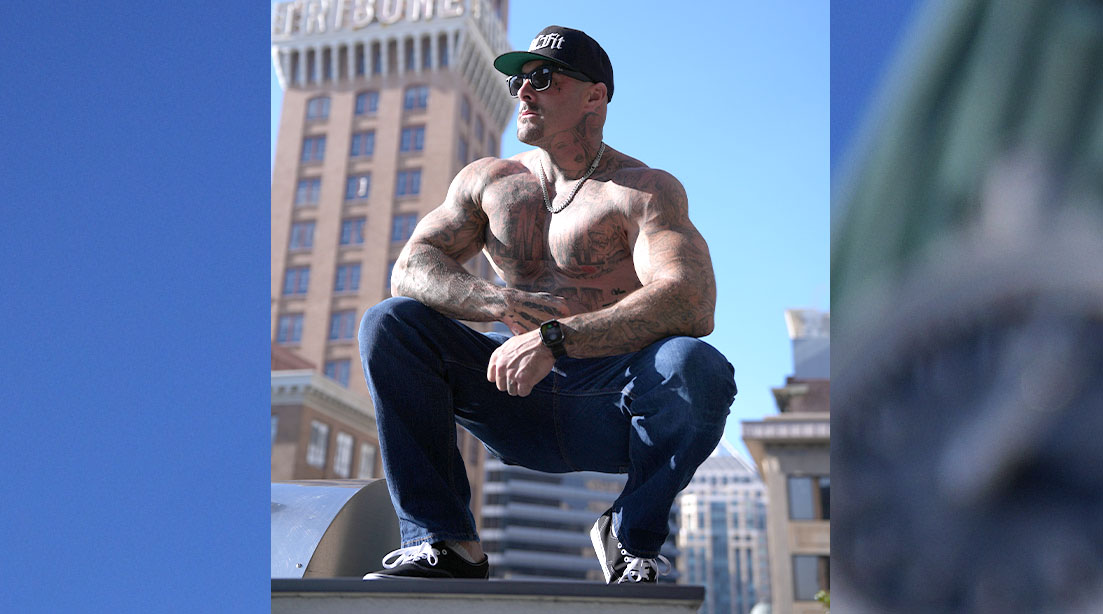 Dane Carter
Daily Habits That Drive Carter’s Long-Term Transformation
Today, Carter’s life runs on systems, not inspiration. He now runs a business helping others rewrite their stories. He provides online fitness coaching and personal development guidance to clients around the world, many of who are facing the same physical, mental, and emotional battles he once did.
When asked what keeps him grounded, he didn’t hesitate. “Morning prayer,” he said. “I don’t pray asking for s***. I’m just thankful.”
Before his feet hit the floor, he practices gratitude–mentally inventorying sessions learned and opportunities earned. His routine then centers on his trip to the gym to “earn the day.” The phrasing of that matters as it’s more of an obligation than self-care.
The proof of his impact can’t be quantified in just follower count. It’s in the lives of the clients whose transformations mirror the emotional and physical progress he champions. One of his most meaningful success stories is a 55-year-old client who came to him drinking daily, carrying decades of joint pain and limited mobility—“double knee replacement surgery”—and is now “down 120 pounds in 11 months… and literally running now, sober,’’ Carter says. Stories like this shape the ethos of his business: fitness paired with accountability, structure, and purpose.
The work he does centers on routines, systems, and choices rather than quick fixes. He emphasizes that transformation is available to anyone willing to commit to hard choices rather than continuing the easy ones. “Start now, get the help that you need,” he said. “A lot of us men are too scared to reach out and ask for help. Ego is the biggest killer.”
Check out danecarterfit.com