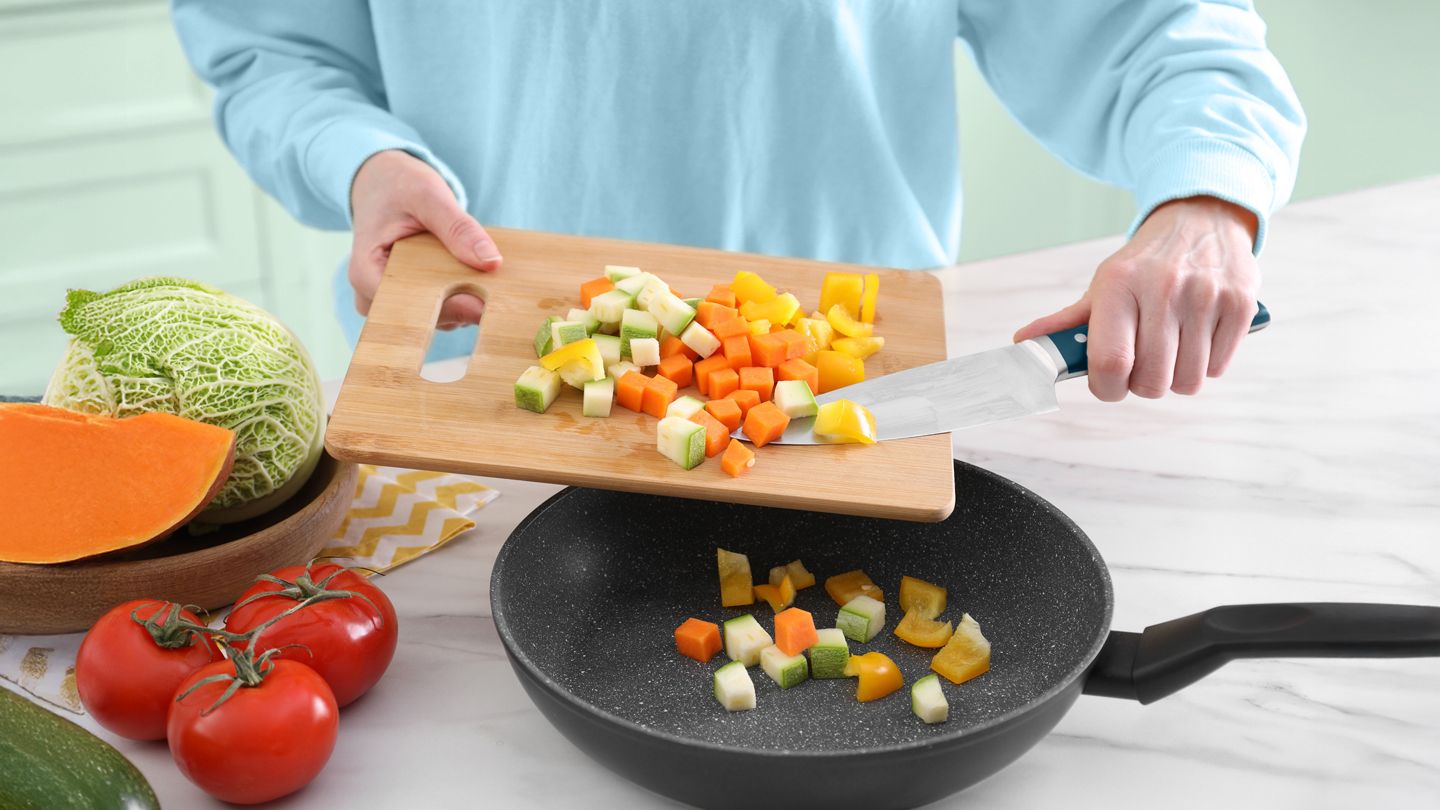
But if you turn up the heat to sauté or stir-fry, White says to keep cooking time short “to help avoid excessive heat that can break down nutrients.”
[10]
Grilling and Broiling
Though grilling uses high heat, this cooking style is less likely to leach the healthy compounds out of your veggies than some other options.
“From a nutrition standpoint, grilling uses high heat with no added water, which helps retain many nutrients that are normally lost through boiling or simmering,” says Leverich. But the intense heat can break down some heat-sensitive vitamins, like vitamin C and B vitamins.
[10]
“Still, when it comes to maximizing both taste and overall veggie intake, grilling is a strong choice,” she says.
Broiling also exposes foods to a strong heating element, which can be beneficial for some types of veggies and less so for others. While broiling does not involve water, its intense heat can break down water-soluble vitamins such as C and some B vitamins, Leverich says.
“That said, it can be a great choice for beta-carotene-rich vegetables like sweet potatoes or squash, since the heat actually helps make those nutrients more available.”
[4]
Baking and Roasting
Despite the higher temps used to heat veggies in the oven, this method doesn’t excessively diminish veggies’ nutrient density, says Saweres.
“Baking and roasting are generally favorable because they use dry heat and little to no added water, which helps limit nutrient leaching,” says Saweres. Plus, baking and roasting can bring out vegetables’ inherent sweetness, often helping people enjoy them more, she says.
While some vitamin C loss will occur in a hot oven, Saweres says fat-soluble antioxidants, like carotenoids in carrots, may become more bioavailable. This is especially true when roasted vegetables are paired with healthy fats like olive or avocado oil.
Pressure Cooking and Slow Cooking
Pressure cooking and slow cooking both use small appliances — sometimes the same device — to heat foods to doneness. But the two have different effects on veggies’ nutrition.
“Pressure cooking can be a good option for nutrient retention, because it uses less water and significantly shorter cooking times, which helps preserve heat-sensitive nutrients like vitamin C and polyphenols,” says Saweres.
[11]
Polyphenols are beneficial plant compounds known for their powerful antioxidant and anti-inflammatory properties.
[12]
The gradual process of slow cooking, on the other hand, isn’t as beneficial for nutrition.
“Slow cooking involves longer exposure to heat, which may reduce water-soluble vitamins, though minerals and fiber remain largely intact,” says Saweres. She says to use minimal liquid in the slow cooker to improve nutrient retention.