By ABBIE BERNSTEIN / Staff Writer
Posted: February 13th, 2026 / 03:48 PM
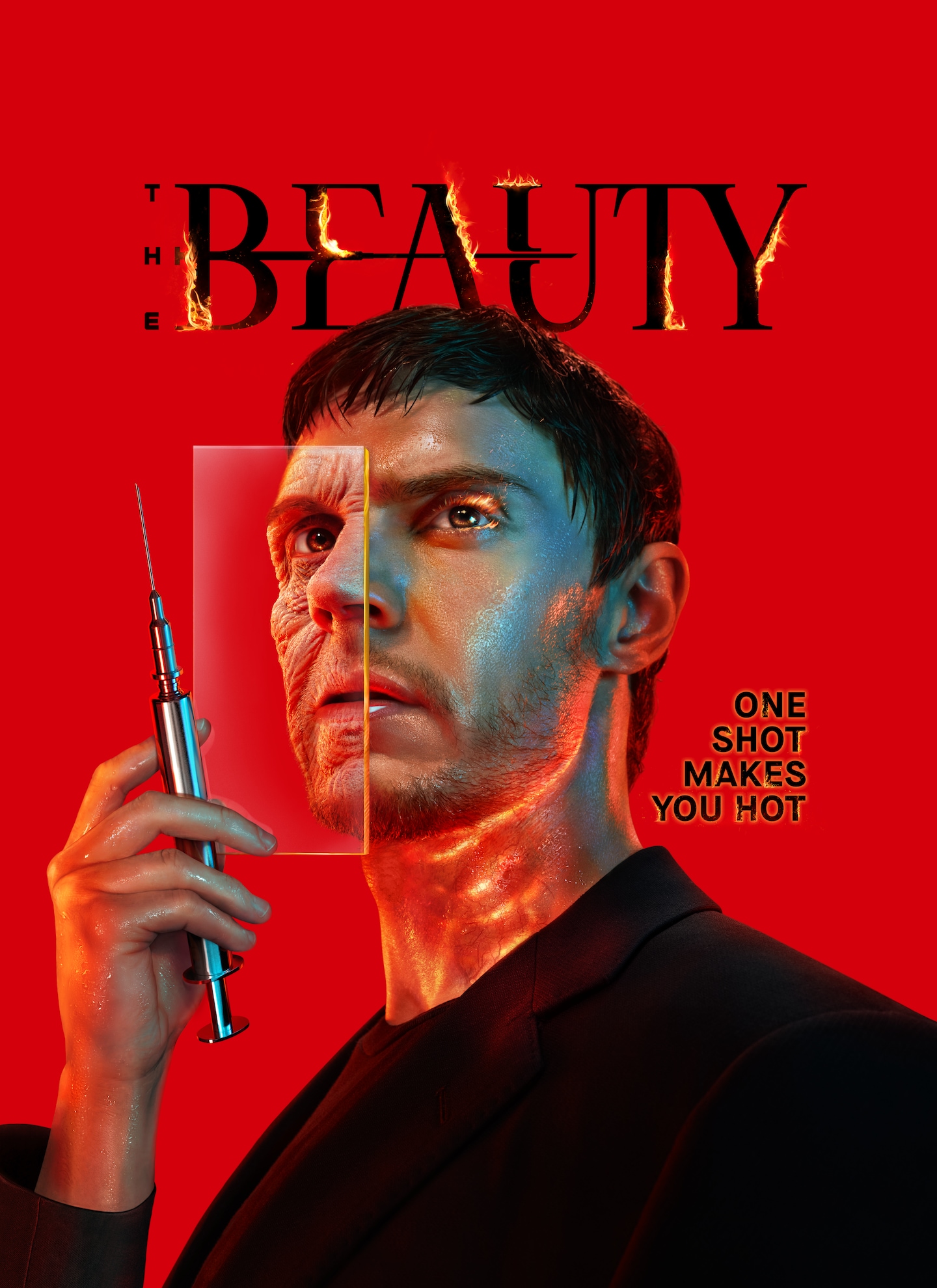
THE BEAUTY Season 1 Key Art | ©2026 FX
FX’s new series THE BEAUTY is adapted by Matthew Hodgson & Ryan Murphy from the comic book by Jeremy Haun & Jason A. Hurley. It airs on FX Wednesday nights, with episodes thereafter available on Hulu in the U.S. and on Disney+ internationally.
In the thriller/dark comedy, wealthy Byron Forst, aka the Corporation, played by Ashton Kutcher, owns the company that controls a new drug that makes its users immediately fit and beautiful. Alas, there are lethal side effects, leading to a homicidal cover-up. The action, shot on location, moves through Paris, Rome, Venice and New York.
Looking into the suspicious circumstances surrounding this pharmaceutical hazard are law enforcement partners Cooper Madsen, played by frequent Murphy star Evan Peters, and Jordan Bennett, played by Rebecca Hall. Other key figures include the Assassin, played by Anthony Ramos, and Jeremy, played by Jeremy Pope. Kutcher, Peters, Pope, and Ramos also serve with Murphy, Hodgson, Haun and Hurley as executive producers on THE BEAUTY.
In a Zoom press conference arranged by FX, Hall, Kutcher, Peters, Pope, and Ramos come together to discuss their new show.
Hall and Peters are asked about the dynamic between their characters, who are professional partners with shifting personal interplay.
Hall replies, “Well, the dynamic is that they work together and they are best friends with benefits. They both think that there’s nothing more to it, although it’s a complete lie and they’re just refusing to be vulnerable with each other. And so, there’s a lot of unspoken nonsense and they should just get on with it.”
Peters concurs. “I totally agree. You’re rooting for one of them to speak up and say, ‘Wait a minute, I don’t want you to see other people, I just want to see you. I love you.’”
Hall elaborates, “They’re both very prideful types who are frightened of emotional intimacy, I think.”
Peters expands on this. “I think also, as characters, that Cooper’s a bit straight-edged and Jordan is very fun and funny, and I think they balance each other out.”
“I think that’s true,” says Hall.
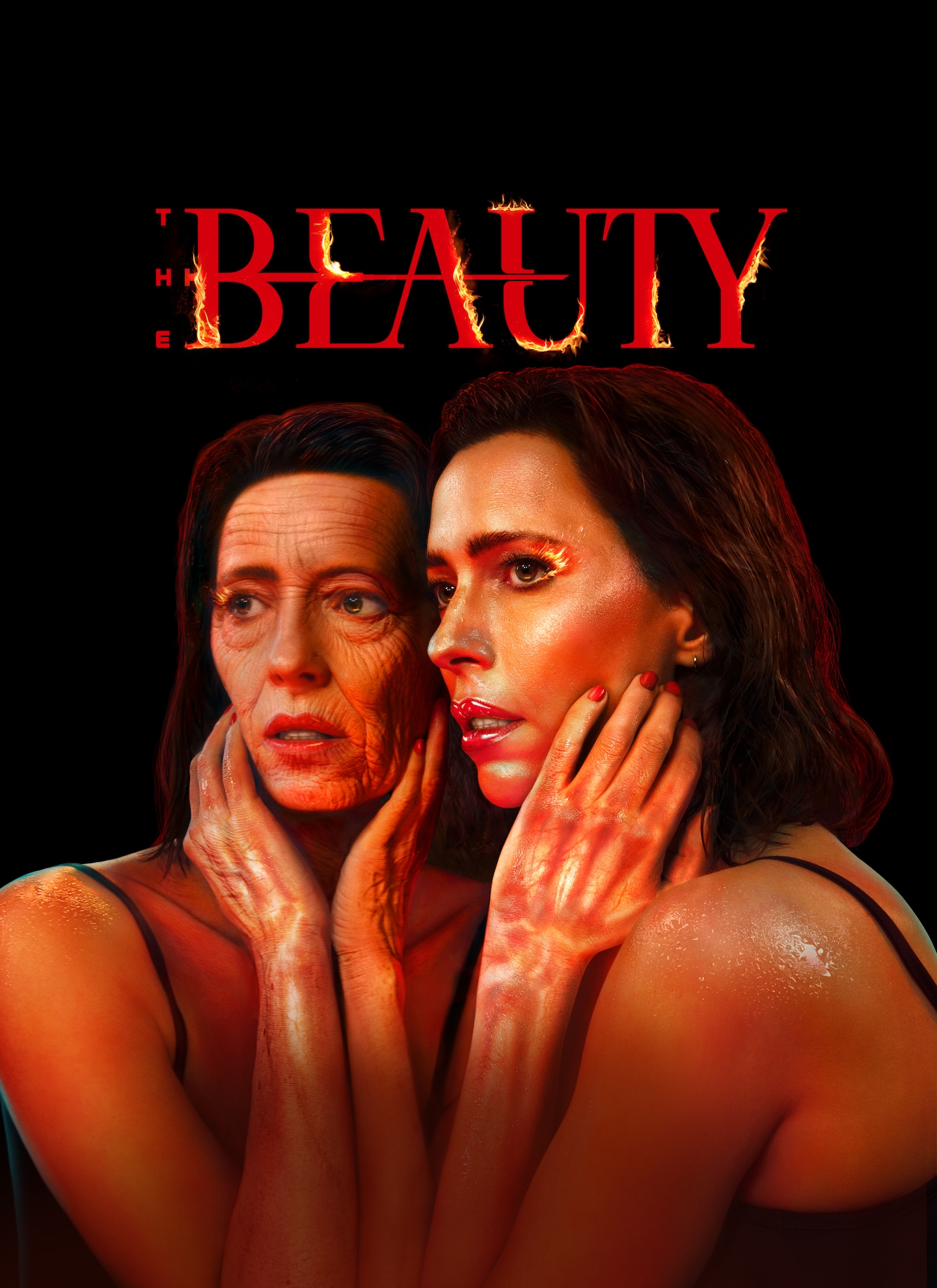
THE BEAUTY Season 1 Key Art | ©2026 FX
Peters addresses his costar directly. “I think that you brought a lot of levity to Cooper and Cooper is just a very serious guy.”
“Blimey, poor Cooper,” Hall sympathizes.
“Poor Cooper,” Ramos chimes in.
Ramos and Pope play out a more unconventional character dynamic, with Ramos’s Assassin taking Pope’s Jeremy on as a quasi-apprentice.
Ramos believes this is possibly because “Jeremy reminds the Assassin of himself. I think there’s a level of empathy that the Assassin has for Jeremy’s character that Jeremy brings out of him, that he taps into. The Assassin spends a lot of time by himself, right? He’s a killer. That’s what he does, and he does it alone. I think he sees a kindred spirit in this guy that he was intended to kill. And he also reminds him of someone he loves as well.
“So,” Ramos continues, I think that there’s a level of loneliness and a void that I think that Jeremy fills, a hole in the Assassin’s soul or heart, if you will, that I believe Jeremy fills for the character. And it’s really cool to be able to dive into that and also see their relationship grow over time.”
Pope elaborates, “Like Anthony said, the Assassin has spent a lot of time alone. I think it’s the same thing for Jeremy, who is described as an incel, an involuntary celibate, who is looking for connection and affection. So, I think in this moment, he gets to meet someone who sees him and appreciates the weirdness that he is and that he’s bringing.
“So, I think they begin to work as a duo and they begin to find new ways in this new experience and new life. So, while it is a lot of fun, one, I’ve known Anthony for fifteen years, so there’s that chemistry that we built, just as brothers and as family. So, to be able to translate that into these nuanced characters that some would say are villains or bad guys, I think it was about us excavating the truth and trying to get into the psyche of these humans who are up against difficult stakes. And to them, these are the right choices.
“We see a moment for the Assassin where he goes, ‘I need someone. I need someone who can do two things, who can help me go and kill and do my job, but can also in this moment fill a void.’ I think for Jeremy, he’s like, ‘I’ve always needed someone to just see me for who and what I am.’ So, that’s where we begin our journey. And then, stay tuned for more.”
Kutcher is aware that the audience won’t necessarily find his scheming Corporation the most sympathetic of figures. However, “I learned a very long time ago, you can’t judge your character. So, I can, from 10,000 feet, look at the behavior of that character and go, ‘Wow, he’s doing some pretty abhorrent things.’ But when you’re playing the character, you have to play them from the perspective that they believe that they’re doing something right, [or] ‘You forced my hand, I have to do this,’ or that there’s some benevolent necessity to their action.
“And so, as the person playing this character, I have to look at the character as a good guy who’s doing a good thing. I have to look at the character as someone who goes, ‘Wait, this will help people live better, happier, more fulfilled lives. And if there is a bastardized version of this drug on the market that is hurting people, I have to contain that before it becomes a problem.’ And so, you can look at it through that lens and go, ‘He thinks he’s doing the right thing,’ or you can look at it from 10,000 feet, and be like, ‘It’s not okay to kill people.’
“But by the way,” Kutcher continues, “there are people in government that make these decisions every day and somehow make them from a benevolent perspective and go, ‘Well, we needed to kill those people so they didn’t kill those [other] people.’ And they believe what they’re doing is an effort of containment or sanitization of abhorrent behavior.
“So, I think if you twist the way you see anything in the world, you can find yourself a version or write yourself a version that is the good [justified way of seeing it]. I’m in a ‘banned book’ club where we read books that you would be embarrassed to read on the subway, because you wouldn’t want people looking at you. And so, as I was reading Ted Kaczynski’s manifesto, and you can follow his train of thought for a lot of it. I didn’t agree with a lot of his thought train, but you could follow it. And then you get to Article 94, where he’s saying, ‘And so, I needed to kill a bunch of people so people would actually listen to what I was saying.’ And you go, ‘Okay, I understand – you jumped the shark there,’ but every so-called villain can rationalize their behavior.”
How do the actors think THE BEAUTY reflects the current cultural landscape?
Hall answers first. “I think in many ways that Ryan Murphy has a nose for the zeitgeist and what is current and what we’re all talking about. And he makes it subversive and provocative and even more worth discussing.
“I think there’s a lot to be said about the chase for perfection and what that means, and also the commodification of beauty. I think human beauty is a conceptually complicated thing. It’s not like looking at a sunrise or [something in] nature, something that’s objective. It’s subjective.
“So, the idea that you can pay for perfection and therefore you’re handing over your idea of it to someone who is taking your money and might want more of it is complicated. What does that mean? How does it shift? What does it change? Because, frankly, I think keeping people in a place of inadequacy is more profitable [than helping them feel worthy].”
Kutcher agrees. “I think we’re living in a world where GLP-1s are pervasive. The demand for Ozempic and Wegovy and Mounjaro and all these drugs, some of them are for health complications, others are just for aesthetic outcome. And then we have this increasing demand for cosmetic surgery, including tourism for cosmetic surgery and people augmenting themselves in order to achieve a look or a feel or a vibe that they think will give them some sort of advantage, or maybe it will just make them happy.
“And you start to ask the question, ‘Is that so wrong?’ And then you add gene editing on top of it, which is happening in the world today, which can make you healthier or solve for you if you have sickle cell anemia or some other genetic defect. You amalgamate all that into one thing, and it’s a shot, and it’s called ‘The Beauty.’
“And the question is,” Kutcher continues, “what are you willing to sacrifice for that? What risks are you willing to take? And I think that that’s incredibly poignant. Ryan, as was mentioned, always has his finger on the pulse of the decisions that we’re all making on a daily basis, like, what skin cream am I going to use, what kind of shampoo am I using? All of these things that are daily decisions, this show gets underneath and explores and makes you ask those questions about yourself and about what your worldview is.”
Ramos provides an example from his own life. “Just the other day, my stylist is like, ‘Hey, we have a photoshoot coming up, you should get a facial.’ I get to the facial and he asks, ‘She flushed your face, right?’ I said, ‘What, I was looking puffy before?” And he’s like, ‘A little bit.’
“They have Emsculpt and they have shots where they can put collagen in your body. We mentioned in some previous interviews about people getting braces and people not even blinking at that. But now there’s Botox and the tummy tuck and Ozempic. There are so many things out there and so much available to us that can enhance our beauty or that we could take to essentially make us the person that we’d like to look like on the outside. And I think that society tells us what we probably should look like on the outside a lot of times.
“And I think that, instinctually, we put that pressure on ourselves, like, ‘Maybe I’m not skinny enough,’ or ‘Maybe my face isn’t trim enough,’ or, ‘Maybe I’m looking a little too puffy, let me get this facial to flush out my face,’ and so on and so forth. It’s a part of our culture in a big way. And I think that this show talks about that on a deep level.”
Peters relates, “I think there’s also a throughline through a lot of Ryan’s projects, which is that the thing that makes you you and makes you unique is the thing that makes you interesting and is to be celebrated. At the end, there are some episodes that really hammer that in and I think that there’s nobody better than Ryan to spread that message. So, yeah, it makes you question it.”
“Hallelujah,” Pope praises Peters’s response. “A simple answer for me is just, I love a piece of art that asks the audience the question, ‘What would you do if there was a drug or something that you could take that would make you feel like the best version of yourself?’
“I think the show starts off in a very vain physical way,” Pope continues. “But then we talk about a kid who maybe has a disease where they haven’t been able to live their full life, and as a parent or as a person who is observing that, what would you give to see someone step into their beauty and their light?
“I think that’s an interesting conversation to be having, because everyone’s saying there are a lot of things that are being projected onto us via social media, via the news, there’s always a medication that you can take that can change this or do that if you have it. So, I think it’s just an active conversation about where you sit on the side of beauty, your perspective of yourself, the inner work, the outer work. To me, that makes for an interesting dialogue.”
Follow us on Twitter at ASSIGNMENT X
Like us on Facebook at ASSIGNMENT X
Article Source: Assignment X
Article: Interview: Actors Rebecca Hall, Ashton Kutcher, Evan Peters, Jeremy Pope and Anthony Ramos on new FX series THE BEAUTY
Related
Related Posts: