There’s no better way to start your day than by eating nourishing breakfast that fills you up and gives you energy until lunch time. One simple and important way to ensure you’re getting a healthy, satisfying breakfast is to focus on fiber-rich foods. Why is fiber so special, and what can adding some fiber to your morning meal do for your health? Here’s what to know about this key nutrient, plus high-fiber breakfast ideas to get you started.
Why Fiber at Breakfast Matters
Two surprising facts about fiber: It’s a type of carbohydrate, and it’s actually indigestible by the body. But this isn’t a bad thing by any means.
“Fiber works to keep blood sugar stable, feed healthy microbiota in our gut, bulk up stool for increased regularity, reduce cholesterol levels, regulate hormone levels, eliminate harmful compounds and toxins, and more,” says Megan Hilbert MS, RDN, registered dietitian at Top Nutrition Coaching.
Megan Hilbert, MS, RDN, registered dietitian nutritionist at Top Nutrition CoachingJessica Levinson, MS, RDN, CDN, registered dietitian nutritionist and certified dietitian nutritionist
Fiber slows down digestion, producing more stable, prolonged energy levels, so a high-fiber breakfast will help that meal keep you even more satisfied.
“Since fiber plays an important role in managing and promoting gut health, higher fiber intake is also linked to decreased risk for certain gut health conditions like inflammatory bowel disease, irritable bowel syndrome, and diverticular disease, as well as other chronic illnesses like type 2 diabetes, heart disease, and stroke,” Hillbert says.
Soluble vs. Insoluble Fiber
Fiber is broken down into two main types: soluble and insoluble, and both are important. Generally, soluble fiber helps to treat and prevent diarrhea, while insoluble fiber is often utilized for alleviating and preventing constipation.
“Foods high in soluble fiber include oats, chia seeds, nuts, raspberries, pears, and apples, while insoluble fiber can be found in brown rice, legumes, cruciferous vegetables, and quinoa,” says Hilbert. However, all plant-based foods, including fruits, veggies, legumes, whole grains, nuts, seeds, herbs, and spices, contain some of each type of fiber.
How Much Fiber Do You Need Per Day?
“Only 5% of Americans are getting enough fiber in their diet,” Hilbert says. But how much fiber do we actually need per day?
According to the Academy of Nutrition and Dietetics, adult women should aim for at least 25 grams of fiber per day and adult men should aim for 38 grams of fiber per day.
Breakfast is a great place to start boosting your fiber intake if you don’t meet these guidelines currently, but it’s important to add fiber into the diet gradually and mindfully. Hilbert explains that consuming too much fiber too quickly is what can cause digestive distress like gas and bloating.
High-Fiber Breakfast Ideas
“Breakfast helps break our overnight fasting period, which is important to supply the body with glucose to fuel our muscles and brain at the start of the day,” Hilbert says. “Plus, research shows that breakfast eaters perform better at work and in school due to improved memory and focus.”
These results are found in those eating a balanced breakfast, which typically includes a source of protein, healthy fat, and complex carbohydrate from whole grains or starchy vegetables, in addition to a produce item like a fruit or veggie.
Putting together a balanced breakfast can be a challenging concept if you’re not used to it—but we’re here to help. Here’s how to incorporate more fiber into your first meal of the day, what to pair it with, and how to make it something you look forward to every morning.
Chia Seed Pudding
Credit:
Greg DuPree
If meal prep is your thing, chia seed pudding is an excellent make-ahead, high-fiber breakfast. Simply mix two tablespoons of chia seeds with a half cup of whatever type of milk you prefer, plus one teaspoon of sweetener, like honey or maple syrup. This blend by itself contains a hefty eight grams of fiber, but by topping with fruit and chopped nuts in the morning you can bump that number by five to 10 grams.
Green Smoothie
Green Smoothie.
Credit:
Smoothies can be loaded with nutrient-rich, high-fiber foods. Any frozen fruits, veggies, nut butters, seeds, and other superfoods like the blue-green algae and spirulina are all excellent ingredients. Green smoothies can be especially high in fiber, thanks to the addition of spinach, kale, spirulina, or chlorella (or all the above!), ranging anywhere from 10 to 15 grams per 16 ounces.
Sweet Potato and Black Bean Breakfast Tacos
Credit:
Greg Dupree, Prop Stylist: Chelsea zimmer, Food Stylist: Claire Spollen
These filling (and fabulous!) breakfast tacos are packed with fiber, thanks to the black beans, sweet potatoes, and the avocado garnish. Use whole-grain tortillas to amp up the fiber factor even more.
Avocado Toast
Credit: Barcin/Getty Images
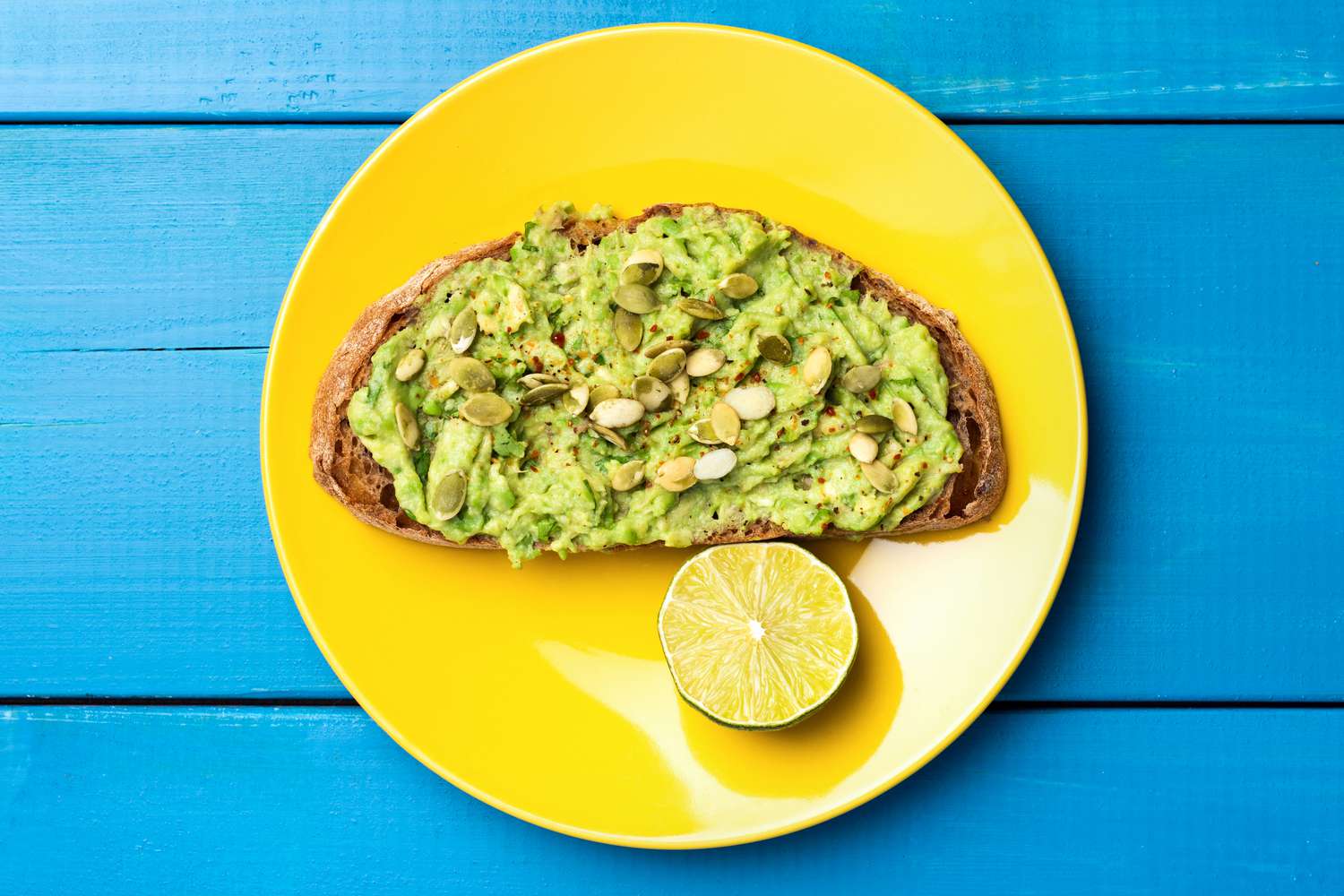
No breakfast is made worse with a side of avocado toast—and it’s not just trendy and pretty, it’s packed with fiber. A slice of whole wheat or whole grain bread will offer around two to five grams of fiber (depending on the brand of bread) and half a cup of avocado gets you another five grams.
Dry Cereal With Fruit and Nuts
Credit:
Marko Jan / Getty Images
It doesn’t get easier than a bowl of cold cereal in the morning. Sugary cereals of your childhood aren’t always the best sources of fiber, sadly, but there are tons of the whole grain, low-sugar options at the supermarket to choose from. In fact, some brands contain upwards of 10 grams of fiber per half cup! Up this number even more by topping your bowl with fruit, nuts, or seeds.
Whole Wheat French Toast
Credit: Charles Masters
Whole wheat bread gives subtle nuttiness and a boost of fiber to your favorite French toast recipe. With anywhere between four and 10 grams of fiber per two slices (brand dependent), this brunch staple qualifies as a high-fiber breakfast—especially when you add toppings like fruit and nuts.
Savory Seedy Granola
Credit:
Greg DuPree; Food Stylist: Chelsea Zimmer; Prop Stylist: Claire Spollen
Granola tends to be a high-fiber breakfast option, and this spice-laden savory version is a fun take on the classic. (Consider sprinkling it on eggs in lieu of the classic yogurt!). The oats alone add 8 grams of fiber to the recipe, 5.6 grams from the sesame seeds, 3 grams from the tahini, along with 4 grams each from the pepitas and sunflower seeds.
High-Protein Skillet Baked Eggs With White Beans and Mushrooms
Credit:
Greg Dupree, Prop Stylist: Chelsea zimmer, Food Stylist: Claire Spollen
Want to make sure that your breakfast is really filling to get you through a busy day? Try this easy skillet recipe, which features plenty of filling protein and fiber. Cannellini beans and kale combine to provide 9 grams of fiber per serving.
Yogurt With Granola and Sliced Fruit
When you’re short on time, but still want to prioritize a nourishing breakfast, yogurt bowls are an excellent option. Granola and sliced fruit are easy toppings rich in fiber, with anywhere from two to four grams per one-third cup of granola (brand dependent) and between three to eight grams per cup of fruit, depending on the type. For even more fiber, sprinkle some chia seeds, hemp hearts, or ground flaxseed on top.