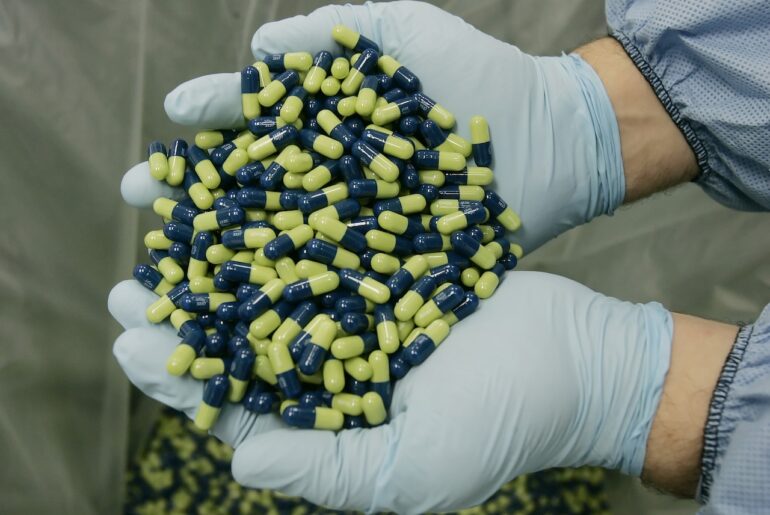
WICHITA, Kan. (KWCH) – Kansas lawmakers are considering a bill that would put the supplement kratom in the same category as cocaine and meth.
Kratom started as a plant-based supplement used to treat opioid addiction.
It’s been marketed as an energy booster and pain reliever but it has faced concerns about being addictive.
“All of a sudden they synthesized it to be much more potent, much stronger, much more addictive, and of course, people are now going through pretty significant opioid withdrawals just to get off of it,” said Dr. Gregory Lakin, Health Director at Center for Change Wichita.
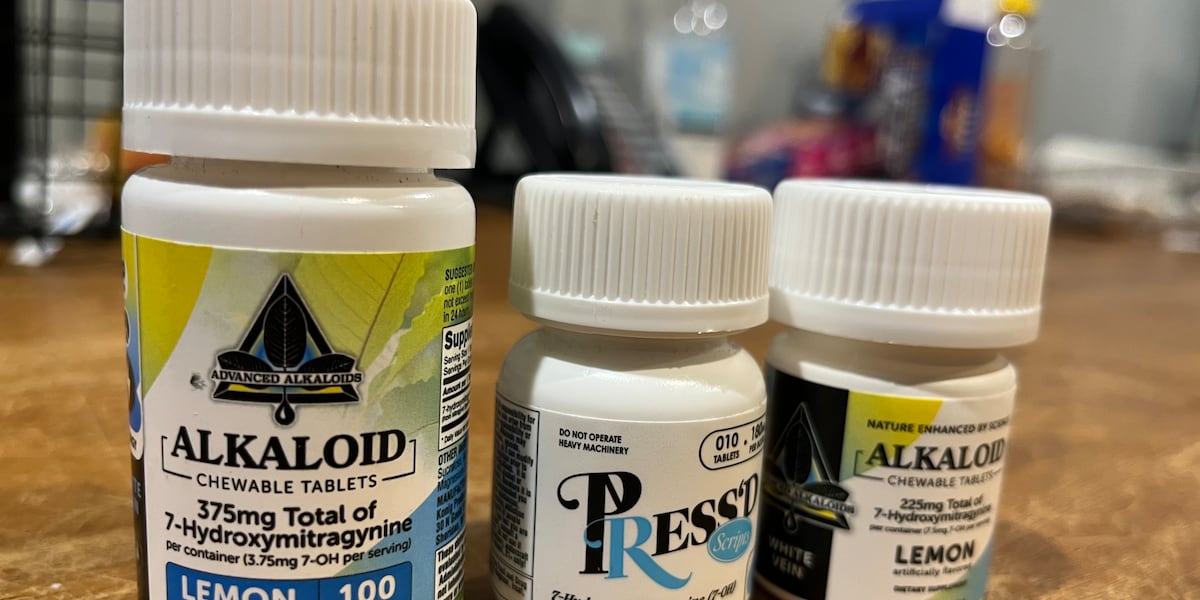
The biggest issue is kratom’s synthetic form, 7-hydroxymitragynine (7-OH).
Experts say it can cause opioid withdrawal-like symptoms, just like fentanyl does, and it’s easily accessible in places like gas stations.
“We’ve had probably three to four a week walk in to get treatment for opioid-like withdrawals from 7-OH,” said Lakin.
Last year, there was a Kansas bill that would’ve created a kratom consumer protection act, which is already in place in 18 other states. That bill ended up stalling.
Happy Teahouse in Wichita uses kratom in its drinks, but in its original, natural form, not 7-OH.
The owner says that the public not knowing the difference between the natural form of kratom and 7-OH could create issues.
“We’re seeing that, you know, it’s hard to distinguish because they’re allowing 7-OH to be called kratom. So on the packaging it says kratom, but in reality, it’s a synthetic derivative,” said Bo Lewis, owner of Happy Teahouse.
As of last August, kratom had been banned in six states. The FDA has warned people not to use kratom, primarily when mixed with other substances like alcohol.
Lawmakers will discuss the bill on Monday.
Copyright 2026 KWCH. All rights reserved. To report a correction or typo, please email news@kwch.com