You don’t need a nutrition degree to make a smart choice about yogurt. With a little label-reading know-how, you can quickly tell which yogurts support your health and which ones are better left on the shelf.
We asked Mindy Haar, PhD, RDN, assistant dean of the School of Health Professions at New York Institute of Technology, to explain exactly what to look for when shopping for yogurt and what to avoid.
*This interview has been edited and condensed for clarity and length.
Q: What actually makes one yogurt healthier than another?
Haar: No matter what type of milk is used—skim, low-fat, or whole milk—yogurt is a very good source of protein and calcium. Bacterial cultures act as probiotics in the small intestine, promoting a healthy gut with a plethora of additional benefits.
Other ingredients can vary greatly, though, so checking both the nutrition facts label and the ingredient list is important. To reduce sugar intake, consider buying plain yogurt and adding 1-2 teaspoons of sugar or maple syrup, as well as fresh fruit.
Due to yogurt’s many amazing qualities and versatility, plain yogurt can be substituted for milk in cake and muffin recipes, swapped for sour cream with baked potatoes, and substituted for mayonnaise in salad dressing.
1. Look for a Short Ingredient List
At its core, yogurt only needs two things: milk and live cultures. The longer the ingredient list, the more likely it is to include fillers or additives that don’t add much nutritionally.
Some yogurts contain food starches to thicken texture, along with artificial colors or artificial flavors. These ingredients aren’t harmful in small amounts, but they’re not doing your health any favors either.
Instead, prioritize yogurts made with milk and live cultures, and add fresh fruit or natural sweeteners yourself if needed.
2. Check Added Sugar, Not Just Total Sugar
Sugar is where many yogurts quietly go off the rails. Fruit-flavored yogurts often contain added sugars on top of the naturally occurring lactose in milk, which can raise blood sugar levels without improving satiety or nutrient density.
When checking the ‘added sugar’ line on the nutrition facts label, keep in mind that 4 grams (g) of added sugar is equivalent to one teaspoon of sugar. Yogurt with more than two teaspoons—or 8 g—of added sugar should be avoided.
That means even yogurts that sound healthy—like vanilla or honey-flavored—can exceed recommended limits.
3. Consider the Protein Content
Protein is one of the main reasons yogurt can be so satisfying. It helps you feel full longer, supports muscle maintenance, and slows digestion, making it especially helpful for steady energy and blood sugar control.As a result, higher-protein yogurt options are often a better choice if you’re looking for a snack that keeps you feeling full longer.
Many yogurts naturally contain protein, but some styles are especially protein-dense because they’re strained to remove extra liquid. These include:
4. Be Strategic With Plant-Based Yogurts
Plant-based yogurts can be a good option for people avoiding dairy, but nutritionally, they’re not all created equal.
Plant-based yogurts are typically made with soy, almond, or cashew milk, which do not naturally contain significant amounts of calcium.
Be sure to select those that are fortified with calcium and vitamin D. That way, you’re not missing out on key nutrients that dairy yogurt naturally provides.
5. Be Mindful of Calories and Fat—But Don’t Fear Them
Full-fat yogurt has made a comeback as dietary guidelines have become more flexible around dairy fat. Still, higher-fat yogurts are more calorie-dense.
While the newer dietary guidelines are more liberal with higher-fat dairy products, keep in mind that yogurt made with whole milk will be higher in calories.
There’s no single “right” choice here—it’s just something to keep in mind as you choose a yogurt that best fits your needs and portions.
6. Skip Yogurts With Granola or Crunchy Toppings Built In
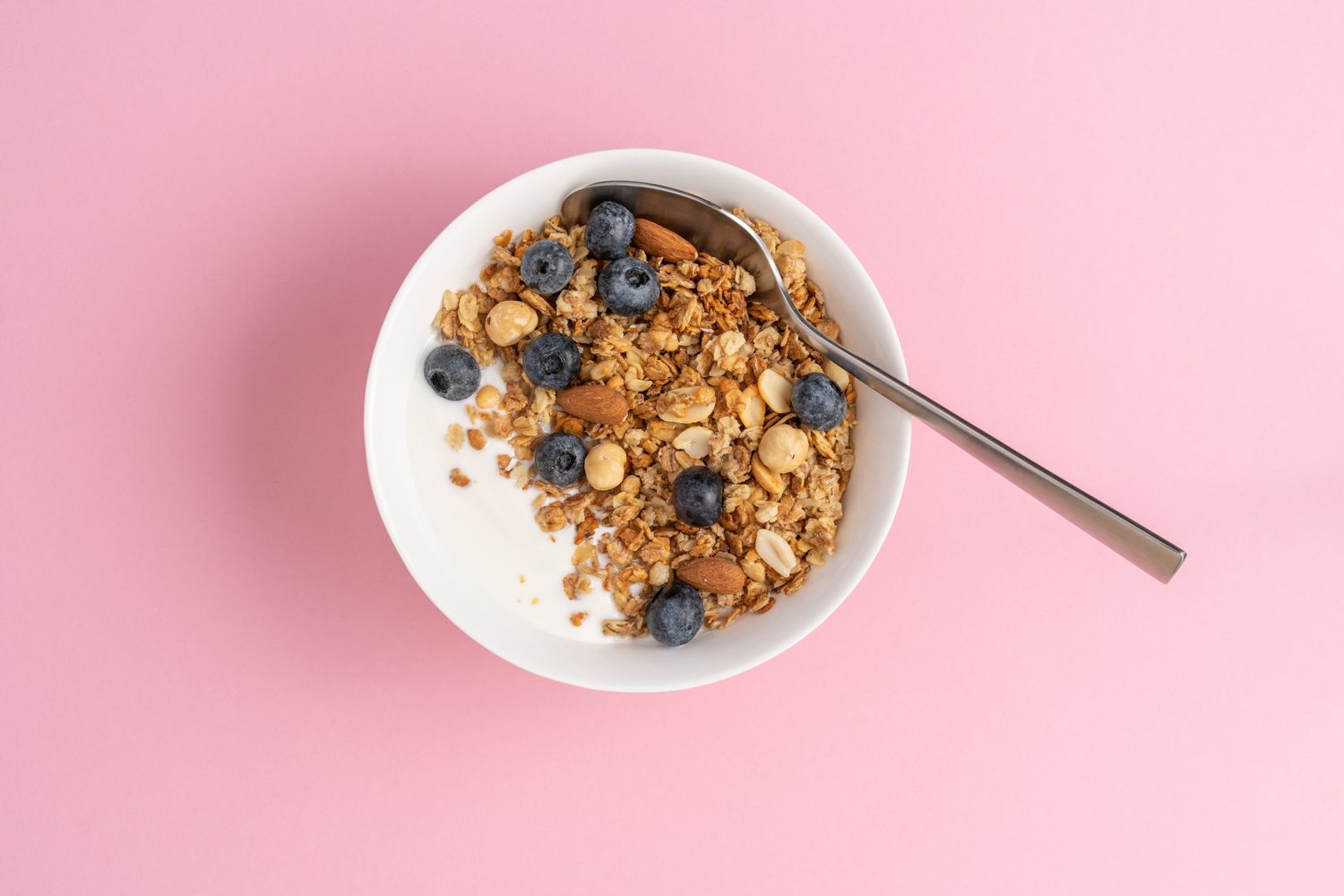
Yogurts that come with granola, cookie pieces, or candy mixed in or packaged on top often add unnecessary sugar and calories. Seeing candy or crushed cookies is a clear sign that the ingredients aren’t as nutritious as they could be. Even granola can quickly push a yogurt into dessert territory.
Instead, choose a plain or lightly sweetened yogurt and add your own toppings. Fresh fruit and maple syrup add natural sweetness, while a small amount of nuts or seeds provides crunch and satiety without the sugar overload.
Verywell Health uses only high-quality sources, including peer-reviewed studies, to support the facts within our articles. Read our editorial process to learn more about how we fact-check and keep our content accurate, reliable, and trustworthy.
DiNicolantonio JJ, O’Keefe JH. Added sugars drive insulin resistance, hyperinsulinemia, hypertension, type 2 diabetes and coronary heart disease. Mo Med. 2022;119(6):519-523.
Ishaq I, Noreen S, Maduabuchi Aja P, Atoki AV. Role of protein intake in maintaining muscle mass composition among elderly females suffering from sarcopenia. Front Nutr. 2025;12:1547325. doi:10.3389/fnut.2025.1547325
USDA. Yogurt, Greek, plain, nonfat.
USDA. Plain skyr Icelandic yogurt skyr yogurt, plain skyr.
USDA. Yogurt, soy.

Kathleen Ferraro is a writer and content strategist with a master’s degree in journalism and nearly a decade of experience in health, wellness, and science storytelling. She has served as a health editor at LIVESTRONG.com, contributed to publications like Everyday Health, Well+Good, and Outside, and developed copy and content strategy for brands like Stride Health, Peloton, Exos and more.
Thanks for your feedback!
What is your feedback?
Helpful
Report an Error
Other