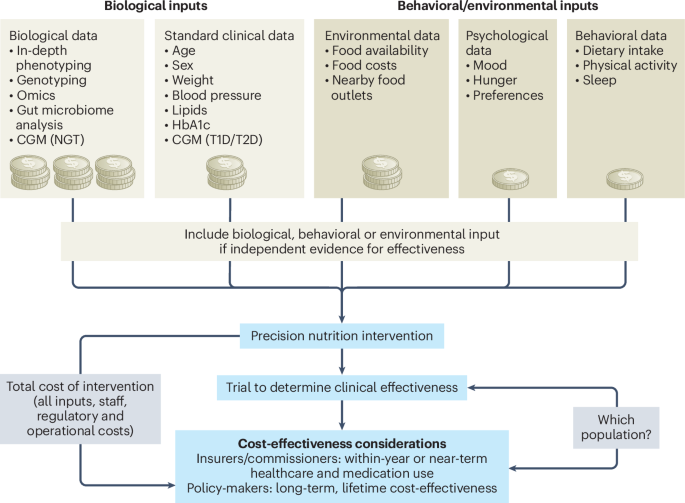
Precision nutrition promises tailored dietary advice, but without cost-effectiveness, it risks being clinically irrelevant and economically unsustainable. The hope is that tailored dietary recommendations will reduce the incidence and burden of cardiometabolic diseases. Enthusiasm for precision nutrition has been matched by more than £100 million in grant funding from the US National Institutes of Health and European Union in the past 3 years alone.
We believe far greater scrutiny should be applied to the cost-effectiveness of precision nutrition interventions, particularly given the null, negligible or modest improvements1,2,3,4,5 in cardiometabolic risk factors reported by molecular biology or omics trials so far. Decision-makers will weigh up the cost of the intervention against health improvements and expected costs, and if the interventions are not cost-effective, they will not be implemented in healthcare systems.