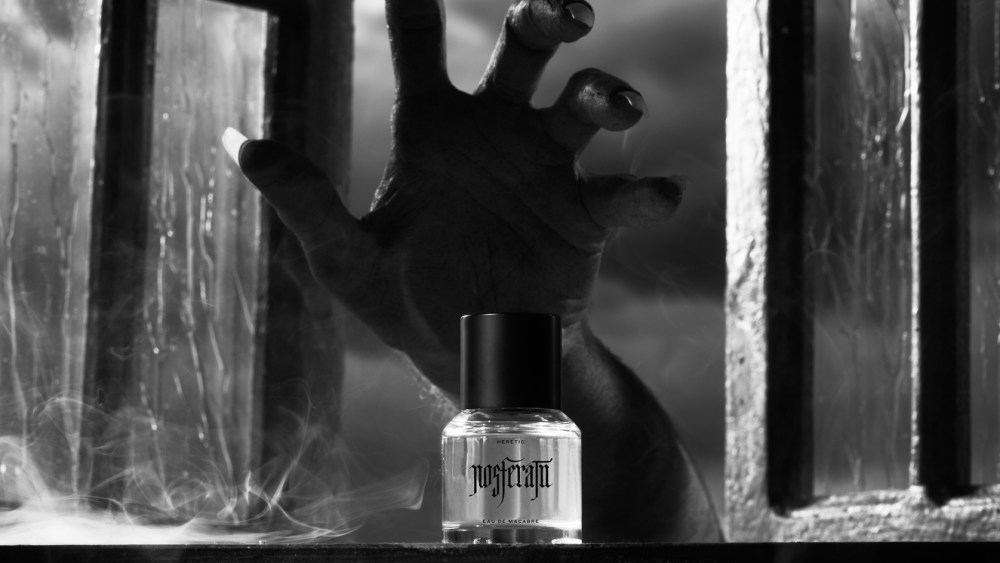
Roughly every five minutes, someone in the world spends $125 to smell like wilting lilac, petrichor and an encounter with Count Orlok, the fictional vampire of “Nosferatu” fame.
Yes, more than a year after its debut, Heretic’s Nosferatu Eau de Macabre — launched as a limited-edition scent ahead of the December 2024 horror film remake of the same name — is still an object of desire among fragrance fans of the occult. Of which there are at least 100,000, judging by the scent’s units sold to date.
The fragrance has more tangible notes, too — ambrette, oud and cypriol among them — but mounting interest in fantasy-note fragrances at large indicates that the scent’s more imaginative componentry has likely been the bigger driver of its success.
Indeed, niche fragrance brands, which represent the fastest-growing segment of the total fragrance market, have increasingly been leaning into the emotional and the unconventional to sell bottles, a marked departure from perfume’s sultrier past.

Thin Wild Mercury’s Chelsea Staircase.
Courtesy
Take Los Angeles-based Thin Wild Mercury, for example, whose $165 Chelsea Staircase eau de parfum pairs notes of lemon and Earl Grey tea with stretched canvas and antique wrought iron, inspired by New York’s The Chelsea Hotel.
There’s also the best-selling Dandelion Butter scent from Clue Perfumery, which taps pollen, milky sap, salted butter and “dandelion-stained chin.” Or any other hit from the Chicago-based brand, including Warm Bulb (sandalwood and hot air), With the Candlestick (cherry communion wine and melted wax) or Morel Map (dead elm tree and forest floor).
Clue’s best-selling Dandelion Butter perfume.
It’s mainly brands on the fringes who dabble, but By/Rosie Jane, a longtime gourmand sweetheart, rolled out a fantasy-note fragrance of its own to Sephora last month. Called Matilda, the scent retails for $86 and taps notes of passion fruit nectar, golden musk and “dancing in your underwear.” Snif, sold at Ulta Beauty, has similarly dipped its toes, offering fragrances with gasoline and surf wax accords among its blends.
By/Rosie Jane’s campaign for its Matilda Eau de Parfum, which taps the feeling of “dancing in your underwear.”
BLISS KAUFMAN
For a long time, fragrances have been categorized into four core scent families: fresh, floral, woody and amber. Subcategories have emerged, with gourmand, musk, spicy and citrus scents each having respective turns in the spotlight.
But as trends like fragrance wardrobing and the popularity of #PerfumeTok — a content niche on TikTok dedicated solely to talking about perfume — have emerged, the fragrance category has been propelled to more than 20 consecutive quarters of growth.
Once upon a time, Le Labo’s Santal 33 defined the whole of New York City for the better part of a decade. But as perfume collections grow and tangible fragrance notes remain finite (although, one emerging AI fragrance-maker, Osmo, is working on that) — where better for perfumers to take us than into our imaginations?