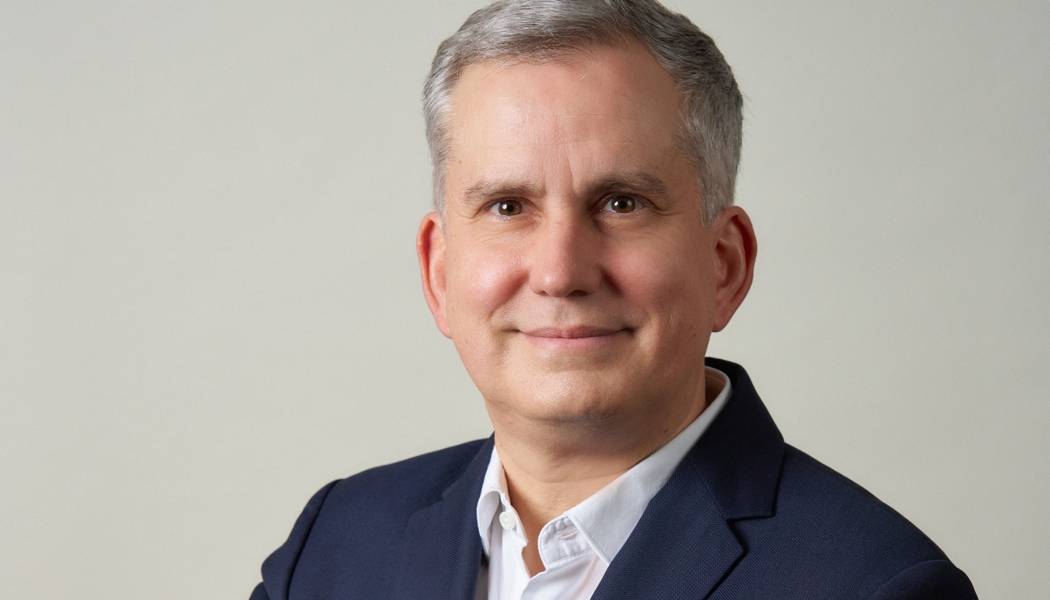
Premium Beauty News – You have been at the helm of FEBEA for almost five years. What is your perspective on the sector’s recent evolution?
Emmanuel Guichard – The past five years have been especially turbulent. The cosmetics industry has faced a series of major shocks, beginning with the Covid-19 pandemic. Within months, global trade ground to a halt, followed by a sharp rebound that severely strained supply chains. While uncertainty still prevails, clearer trends are now emerging — particularly across the European continent.
Premium Beauty News – French exports appear to be losing momentum. How do you interpret this shift?
Emmanuel Guichard – France remains the world’s leading cosmetics exporter, but the industry is facing intensifying global competition and a change in U.S. policy.
The final figures, released on February 6, confirm the slowdown observed in recent months. 2025 closed with a 0.1% decline. Excluding the pandemic period, this is the first contraction since the 2008 financial crisis. It is a strong warning signal.
The downturn is largely attributable to U.S. tariffs, which led to a 19% drop in exports over the year and an even steeper 25% fall in the fourth quarter. However, it also reflects intensifying global competition, particularly from dynamic Asian players such as South Korea.
Premium Beauty News – Is Europe emerging as a growth driver?
Emmanuel Guichard – Clearly, yes. Inflation has largely subsided, and consumption is picking up across many European markets. French exports to EU member states have risen by 4%. France and Germany remain exceptions, due to specific and well-defined political and economic factors.
The slowdown in inflation is also producing a noteworthy effect: it is diminishing the appeal of unfair competition. Consumers are placing less emphasis on price alone and paying greater attention to safety, environmental standards, and quality —areas where our industry has well-established strengths.
Premium Beauty News – How can exporting companies adapt?
Emmanuel Guichard – Geopolitical risk has now become a structural feature of the global landscape. In this environment, the only sound strategy for companies is to diversify their markets. The free trade agreements recently concluded between the European Union and Mercosur, and with India, are steps in that direction—although their respective potential differs significantly.
Regarding Mercosur, the treaty’s impact on our industry should be fairly limited; for instance, it does not provide for tariff reductions on fragrances. Moreover, Latin American countries are still struggling to develop a stable middle class with sufficient purchasing power to buy our products at scale. That said, the removal of certain duties can only be positive. As it stands, France exports more cosmetics and fragrances to Portugal than to Brazil!
India, by contrast, offers significant growth potential. Market access is currently highly restricted, but the new agreement could change that. With a middle class of nearly 70 million consumers, there is strong demand for beauty products and fragrances.
Premium Beauty News – What about Asia?
Emmanuel Guichard – Our exports to China remained stable (1.2%), showing no real signs of recovery. French products continue to account for 30% of imported cosmetics in the Chinese market. Meanwhile, Chinese brands are increasingly pursuing international expansion, emerging as strong competitors to South Korea.
In Indonesia, the recent implementation of halal certification is creating extra costs for exporters. This development also raises the risk that similar regulatory measures could spread to other markets.
Premium Beauty News – Are European regulations hindering export competitiveness?
Emmanuel Guichard – Let’s just say that European public authorities don’t all share the same perception of the importance of the cosmetics industry! We are advocating for a more proportionate approach to chemical regulations for our sector. When the Scientific Committee on Consumer Safety [1] deems an ingredient safe for cosmetics, it should remain authorized in formulations. Products intended for application to the skin cannot be treated like ingested substances. We also need realistic deadlines that reflect the time required to prepare exemption requests.
We are currently working to simplify these requirements under the European Commission’s Omnibus VI Directive on chemicals. For the industry, this could save up to EUR 6 billion across Europe, including EUR 2 billion for France alone. These savings could help offset several years of losses linked to U.S. tariffs. They would provide additional resources to enhance our global competitiveness.
Premium Beauty News – What’s the latest on the Urban Wastewater Treatment Directive (UWWTD) and the calculation methods you’re challenging?
Emmanuel Guichard – We recently held a full day of discussions with Stéphane Séjourné, the European Commissioner responsible for this file. Expanding the list of sectors covered by this new Extended Producer Responsibility is, unsurprisingly, a lengthy process. Cosmetics companies are willing to contribute to urban wastewater treatment — only in proportion to our actual role in the pollution generated. It makes no sense, for example, for us to fund the cleanup of caffeine pollution; we are clearly not the main driver behind coffee consumption!
Moreover, local authorities often try to pass the entire cost onto industry. Our aim is not to rewrite the entire directive but to define a clear list of targeted pollutants and ensure the polluter-pays principle is applied consistently.
Premium Beauty News – What is your top priority moving forward?
Emmanuel Guichard – Our clear priority is to boost the competitiveness of the cosmetics industry in France and across Europe. Achieving this will require regulatory simplification and greater international transparency, especially as the sector undergoes a period of consolidation among both brands and suppliers.