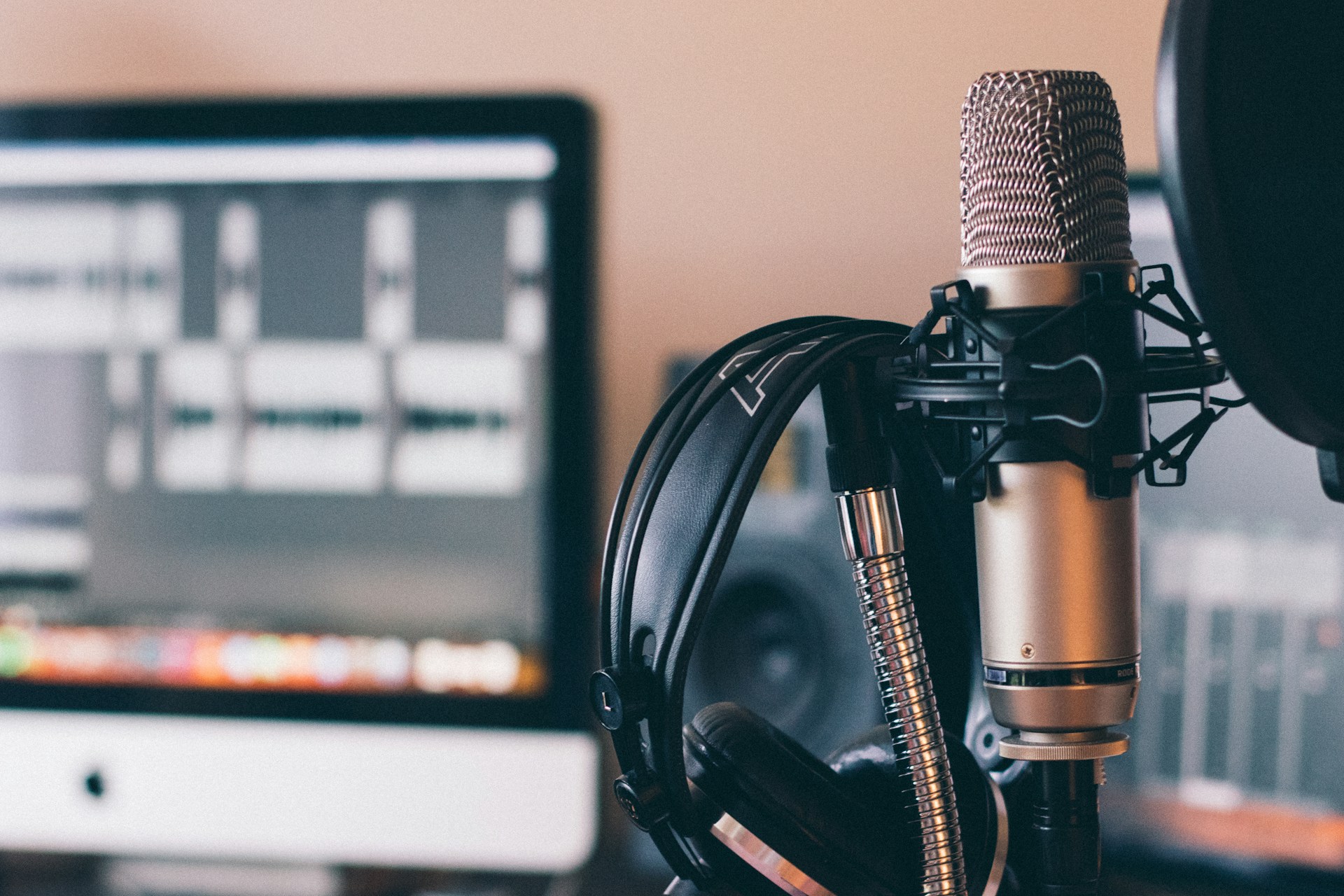
Mental engagement supports emotional regulation. Ed-podcasts can become your practical way to integrate continuous learning into your daily schedule without increasing screen fatigue.
You might find yourself doomscrolling through social media or skimming headlines without retaining any information. Educational podcasts offer a structured way to use that same time for focused listening and continuous learning. The practice also supports memory and attention. We carried out this research using reliable data from institutions and reviewed podcasts lists for you, focusing on health and cognitive aging.
We assembled an evidence-based listicle with practical examples that show how audio learning supports lifelong mental fitness. It translates complex academic data into clear explanations you can implement into your daily routine.
 What Is Lifelong Mental Fitness?
To understand why educational podcasts or audio learning are effective, let’s look at the shift toward proactive brain care. In recent years, the concept of Lifelong Mental Fitness has transitioned from a niche academic term to a major public health trend. Unlike traditional mental health, which often focuses on the treatment of illness, mental fitness is about proactive strengthening of cognitive and emotional reserves throughout your entire life.
It is also essential to understand the shift toward cognitive or proactive mental care. While the modern wellness industry often uses this term, the formal psychological concept of mental fitness was actually proposed by Dorothea McCarthy in 1964.
From Mental Health to Mental Fitness Continuum
Writing in the journal, McCarthy introduced the term as a direct response to psychologist Andie Knutson’s 1963 plea for a positive alternative to mental health. McCarthy suggested mental fitness because it represents a continuum, much like physical health, where you can actively improve your capacity regardless of your starting point:
This foundational idea is closely related to the scientific concept of cognitive reserve, popularized by Dr. Yaakov Stern in the early 2000s, which explains why some people maintain sharp minds despite biological aging. Building this reserve requires consistent mental “workouts” and “mental hygiene,” first coined by William Sweetser in 1843. Today, we see that the term mental fitness is more widely understood as a changeable capacity to use personal resources and skills to adapt psychologically to environmental challenges.  Photo by Eloy Caudet on Unsplash
Below are practical tips that explain how different educational podcasts categories support lifelong mental fitness, with filtered examples under each:
1. Strengthening Cognitive Vitality Through Structured Learning
Learning unfamiliar skills or processing new information causes physical changes in synapses, which means that when you listen to a science episode that explains a new concept or study, your brain processes new terms and improves memory. That repeated exposure supports neural adaptation, reinforcing pathways involved in attention.
Here is the list of science-focused podcasts, which provide this kind of structured learning:
Radiolab: This show builds an episode around one research question, where the hosts follow scientists as they walk through laboratory findings. Ologies: Alie Ward interviews experts in niche fields like volcanology or primatology. You hear specialized vocabulary explained in a casual context. StarTalk Radio: Neil deGrasse Tyson connects physics to popular culture, explaining space science using examples from daily life. 2. Building Mental Imagery Without Visuals
Audio requires you to build images internally. There are no charts or slides to look at while you listen. Your working memory carries the thread of the discussion. Narrative listening activates areas of the brain linked to mental imagery and memory encoding. This process makes the information more likely to stay in long-term memory.
Podcasts that you can try to improve this process include:
Stuff You Should Know: Josh and Chuck walk through one topic in plain language. They describe how things work, like a shortwave radio, which requires you to visualize the mechanics. TED Radio Hour: This show expands on a single TED Talk. It includes interviews with the original researchers to provide details beyond the stage presentation. 99% Invisible: Roman Mars explains design decisions through storytelling. He describes architecture you see every day, like curb cuts, so you notice them in a different way. 3. Retaining Data Through Narrative and Emotional Engagement
Emotional engagement has a role in how you recall facts. Emotional activation helps you retain information for longer periods. History podcasts, for example, use this mechanism through storytelling:
Hardcore History: Dan Carlin spends hours on one historical event. This length allows you to trace the cause and effect of a situation over time. Throughline: This show connects news events with historical context. Fall of Civilizations: Paul Cooper explores how ancient societies collapsed. He describes the environment and the people to build a mental picture of the past. 4. Supporting Emotional Stability and Mental Health Awareness
Chronic stress has an effect on your attention. Prolonged stress influences cognitive performance over time, too. Educational podcasts that focus on psychology provide explanations of how anxiety works in the body. You can use this type of podcast to improve your mental health and find brain exercises:
The Ten Percent Happier Podcast: This show includes guided practices based on mindfulness research and clinical psychologists about how to handle specific stressors. WorkLife with Adam Grant: You can listen to an episode about burnout and hear a scientist explain the data.
Interview-based podcasts can help you simulate a dialogue between two people:
The Tim Ferriss Show: Ferriss features researchers who explain different methods and the reasoning behind their health advice. The Diary of A CEO: Steven Bartlett has conversations with business leaders. They discuss the mental challenges of their careers, which provides a realistic perspective. 5. Advancing Behavioral Development
Mental health through the lens of fitness means focusing on what actually works, just as with physical fitness — practical, predictable actions. It is not about abstract concepts. Therefore, mental fitness involves observing your thoughts as an exercise. Podcasts that break down routines can support this kind of mental training:
The School of Greatness: Lewis Howes interviews authors about their habits. Philosophize This!: This show explains philosophical frameworks in chronological order. Hidden Brain: Shankar Vedantam analyzes cognitive bias research in applied settings, helping you learn to recognize when your brain is taking a shortcut. 4. Sharpening Focus with Short-Form Auditory and Microlearning
Idle periods can be a time for learning. A 15-minute episode during a walk aligns with the principle of spaced repetition. This practice shows that shorter learning sessions (microlearning approach) spaced over time improve your retention. Short-format options of podcasts include:
Short Wave: This NPR science podcast is usually under 15 minutes. It gives you a quick update on a new discovery. 5 Minute History: This show provides stories about historical events.
You can also listen to short nonfiction summaries and bestselling titles in audio form. This format works similarly to podcasts, delivering structured ideas through listening. You can choose categories that match your interests and play one summary during your commute:
‘Brain Boost: Healthy Habits for a Happier Life’ by Dr. Barbara Sahakian and Dr. Christelle Langley (Cambridge University Press, Jan 2025): This book details how consistent sleep, social connection, and lifelong learning act as “toxin removers” for the brain. ‘Mental Muscles: Training Your Brain Like Your Body for Lifelong Strength’ (Live Long and Strong Press, Nov 2025): This guide translates the neuroscience of neuroplasticity into daily mental workouts. ‘Ikigai: The Japanese Secret to a Long and Happy Life’: While older, this text remains a trendsetter in 2026 for its focus on “anti-aging attitudes” and purposeful living (Penguin, 2017). Try One Format This Week and See How It Fits Your Learning Plan and Mental Health
Educational podcasts provide a structured way to access useful data without requiring you to sit down for extended reading sessions. You can listen to long-form interviews, university-produced shows, or even short book summary audios, so you can match a format to your specific schedule and needs. You can test one format during your next commute and notice whether it becomes part of your routine.
You may listen to podcasts in the evening and reduce physical tension by avoiding scrolling through the news or social media. Guided audio explanations let you focus on a calming method. This shift reduces exposure to fragmented information while supporting emotional stability!
This article was written for WHN by Ksenia Melnychenko, who is a Content Writer and Manager. Ksenia produces research-backed articles within the learning niche. She covers the intersection of education and tech, with a focus on EdTech hubs and microlearning platforms. The practice she borrowed from the professional content team allows her to combine data with real workplace outcomes, making technical topics accessible to a broad business audience.
As with anything you read on the internet, this article on podcasts should not be construed as medical advice; please talk to your doctor or primary care provider before changing your wellness routine. WHN neither agrees nor disagrees with any of the materials posted. This article is not intended to provide a medical diagnosis, recommendation, treatment, or endorsement.
Opinion Disclaimer: The views and opinions expressed in this article are those of the author and do not necessarily reflect the official policy of WHN. Any content provided by guest authors is of their own opinion and is not intended to malign any religion, ethnic group, club, organization, company, individual, or anyone or anything else. These statements have not been evaluated by the Food and Drug Administration.