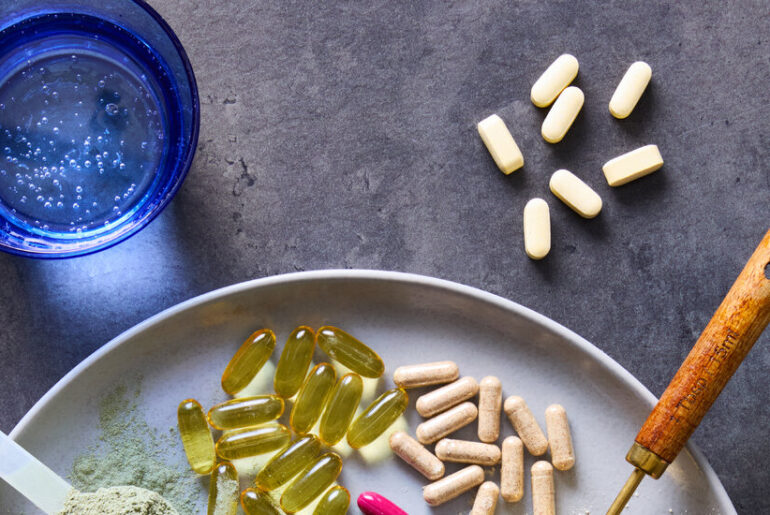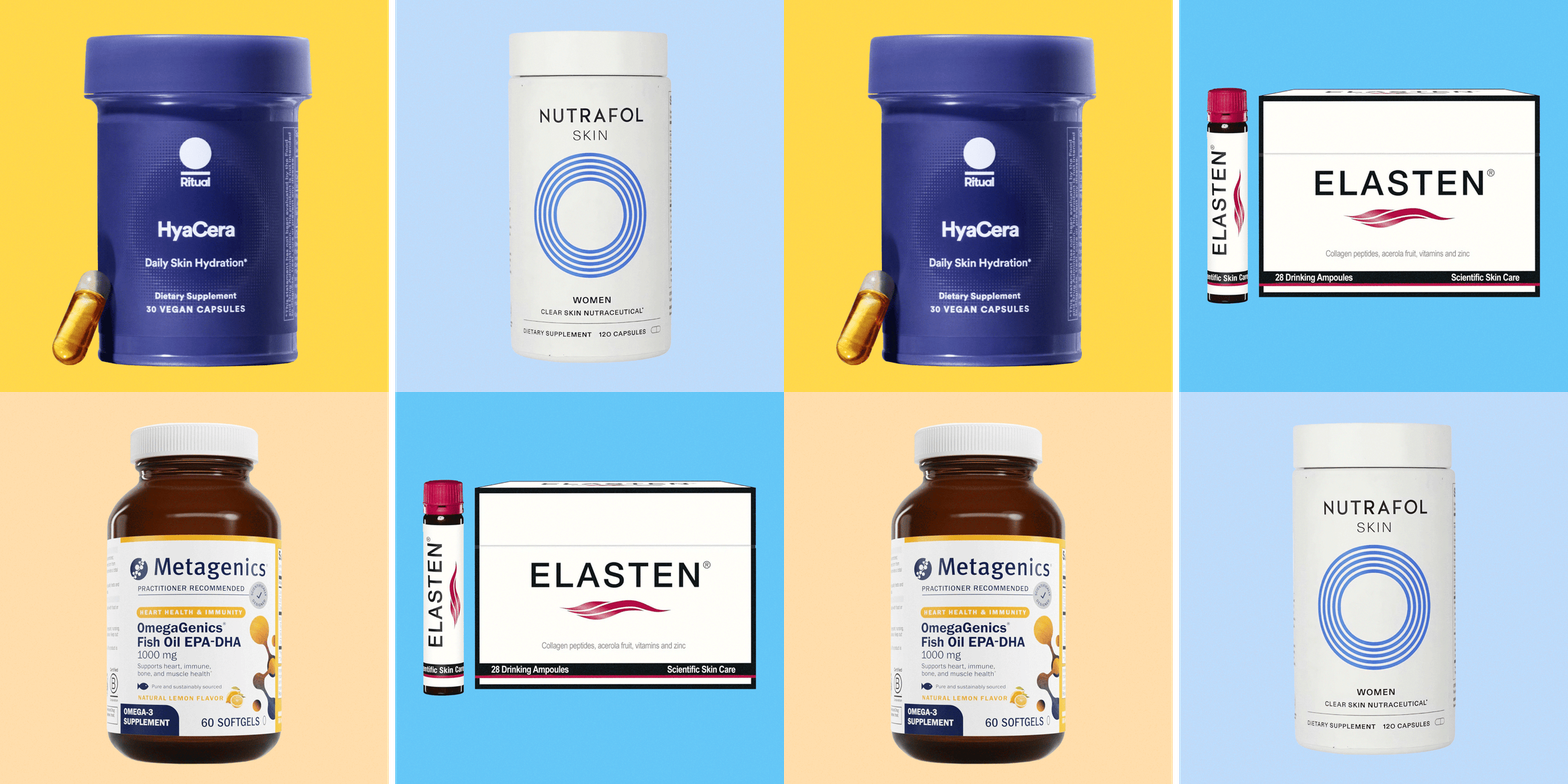
Dermatologists look to where the evidence is solid. “Collagen peptides are among the most studied,” says Engelman. “While these don’t go directly to the skin, they provide amino acids that support the body’s own collagen production and have been shown to modestly improve elasticity, hydration, and wrinkle appearance over time.”
Several other ingredients prove legitimacy for supporting skin under environmental and internal stress. “Antioxidants, including polyphenols, can help combat oxidative stress, which plays a major role in skin aging,” says Engelman. Vitamin C, in particular, helps with collagen production and protection from harmful sun rays and pollution. “Another great ingredient, the plant extract Polypodium leucotomos, is shown to help reduce UV-induced oxidative damage when taken alongside daily sunscreen,” says Boakye. “These ingredients don’t stop aging, but they may help skin age more evenly, recover more efficiently, and maintain its quality over time.”
Fatty acids and the gut-skin connection are also factors in skin longevity. “Omega-3 fatty acids support barrier function, reduce inflammation, and may improve dryness and sensitivity,” says King. “Probiotics can be helpful for certain inflammatory skin conditions through the gut-skin axis.”
Farhang also likes ingestible hyaluronic acid and ceramides for their ability to hydrate the skin and improve barrier function from within, especially as these factors weaken with age. And some nutrients have highly specific targets. “Niacinamide (vitamin B3), has strong clinical data showing reduced rates of non-melanoma skin cancers in high-risk patients by supporting DNA repair and reducing UV-related immune suppression,” says Farhang.