Biohackers like it. Athletes and Joe Rogan do, too. Stanford neuroscientist and podcaster Andrew Huberman says it “sharpens the mind.” On social media, health and wellness influencers explain how they use it for a pre-workout boost or as part of their “stacks.”
Nicotine, the stimulant that makes cigarettes so addictive, is getting a reputational makeover. As smoking rates fall in the U.S., companies and influencers are pushing the purported cognitive and health benefits of indulging in oral nicotine and other products.

How the myth that nicotine causes cancer is hurting public health
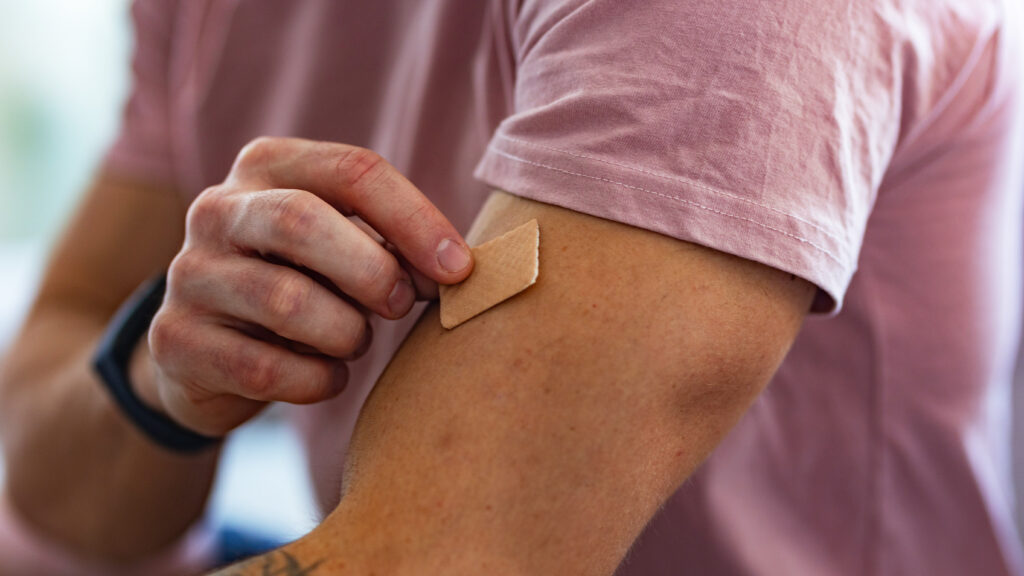
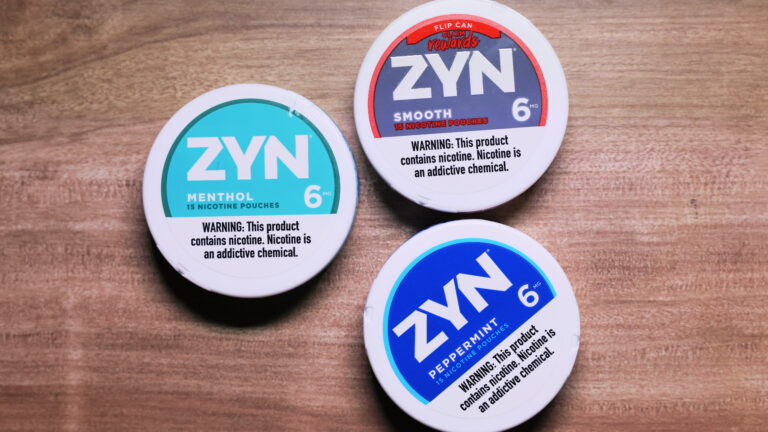
Beyond mega brands like Philip Morris International’s Zyn, a wave of startups with millennial-minimalist packaging now market “clean,” “modern” nicotine pouches aimed at helping people “lock in” and achieve their goals — whether that’s leaping over a Land Rover on a mountain bike or, per the tongue-in-cheek but still bro-y pouch brand Excel, “the relentless pursuit of shareholder value.” Tech companies like Palantir now stock vending machines with nicotine pouches from brands Lucy and Sesh in the hopes of boosting their workers’ productivity. Slate ran a first-person story last year about experimenting with nicotine to treat brain fog. And marketing research firm NielsenIQ recently observed that nicotine patches have gotten a “hot new rebrand,” with growth driven by nonsmokers turning to the products for weight loss and as a “health aide” for symptoms of menopause.
But the nicotine wellness boom is precarious. Some of these products aren’t technically legal in the U.S. To date, the only nicotine pouches authorized for sale by the Food and Drug Administration are Zyn and on!, backed by Altria Group. The others could face legal risk. “The FDA’s compliance actions could include issuing a warning letter to the company, injunction, or initiating a seizure of the illegal products,” the agency told STAT in a statement.
And while health experts widely support the use of research-backed products like nicotine patches and chewing gum for people trying to quit smoking, they worry about nonsmokers — particularly young people — starting down the path of nicotine products. Any health benefits that nicotine may have are frequently overblown or misinterpreted, they say, and outweighed by the problem of addiction.
“I’ve talked to people who consider themselves biohackers,” said Paul Newhouse, a professor of psychiatry and pharmacology at Vanderbilt University who studies nicotine and cognition. “I think for most of us, nicotine’s effects will be marginal at best and negative at worst.”
How nicotine affects our bodies and brains
Newhouse is frequently cited by nicotine evangelists for his findings on the stimulant’s positive effects for people with conditions like Alzheimer’s disease. He’s also consulted with Philip Morris International’s nicotine research program. But he said the idea that nicotine works as a “smart drug” is a misconception.
Nicotine is “very unlikely to help the cognitive function of someone who is functioning at their normal capacity,” he said.
The push to turn Big Food into the new Big Tobacco
Instead, his work suggests that nicotine may sometimes improve concentration, focus, and clarity among people who have certain diseases or disorders that hamper their thinking. Its efficacy even in those situations is not guaranteed: His recent two-year clinical study of people with mild cognitive impairment, the MIND Study, found that nicotine did not slow memory loss compared to placebo. And Newhouse stresses that nicotine actually hurts people’s ability to think clearly if they don’t have that kind of problem to begin with.
Another important factor in interpreting Newhouse’s research: He’s most closely studied the effects of nicotine patches applied to the skin, which he said appear to be safe and unlikely to lead to addiction. For oral nicotine pouches, he said, “I don’t think we know the long-term safety risk.” And he noted that oral nicotine products may be more habit-forming than skin patches.
It’s true that nicotine does not cause lung cancer or the other major diseases associated with smoking cigarettes. (The culprit is combustible tobacco and the carcinogens produced when smoke is inhaled, which is why many harm-reduction advocates also support e-cigarettes as a substitute for cigarettes.) And for those who claim it gives them a much-needed energy boost, it makes sense that they feel an initial rush when nicotine hits their system: Nicotine triggers the release of dopamine and adrenaline.
But Brian King, an epidemiologist and former head of the Center for Tobacco Products at the FDA, noted that those effects are only temporary.
“Over time, the brain’s chemistry recalibrates around the constant presence of nicotine, and so the drug becomes the new normal,” said King, who’s now executive vice president of U.S. programs at the advocacy group Campaign for Tobacco-Free Kids. (Campaign for Tobacco-Free Kids receives funding from Bloomberg Philanthropies, as does STAT. Bloomberg does not have editorial input on STAT’s coverage.)
The rise of nicotine among influencers has a lot to do with its allure as a stimulant that can give people an extra edge while conceivably being framed as “natural.” (They often mention that it’s found in foods like tomatoes and eggplants, which is true, albeit at extremely low levels.) They also frequently try to compare nicotine to caffeine, categorizing it as a “nootropic” and suggesting that both are relatively harmless, natural stimulants. But “nicotine and caffeine are very distinct central nervous system stimulants with fundamentally different safety dependence in physiologic profiles,” King said. “Ultimately it’s not ideal if we have a perpetually nicotine-addicted population.”

STAT Plus: FDA authorizes sale of Zyn nicotine pouches, saying public health benefits outweigh risk
Among the concerns: Nicotine can be a gateway to other substance use, particularly for adolescents. It also poses risks to the cardiovascular system because it constricts blood vessels and increases blood pressure and heart rate. Studies on the particular health effects of oral nicotine pouches, however, are limited; the American Heart Association in 2024 called for more research into those products.
In some ways, the buzz around nicotine as a wellness hack is nothing new. Tobacco companies were funding and promoting research into the cognitive benefits of nicotine as far back as the 1990s, according to Anna Kostygina, a principal research scientist at NORC at the University of Chicago who studies smokeless tobacco marketing.
What’s striking to her is the way influencers are showing off how they integrate nicotine into their supplements and wellness routines, “normalizing” its use. That, Kostygina said, “raises concerns about introducing nonusers and new users to nicotine.”
One of the most high-profile new nicotine startups is Athletic Nicotine, co-founded a few years ago by Jason Winn, a former college quarterback and Ironman competitor who’d previously launched a sports nutrition bar called Bonk Breaker.
Athletic Nicotine, which says it caters to “high intensity, health-conscious individuals,” has won endorsements from people like Rogan and Make America Healthy Again-affiliated journalist Max Lugavere. It sells “low-dose” pouches containing 1.5 milligram and 3 mg of nicotine along with the more standard 6 mg, and promotes its “premium” quality as distinct from typical gas station offerings. The pouches, sold only online, cost $34.95 for a three-pack.
Winn has a lean, tan face and tousled blond hair befitting his California lifestyle. Speaking over Zoom from his office in Los Angeles, he described his usual pouch routine: one in the morning before weight training or a run, another for his first meeting of the day, a third in the afternoon, “when I used to reach for another coffee,” and his last one in the evening while cooking or coaching sports.
“There’s a discipline to it, to keep it low-dose and controlled,” he said.
Winn’s interest in the nicotine business was piqued, he said, when he heard “Huberman start to tiptoe around the benefits” a few years back. He’s careful in how he describes Athletic’s products: “We definitely don’t [see ourselves] as a wellness supplement; we see ourselves more of a tool for performance,” he said. Sales are up 657% year-over-year.
The company has also caught the attention of the FDA, receiving a warning letter last year. Winn said Athletic is working with the agency on its marketing application and is currently in the scientific review phase. “It’s expensive and it’s long,” he said of the process. “We’re in it for the long run.”
Jayme Nabors, the co-founder of Nicotina nicotine energy drinks, told STAT the brand hasn’t had much success so far in communicating with the FDA. “We’re kind of caught in that same gray area” as many nicotine pouches, he said, “hoping the government can give us clear guidance on getting these products fully legal.”
In the meantime, the company is nearly sold out of its first run of about 250,000 cans, which are available online and in stores throughout the Southeast as well as a few other states. A four-pack costs $26 on the vape site MyVPro. The energy drinks contain either 3 mg or 6 mg of nicotine as well as caffeine from yerba mate.
“Everybody’s looking for functional beverages,” Nabors said. “It’s kind of the new hot word everybody’s talking about.” Nicotine is an ingredient that makes his company’s energy drink stand out, he said, and helps people “take advantage of the health benefits of nicotine, give you a little bit of a mood [boost].”
Not all biohackers are interested in nicotine — longevity entrepreneur Bryan Johnson warns against it. But Dave Asprey, another fixture of the movement and the creator of the butter-enriched beverage Bulletproof Coffee and its associated products, has been using it since he first learned about Newhouse’s research on nicotine and Alzheimer’s.
Asprey’s invested with the pouch brand Lucy, co-founded by some of the minds behind the meal-replacement drink Soylent — another favorite among Silicon Valley desk jockeys. (Lucy is also the brand that makes Excel, the pouches aimed at tech and finance workers.) He occasionally throws up a Lucy referral code for his followers when he posts about the benefits of nicotine and earns a commission when he tags the product on YouTube.
When he first started using nicotine, “it was a magic four hours after I did it,” Asprey told STAT via email. “It still gives me incredible focus, clarity, and high-level productivity.”
He warns his followers that nicotine is addictive and aims to limit his own intake to no more than 10 mg a day. He seemed shocked in an interview with Lucy co-founder David Renteln last month when the latter man revealed he sometimes consumed up to three cans (or 45 pouches) in a day.
“Did your brain explode?” Asprey asked, and then: “Are there any negative effects of that kind of dosing?”
“Not that I’m aware of,” Renteln said.
Part of the appeal of nicotine as a health and longevity hack is that it’s edgy and counterintuitive — the same sensibility that makes some wellness influencers and Make America Healthy Again leaders delight in urging people to embrace meat and butter or drink raw milk.
Health secretary Robert F. Kennedy Jr. himself has been spotted popping nicotine pouches. The MAHA-friendly podcast “Culture Apothecary” invited chiropractor and nicotine acolyte Bryan Ardis on last year for an episode with the telling title “Nicotine Is Not the Villain: What Big Pharma Hides From Parents.” Jenny McCarthy, the entertainer now perhaps best known for claiming with no evidence that vaccines cause autism, also touts the benefits of nicotine for health.
King, the former FDA tobacco center chief, noted that the agency is working through a sizable backlog of applications from companies that sell nicotine products. But long wait times aren’t a free pass: “Simply submitting an application does not give a company safe harbor to sell as they please.”
City and state governments may also go after companies for violating their laws. The city of San Francisco, which has banned all flavored tobacco products, reached a $1 million settlement with Lucy last month because online sellers were shipping the product to locals.
The age of self-optimization
Startups tend to be more explicit in engaging with health and wellness, but major brands owned by legacy tobacco companies implicitly draw the same associations, said Robert Jackler, founder of the interdisciplinary research group Stanford Research into the Impact of Tobacco Advertising.
He notes that Velo, the nicotine pouch brand owned by British American Tobacco, is the French word for “bicycle” and connotes the word “velocity” — implying the pouches can give users an energetic rush. Zyn’s advertising imagery features active people hiking, snowboarding, or making to-do lists as an act of self-improvement.
Sometimes the rhetoric is more direct. Philip Morris International chief Stacey Kennedy told Axios last year that nicotine has “certain cognitive benefits,” language that’s repeated on the company’s site, which also says the ingredient may help improve “attention, memory, and fine motor function.”
What RFK Jr.’s milk mustache says about the historic power of dairy in the U.S.
The most recent U.S. survey of youth tobacco use in 2024 showed that about half a million, or 2%, of middle and high school students were using nicotine pouches. But anecdotally, based on social media and his own experiences walking around Stanford’s campus, Jackler thinks they’re “virally popular” among young people, who may be particularly susceptible to the perception that nicotine can help them achieve goals in school and at the gym.
“There’s a lot of chatter on social media by young people that if they take a nicotine pouch or an e-cigarette, that it will give them a buzz and help them to study and may help their performance,” Jackler said.
And in a cultural moment where an obsession with self-optimization has people flocking to buy gray-market Chinese peptides online and the health secretary himself has been spotted squirting what appears to be the synthetic dye methylene blue into a glass of water, it makes sense that nonsmokers of various ages could get interested in experimenting with nicotine — a chemical that may seem reassuringly familiar by comparison.
Journalist Chris Gayomali, who writes the health and wellness newsletter Heavies, is one such example. He was a smoker long ago but hadn’t been a regular user of nicotine in years, having found that Zyn made him light-headed.
But when Athletic Nicotine pitched him on its pouches, he decided to give it a try. “It hit a really sweet spot for me in terms of giving me energy and clearing out the fogginess,” said Gayomali, the sleep-deprived father of a 3-year-old child. He still sometimes uses it before his Muay Thai workouts, which he does five or six days a week. But he’s aware that he’s taking a risk.
“I could definitely see myself getting addicted to them,” he said. “These are a little too good at what they do.”
STAT’s coverage of chronic health issues is supported by a grant from Bloomberg Philanthropies. Our financial supporters are not involved in any decisions about our journalism.