by JENN WOOD
***
A South Carolina circuit court judge has denied ‘Stand Your Ground’ immunity to one of the two defendants in the fatal 2023 shooting of 33-year-old North Carolina insurance adjuster Scott Spivey — ruling from the bench that defendant Charles Weldon Boyd’s testimony lacked credibility and that his conduct prior to the incident undermined his claim of lawful self-defense.
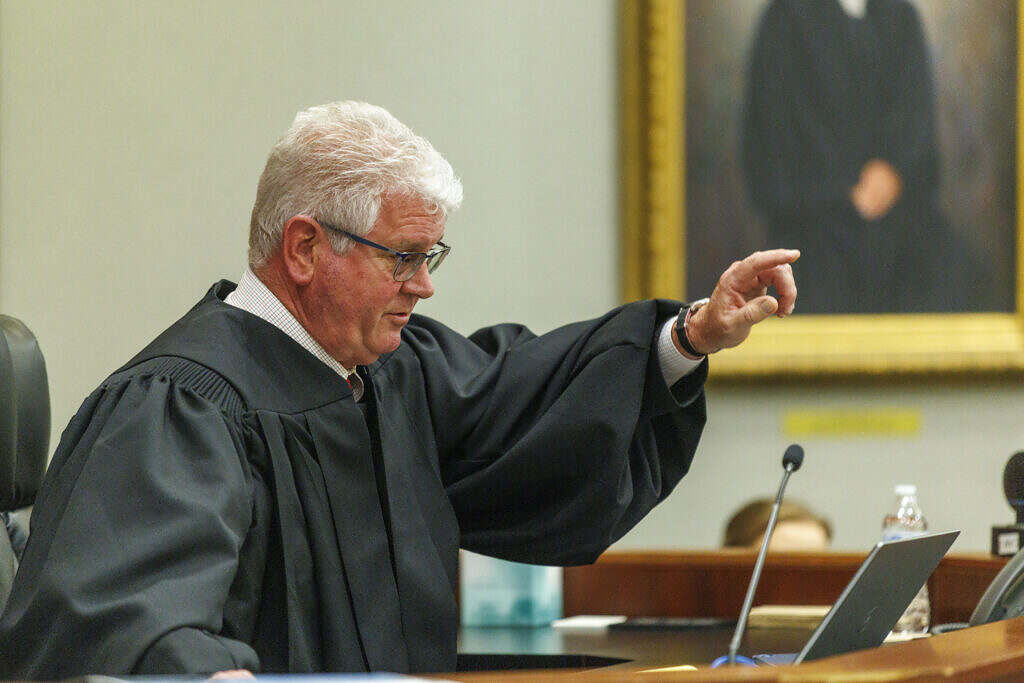
S.C. circuit court judge Eugene C. Griffith, Jr. announced his decision on Friday following four days of testimony in this high-profile civil immunity hearing. The ruling means the wrongful death lawsuit filed by Spivey’s estate will proceed toward trial – at least as it relates to Boyd.
“I really question the credibility of Weldon Boyd,” Griffith said in open court.
The judge cited multiple inconsistencies in Boyd’s testimony, contrasting his account of the events with other witnesses and evidence presented during the hearing (although, as previously reported, the accounts of several key witnesses shifted).
***
CREDIBILITY AT THE CENTER
Under South Carolina’s ‘Protection of Persons and Property Act‘— commonly known as its ‘Stand Your Ground’ law — a defendant seeking immunity must prove by a preponderance of the evidence that he acted in lawful self-defense and was not the aggressor.
In this case, judge Griffith made it clear that Boyd – while not necessarily civilly liable in connection with Spivey’s death – failed to meet that burden.
The court pointed specifically to discrepancies between Boyd’s description of Spivey’s actions outside the vehicle and accounts provided by other witnesses. Griffith noted the accounts were “totally different” and said he found it difficult to reconcile the variations.
The judge also focused heavily on Boyd’s decision to continue following Spivey at high speed after allegedly observing him armed.
“They know… both guys in that truck know that the guy they’re following at a rapid trying to keep up, he’s got a gun,” Griffith said.
While Griffith acknowledged Spivey was “acting like a fool” that day, he emphasized that foolish behavior does not justify matching it with more dangerous conduct.
“Foolish behavior don’t require you to foolishly act yourself,” he said.
The judge referenced testimony indicating speeds exceeding 100 miles per hour during the confrontation and questioned why Boyd would attempt to maintain close proximity to an allegedly armed driver rather than disengage.
***
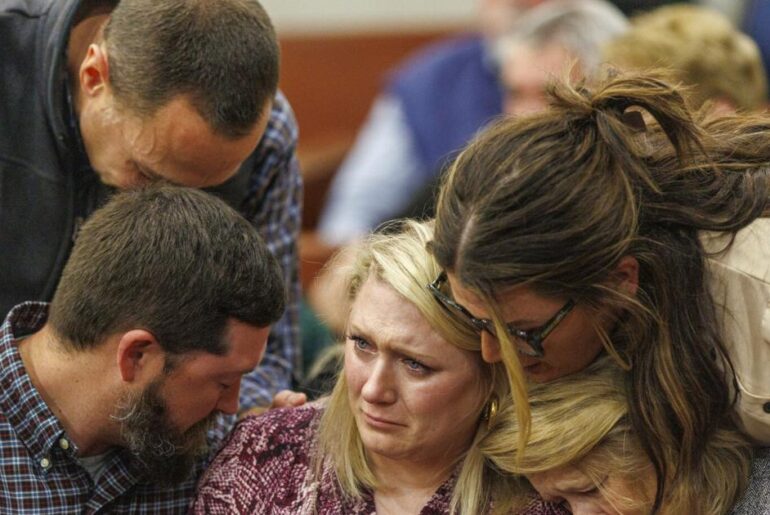
 Jennifer Foley, the sister of Scott Spivey, and Deborah Spivey, his mother, react to the judge’s ruling that immunity would not be granted for Weldon Boyd in the wrongful death lawsuit filed by the family. (James Lee/Pool)
***
Griffith also cited post-shooting phone calls made by Boyd as troubling, suggesting those communications reflected possible efforts to “get a story straight” or ensure that he would be “free and clear of any responsibility.”
While the judge did not make a criminal finding — this was a civil immunity proceeding — the comments indicated he viewed Boyd’s post-incident conduct as relevant to assessing credibility.
In a bench immunity hearing, credibility is often dispositive. Unlike a jury trial, the judge alone weighs witness demeanor, consistency and alignment with other evidence.
In denying Boyd immunity, Griffith concluded he had not shown it was more likely than not that he acted in lawful self-defense.
***
IMMUNITY STILL PENDING FOR WILLIAMS
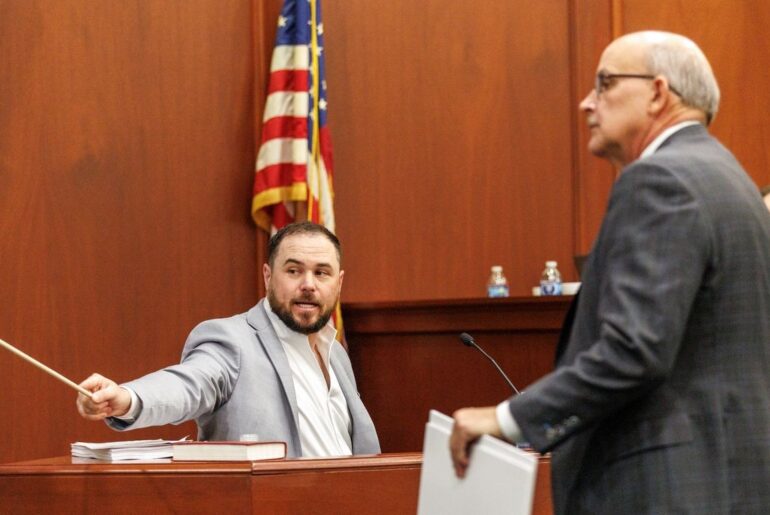
 Defense attorney Morgan Martin begins questioning his client Kenneth “Bradley” Williams during this week’s ‘Stand Your Ground’ hearing in Conway, S.C. (James Lee/Pool)
***
Judge Griffith stopped short of issuing a ruling on Kenneth Bradley Williams, the passenger in Boyd’s truck – indicating his appeal for civil immunity presented a more complicated question.
“He didn’t want to be there,” Griffith said, noting testimony that Williams had urged Boyd to slow down.
However, the judge observed that Williams nonetheless remained in the vehicle as it traveled at high speeds in pursuit of Spivey – and said he would take additional time to study that issue before issuing a decision.
The court also requested proposed orders from counsel regarding both the denial of Boyd’s immunity and the pending question of Williams’ claim.
***
WHAT HAPPENS NEXT
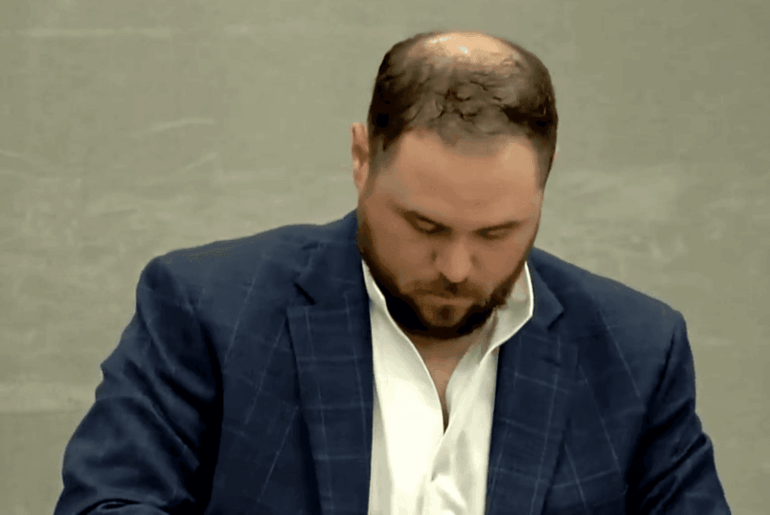
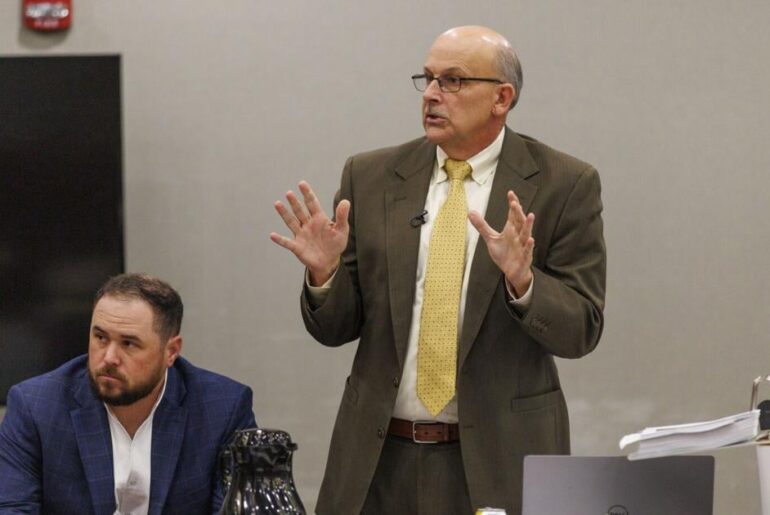
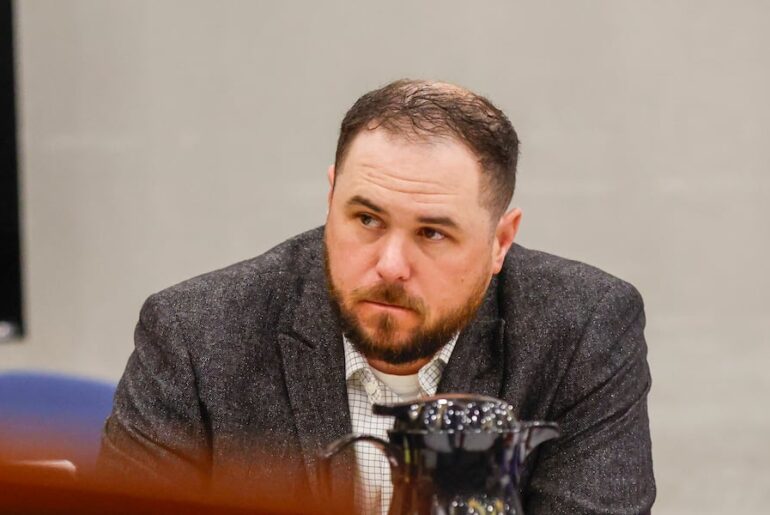
 Plaintiffs’ attorney Mark Tinsley questions a defense expert witness as Weldon Boyd, left, and his attorney Kenneth Moss watch. (James Lee/Pool)
***
The denial of immunity does not determine liability — but it puts an end to Boyd’s attempt to stop the case at the threshold stage.
‘Stand Your Ground’ immunity, if granted, would have barred the wrongful death lawsuit entirely – but Friday’s ruling ensures the case will now proceed through the civil litigation process (at least as far as Boyd is concerned).
That means a jury — not a judge — could ultimately decide whether Boyd’s actions on Camp Swamp Road were justified or not.
For Williams, the question remains open — at least for now.
FITSNews will continue tracking developments as the court issues its written order and rules on Williams’ immunity request.
***
ABOUT THE AUTHOR …
 Jenn Wood (Provided)
As a private investigator turned journalist, Jenn Wood brings a unique skill set to FITSNews as its research director. Known for her meticulous sourcing and victim-centered approach, she helps shape the newsroom’s most complex investigative stories while producing the FITSFiles and Cheer Incorporated podcasts. Jenn lives in South Carolina with her family, where her work continues to spotlight truth, accountability, and justice.
***
WANNA SOUND OFF?
Got something you’d like to say in response to one of our articles? Or an issue you’d like to address proactively? We have an open microphone policy! Submit your letter to the editor (or guest column) via email HERE. Got a tip for a story? CLICK HERE. Got a technical question or a glitch to report? CLICK HERE.