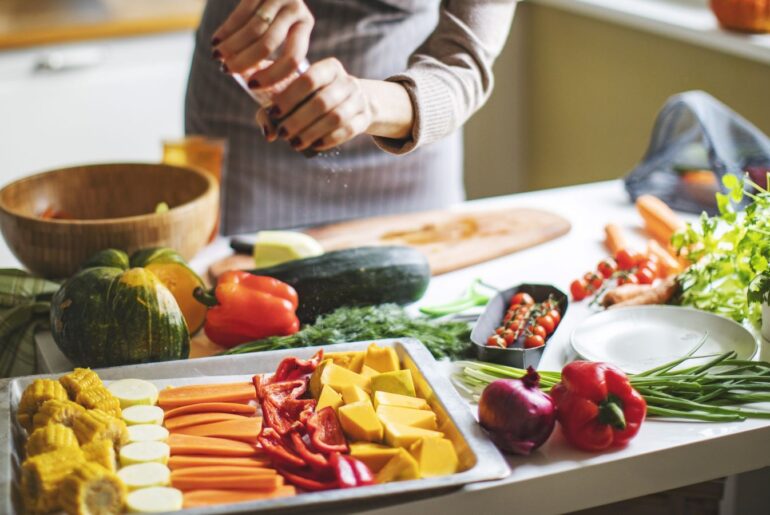
What exactly should a healthy, home-cooked meal include? It’s surprisingly simple. “Just a protein, a vegetable, and a carbohydrate, seasoned well,” says White. Your meal will also include some fat, which is naturally present in some foods or added during cooking for flavor and to prevent sticking in the pan.
None of these meal components is more or less important than the others. The balance ensures that you’re getting the nutrients and energy you need from each meal, that the meal will sustain you for a while, and that your body can break down and absorb all of the nutrients in the food.
Here’s a little more about each of these components.
Protein
The protein on your plate is what the whole meal is typically built around. Proteins are foods like meat, fish, eggs, beans, tofu, and some plant-based meat alternatives. Many other foods contain protein, but when we discuss “putting a protein on your plate,” these are typically what we’re referring to.
Any of these whole food proteins is a great choice, and you may have certain ones you gravitate towards based on your budget, diet, and personal tastes. The important thing is to make sure you have a good source of protein with each meal.
Protein helps you stay full, and it’s extremely important for maintaining muscle mass and for helping your body create new tissues. Protein contains several unique amino acids, and some of the amino acids that the body needs can only come from food. In addition to building or maintaining muscle, protein is crucial for joint, cartilage, and skin health, too.
[3]
[4]
[5]
Most adults need at least 0.8 grams of protein per kilogram of body weight. However, if you’re highly active, trying to build muscle, or trying to lose weight, you may benefit from eating more protein.
[6]
Some of the protein sources that I reach for time and time again for quick, easy, and healthy meals are lean ground beef, boneless skinless chicken thighs, salmon, shrimp, and eggs.CarbohydratesCarbohydrates are foods that your body can easily break down into glucose, or sugar, to use for energy.
[7]
In the context of planning meals, this category typically includes foods like bread, pasta, rice, potatoes, sweet potatoes, oatmeal, grits, and quinoa. Beans are also rich in carbs, even though they’re typically considered a source of protein when meal planning. Fruits, sugary drinks, chips, and sweets are carbs as well.Carbs are often unnecessarily villainized. While you may choose to limit your carb intake if you’re on a low-carb diet like keto, most people benefit from having a source of carbohydrates with each meal. Carbs are an important energy source and can also provide dietary fiber to support digestive health.
[7]
Your best bet for healthy carbs is to stick to whole grains, starchy vegetables (like potatoes and sweet potatoes), and fruits. However, there are several high-protein or high-fiber pastas — usually made with beans — available that can be a great alternative to regular pasta.
Some of my favorite better-for-you carbs are hand-cut potato wedges, sourdough bread, and rice.
VegetablesNon-starchy vegetables, or vegetables that are low in carbs, add color and volume to your plate. They are a rich source of fiber, which can help with digestive health. Fiber also binds with cholesterol in food and can help with your cholesterol levels.
[8]
Another plus for vegetables is that they’re full of vitamins, minerals, and phytochemicals. This is why you’ve probably heard the advice to “eat the rainbow,” because different colored fruits and vegetables contain different antioxidants with a wide array of potential health benefits.
[9]
Vegetables are also ideal for people who are trying to lose weight. You can eat a large quantity of most vegetables for very few calories, which can help you feel full while still keeping your calories within a weight-loss range.
These vegetables include lettuces, greens, tomatoes, carrots, peppers, zucchini, cucumber, yellow squash, green beans, broccoli, cauliflower, mushrooms, and more. My family loves roasted broccoli, roasted Brussels sprouts, salads, sauteed mushrooms, and tomatoes in all forms.
FatLike carbs, fat has been unfairly villainized in the past as a primary contributor to heart disease. However, we’ve learned that the health effects of fat are a bit more nuanced than that.
[10]
Dietary fat plays several important roles in both health and cooking.Eating foods with fat helps boost the absorption of essential vitamins and good-for-you antioxidants. Fat also adds lots of flavor to dishes and helps prevent sticking during cooking.
[11]
[12]
Fat is found naturally in many foods, including meats, nuts, fish, eggs, beans, avocados, and coconut.
There’s no need to avoid fat completely, but there’s also no need to go overboard with it. The staple fats at my house are avocado oil, extra-virgin olive oil, butter, and coconut oil. I especially love avocado oil for sauteing or roasting vegetables, and olive oil is great for making homemade salad dressings.