A new UAB and Alabama CEAL initiative aims to improve health by empowering neighborhoods.The University of Alabama at Birmingham Comprehensive Healthy Living Research Center is leading a National Institutes of Health‑funded study to test whether “food is medicine” and “exercise is medicine” concepts — traditionally used in clinical settings — can be adapted for community‑wide use to address chronic disease risk factors such as poor nutrition and physical inactivity.
The initiative, called Alabama Community Engagement Alliance Prescriptions for Community Health, works with community members and organizations to develop neighborhood‑specific “community prescriptions” that promote healthy eating and physical activity. A Community Health Working Group identifies health priorities, collaborates with experts to design interventions and helps implement them across local neighborhoods.
“We are taking a model that has been used mainly in clinics on a one-on-one basis, and adapting it at the community level,” said Mona Fouad, M.D., director of the Comprehensive Healthy Living Research Center and lead principal investigator for Alabama CEAL. “The idea is, if we really want to move the needle when it comes to improving health, we need to work with the whole community, and not just individuals within the community.”
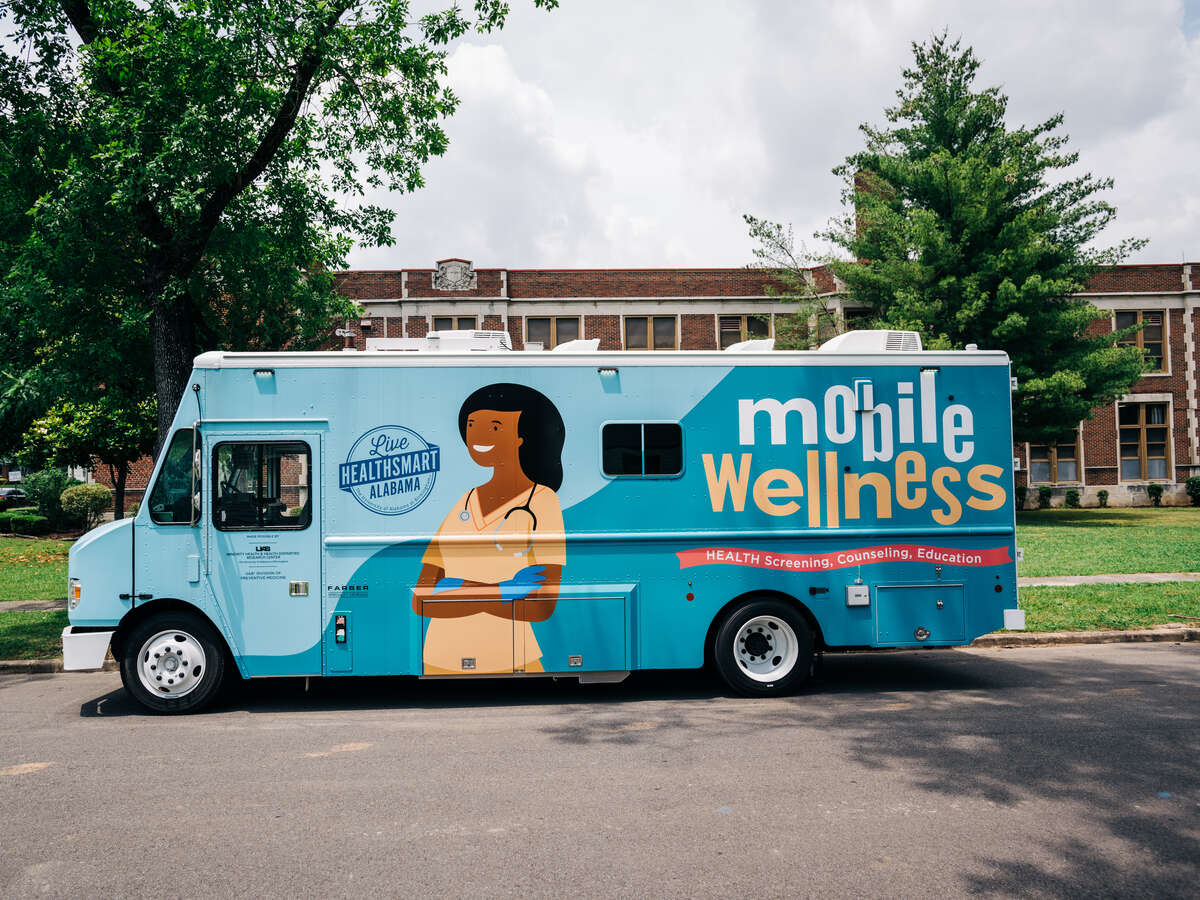
Community health coaches, many of whom live in the neighborhoods they serve, lead wellness events, exercise sessions, cooking demonstrations and other activities. Participants receive personalized guidance tied to resources such as the Live HealthSmart Alabama Mobile Market food services and Mobile Wellness programs.
“A key aspect of the program is the community members who work to design and implement these prescriptions,” said Lori Bateman, Ph.D., associate professor in the UAB Division of General Internal Medicine and Population Science and a multiple principal investigator on the study. “They know what is likely to work in their communities, and they make sure the project stays true to that.”
The study will follow participating communities for two years to measure changes in health behaviors and evaluate program effectiveness. Early feedback indicates strong community engagement and positive momentum.
The project currently operates in the Birmingham neighborhoods of Kingston, Bush Hills, East Lake and Titusville, with plans to expand to additional Birmingham neighborhoods and the cities of Selma and Camden.