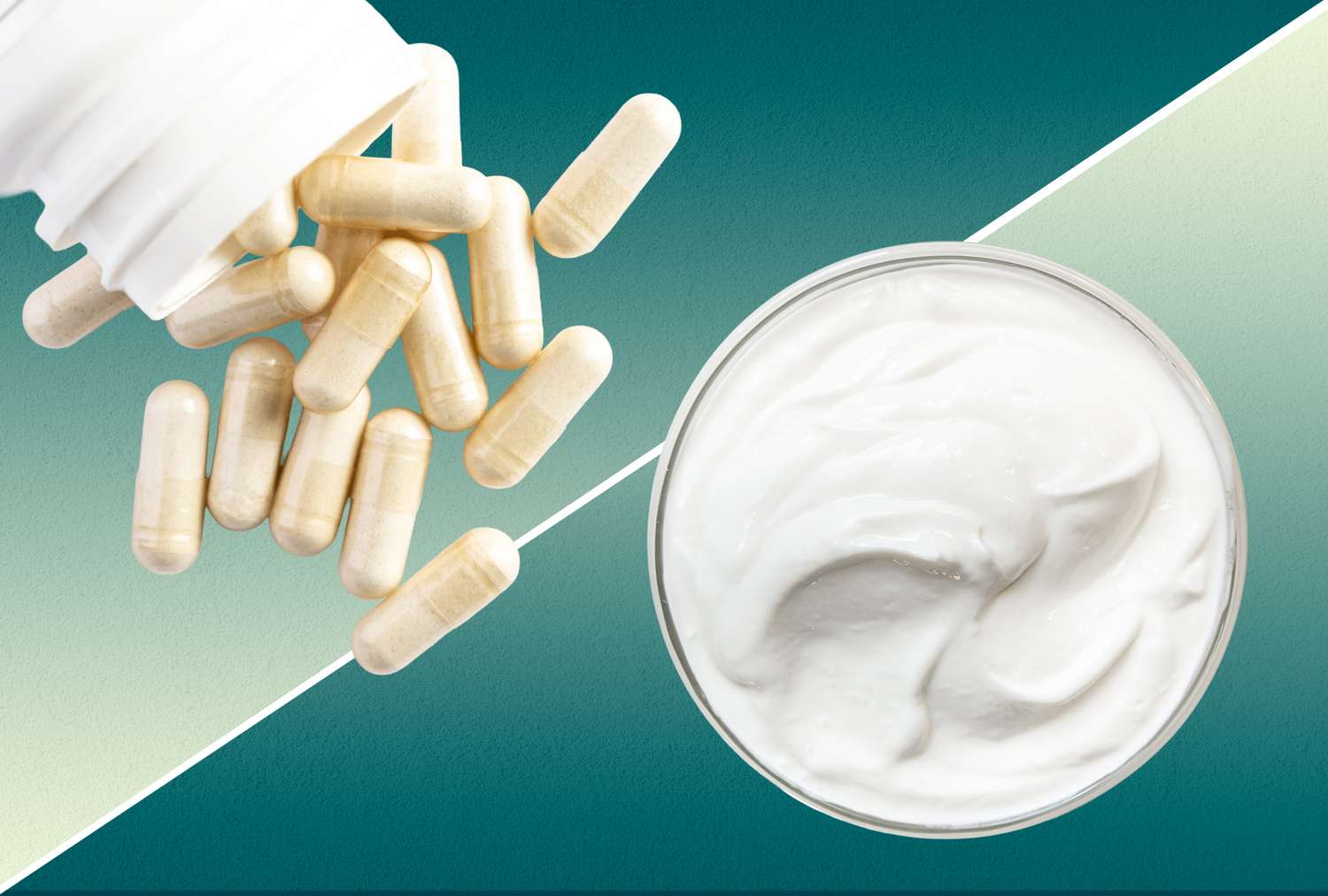
Yogurt offers probiotics plus protein and other nutrients for daily gut support.Probiotic supplements may be beneficial for those with IBS or other clinical conditions.Eating a diet that includes fiber-rich and fermented foods is also important for gut health.
Whether you’re scrolling TikTok or perusing the aisles at your local grocery, you have likely seen numerous products emphasizing their gut-healthy benefits. Probiotic supplements have become especially popular in the gut health space, coming in a variety of forms from pills to juice shots. But does that mean you should start stockpiling supplements? Or can you achieve a balanced gut simply by eating more probiotic-rich foods, like yogurt?
Whether yogurt or a probiotic supplement is best for your gut depends on your individual needs. “When I think about gut health, I think about the absence of conditions and a diet rich in whole foods and fiber that feeds the natural balance of bacteria in the intestine,” says gastroenterologist Omeed Alipour, MD. In other words, gut health starts with foundational habits—like diet and lifestyle—rather than a singular food or product. To help you decide if yogurt or probiotic supplements are right for you, we spoke with gut health experts to get the facts.
How Yogurt Affects Gut Health
Yogurt supports gut health thanks to its live and active cultures, which contain beneficial bacteria called probiotics. In fact, all products labeled as “yogurt” in the United States must contain two specific bacteria strains: Lactobacillus bulgaricus and Streptococcus thermophilus. “These microbes help maintain a healthy balance of gut bacteria and support digestion,” says Melissa Mroz-Planells, DCN, RDN. Yogurt offers nutritional value beyond probiotics. “Foods like yogurt provide probiotics along with protein, vitamins, and minerals, and are typically intended for regular, long-term dietary support rather than targeted therapy,” Mroz-Planells explains.
But not all yogurts are gut-health heroes. Mroz-Planells points out that both protein content and probiotic strains can vary between types of yogurt. She recommends choosing yogurts with live and active cultures and as little added sugar as possible. “Plain Greek or skyr-style yogurts often provide more protein and fewer added sugars, making them strong options,” she adds.
How Probiotic Supplements Affect Gut Health
Probiotic supplements also contain beneficial bacterial strains, but typically in much more concentrated doses than yogurt. The number of probiotics in a particular food or supplement is measured in CFUs, or colony-forming units, and many probiotic supplements contain 1 to 10 billion CFUs per dose, with some containing 50 billion CFUs or more. However, that doesn’t necessarily mean they are more effective or beneficial than yogurt. “A major misconception is that all probiotics work the same way,” Mroz-Planells explains. “Different strains have different effects, and more isn’t always better. Probiotics are not a cure-all, and their benefits depend on the specific strain, dose, and individual health status.”
Alipour agrees and notes that a big issue with probiotic supplements is the lack of regulation. “Third-party testing has been known to find that ingredients listed in supplements are not always correct or may be found in lower or higher concentrations than indicated by the manufacturer,” he explains. “That being said, there are reputable, commonly recommended probiotics for those who might benefit.” When shopping for probiotic supplements, it is best to look for options that are third-party tested. You can also talk to your doctor to see if they recommend a specific probiotic for your needs.
Yogurt vs. Probiotic Supplements: Which Is Better?
When it comes down to whether yogurt or probiotic supplements are better for your gut health, both experts say there isn’t a universal answer. “Everyone has their own unique gut microbiome, and therein lies the problem with suggesting a one-size-fits-all solution,” says Alipour. However, both experts point out that for folks who are generally healthy and aren’t dealing with ongoing digestive issues, yogurt is better for maintaining a healthy gut microbiome. That said, these products could be useful for certain populations. For example, those who are taking antibiotics may benefit from a probiotic supplement. Research suggests these supplements may reduce the disruption that antibiotics can cause in the gut microbiome by preserving microbial diversity. For those with irritable bowel syndrome, probiotic supplementation may provide relief from symptoms and improve stool consistency. Be sure to talk to your doctor before incorporating these supplements into your routine.
Other Foods That Support Gut Health
Fermented foods. Kimchi, sauerkraut, kefir and miso are all fermented food products, and they can have a positive impact on the gut microbiome. Studies have shown that fermented foods might have a positive influence on the diversity of our gut microbiome.
Chia seeds. Chia seeds are very rich in fiber, boasting nearly 10 grams of dietary fiber per 1-ounce serving. Much of this fiber is in the form of soluble fiber, which supports gut health because it is fermented by beneficial bacteria in the colon.
Whole grains. Similar to chia seeds, whole grains like quinoa and brown rice are also packed with dietary fiber. These foods are strong sources of insoluble fiber, which helps promote regularity and support digestive health.
Cruciferous vegetables. Cruciferous veggies like broccoli and Brussels sprouts are rich in both soluble and insoluble fiber, which is an essential nutrient for a healthy gut. Some studies show that cruciferous vegetables also contain certain bioactive compounds that could help prevent colorectal cancer.
Our Expert Take
If you’re a healthy individual who doesn’t have a clinical need for a probiotic supplement, incorporating yogurt into your routine is likely the best option for consuming probiotics. However, experts recommend talking with your doctor before adding a supplement into your daily routine. If you are taking or recently finished a course of antibiotics, a probiotic supplement could help with side effects like diarrhea or nausea.