There are a lot of reasons you may choose one supplement over another, including a company’s reputation and good reviews. But claims about what a certain supplement can do for your health will inevitably sway your decision, too.
You’re in good company if you take a supplement: About 75% of Americans do. The reasons for this can be mixed, from having an actual deficiency in a nutrient to trying to treat symptoms that keep coming up.
But despite how popular supplements are, the industry isn’t tightly regulated by the Food and Drug Administration (FDA). As a result, it’s hard to know if what the label states is actually in the bottle, points out Dr. Kelly Johnson-Arbor, MD, a toxicologist at MedStar Health. “There is no perfect way to determine whether a dietary supplement is safe or OK to use,” she says.
The claims surrounding supplements are more closely regulated, with the FDA providing clear guidelines on what companies can and can’t say that their product provides. Even then, some companies will be deliberately vague or even outright misleading with their claims. This can be an understandably tricky thing to navigate.
“Unlike prescription medications, dietary supplements are not required to undergo FDA approval before being advertised or sold in the United States,” Dr. Johnson-Arbor continues. “Because dietary supplements are not evaluated or regulated as stringently as prescription drugs, dietary supplement manufacturers are required to state on their label that the product is not intended to diagnose, cure, treat, or prevent any disease. However, not every supplement manufacturer is compliant with this requirement.”
The FDA can send warning letters to companies that don’t follow this requirement, but this usually only happens after the supplement is up for sale, Dr. Johnson-Arbor says.
It’s always a good idea to talk to your healthcare provider before starting a new supplement, especially if you’re taking medication. Together, you can review the supplement and how it may impact your health. But doctors are especially wary of certain supplement label claims, and with good reason. Here’s what they want you to steer clear of.
🩺SIGN UP for Parade’s health newsletter with expert-approved tips, healthy eats, exercises, news & more to help you stay healthy & feel your best self💊
3 Supplement Claims Doctors Want People To Be Wary Of
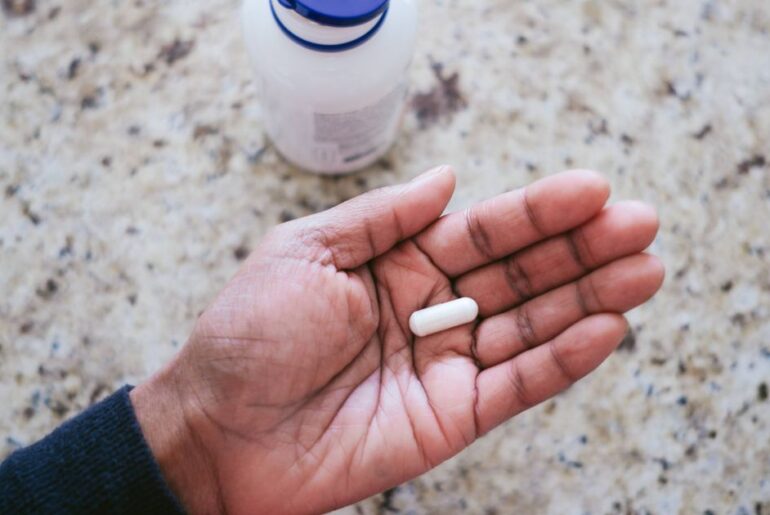
d3sign/Getty Images
(d3sign/Getty Images)
There are a few supplement label claims doctors want you to avoid: “detoxes,” “guaranteed results” and “cures.”
“If it is a supplement, it cannot claim to diagnose, treat or cure,” points out Dr. Jamie Alan, Ph.D., an associate professor of pharmacology and toxicology at Michigan State University. But it’s hard not to get sucked into claims like that.
“People judge a book by its cover,” saysDr. Daniel Chandler, MD, primary care physician at Tufts Medical Center. “If it says it will cure XYZ, it’s easy to believe it.” Chandler notes that these supplements will often have small print on the label that hedges these claims, but that can be easy to miss. “It’s false advertising,” he says.
Why Are These Claims Concerning?
There are a few reasons why doctors are wary of any supplement that makes these claims. Here’s a breakdown.
1. “Detoxes”
Medical detoxification, through a process like chelation therapy, can help remove certain toxins from the body, Johnson-Arbor says. (Chelation therapy is often used in emergency situations like heavy metal poisoning.) “But there is no known detox method that is effective in removing all poisonous compounds, including parasites, pollutants, and synthetic chemicals, from the human body,” she explains.
There’s also this to consider, per Dr. Alan: “Generally, most people do not need to ‘detox.’ Our liver functions as a detoxifying organ, and most times, it does not need extra help.”
Detoxes can also be harmful to your health. “More often than not, they’re laxatives or diuretics,” Dr. Chandler says. “The risk of dehydration increases and that can cause significant harm.”
2. “Guaranteed results”
This is “factually inaccurate,” Dr. Chandler says. “Even as a doctor who prescribes medicines, I can’t guarantee results.”
Dr. Johnson-Arbor agrees. “There are few things in life that are guaranteed,” she says. “While ‘guaranteed results’ is eye-catching and desirable for many people, the reality of ‘individual results may vary’ is often listed in the fine print.”
She also stresses that everyone is impacted differently by treatments, saying, “What works for one person may be ineffective or even potentially toxic for someone else.”
3. “Cures”
This word is a direct violation of FDA rules, which should be a major red flag, Dr. Johnson-Arbor says, explaining, “Dietary supplement manufacturers are not allowed to claim that their products cure disease. Supplement labels that claim to cure or prevent diseases should be read with extreme caution, as that information is likely to be inaccurate.”
How Doctors Decide if a Supplement Is Safe
Again, it’s best to talk to a healthcare provider if you’re interested in taking a supplement. To help you decide if an option is right for you, your doctor will consider the risks and benefits and review other things you’re taking to make sure there are no interactions, Dr. Alan says.
“Doctors will often recommend that patients take supplements that are third-party tested,” Dr. Johnson-Arbor adds.
Choosing the right supplement can be difficult. Ultimately, the safest way to go is to work with your doctor—and to steer clear of supplements with bold claims.
Up Next:
Sources:
Dr. Jamie Alan, Ph.D., an associate professor of pharmacology and toxicology at Michigan State University.
This story was originally published by Parade on Feb 22, 2026, where it first appeared in the Health & Wellness section. Add Parade as a Preferred Source by clicking here.