In grassroots football, most coaches can run a high press, sort the subs bench and untangle a training bib in under three seconds – but ask them what their under-12s should eat before kick-off and suddenly everyone’s looking at their shoelaces.
New research shows almost one in three grassroots football coaches (31%) say they’d welcome training to offer nutritional advice to their players, with many admitting they simply don’t have the confidence or know-how to guide kids and parents on food.
So, step forward Jill Scott – World Cup legend, Euros winner, Queen of the Jungle and now, apparently, head of the peas and carrots department.
From changing rooms to chopping boards
This week in Stockport, the former England midfielder swapped the centre circle for the club kitchen at Reddish North End FC, as she teamed up with M&S Food on a new drive to bring elite-level nutrition lessons into grassroots football clubs.
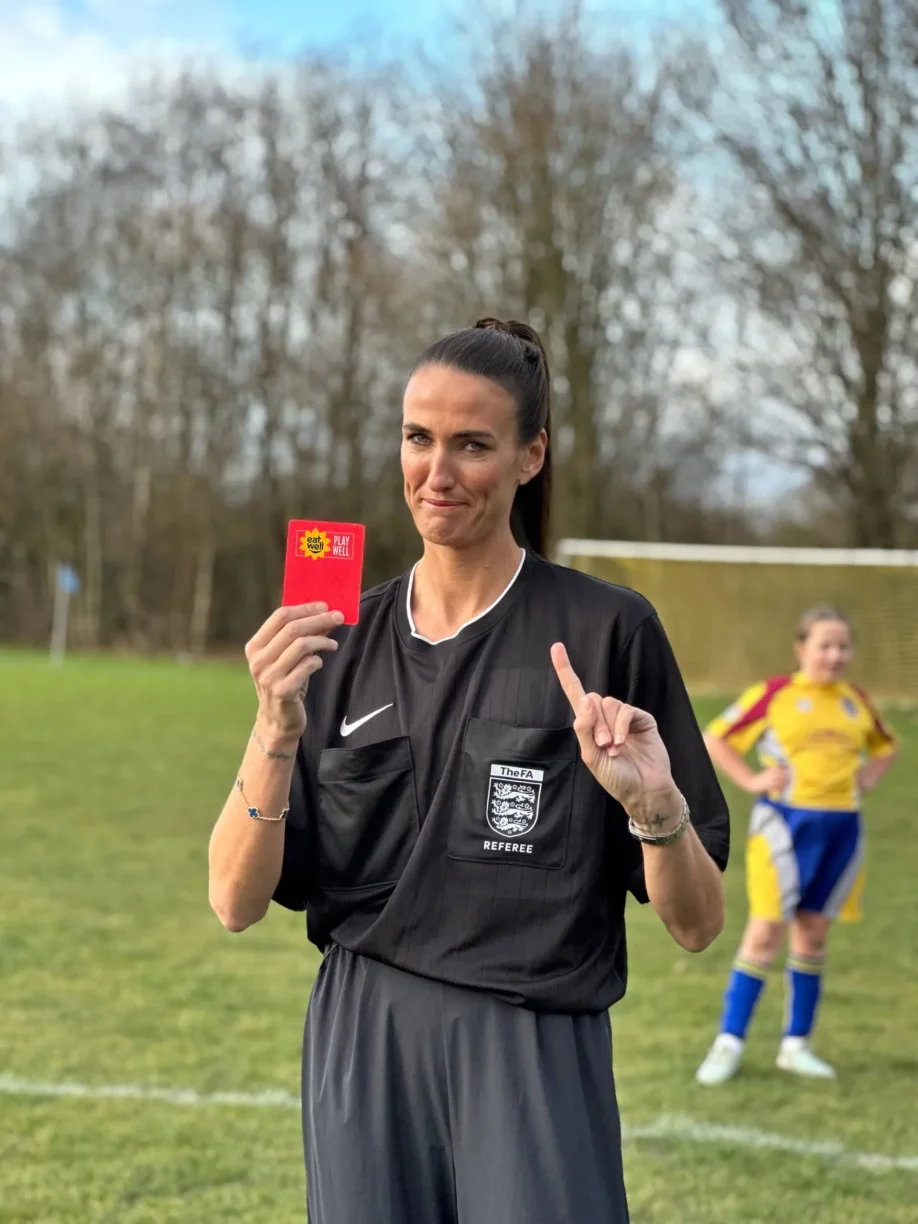
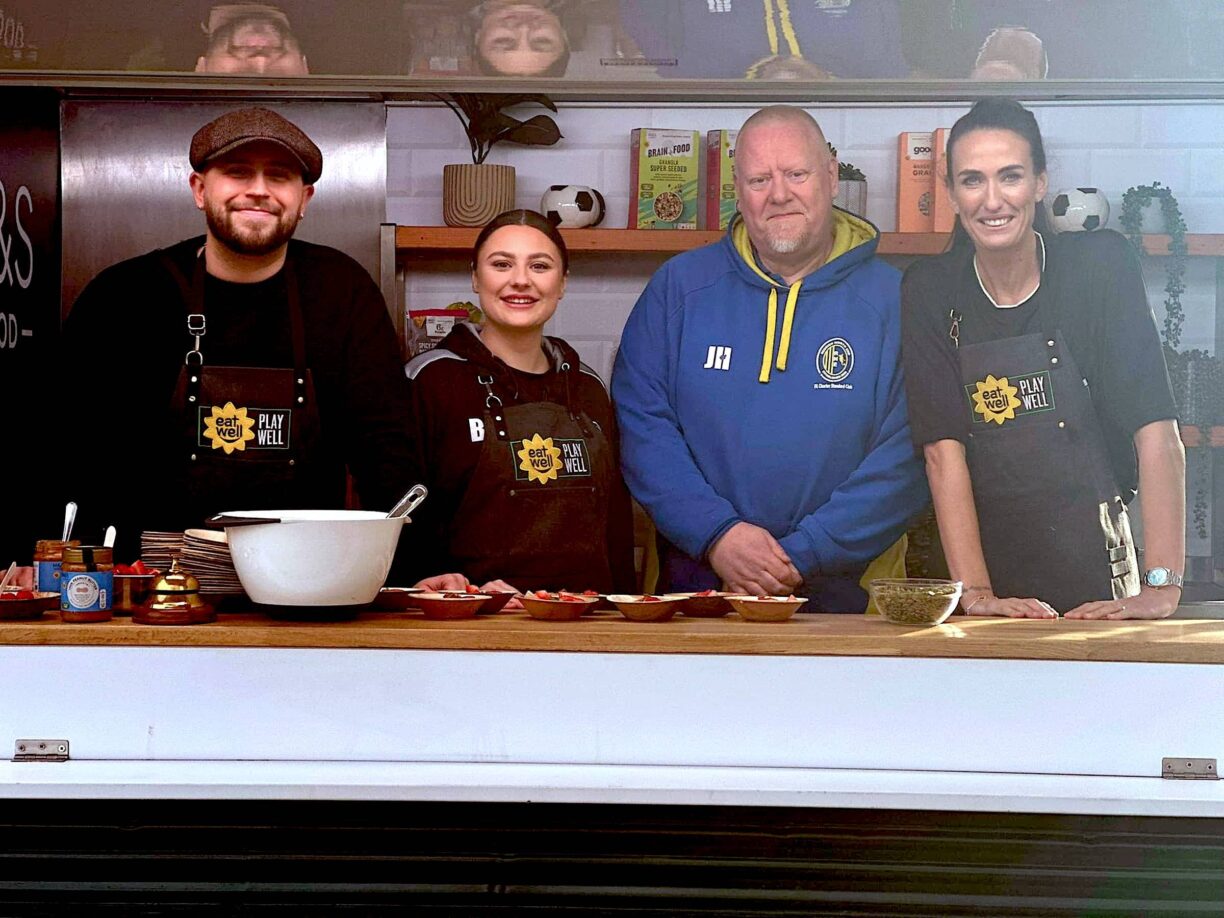
Scott rolled up her sleeves alongside volunteers and M&S Executive Chef Russell Goad, cooking a healthy post-training meal and talking players through why performance starts long before the first whistle. She refereed a kick-about, posed for photos and turned the clubhouse into a pop-up classroom on how to Eat Well and Play Well.
For Scott, this isn’t just another ambassador gig – it’s going back to where it all began.
“Grassroots football was a massive part of my life,” said Scott. “If we can help children at grassroots level, we can help them to become better players.”
It’s a simple line, but it cuts right into the reality of grassroots football in 2026: coaches are expected to be tacticians, teachers, counsellors, logistics managers and now, apparently, nutritionists – without ever being given the playbook.
The nutrition gap on the touchline
The nationwide survey of more than 200 grassroots coaches across the UK makes for slightly uncomfortable reading. Almost a third (31%) openly say they’d welcome training to provide nutritional advice. Only around one in seven (15%) feel comfortable offering guidance to parents or players when asked.
In other words, on many touchlines up and down the country, the person responsible for shaping young players’ footballing habits doesn’t feel equipped to shape their eating habits – even though the two are hopelessly intertwined.
Scott knows exactly what it looks like when the nutrition part is taken seriously.
“I started playing football for England in 2006, when I made my debut, we didn’t have a lot of nutritional advice back then, it was very basic” said Scott. “The nutritional advice that came into the game later, especially when I think about Sarina (Weigman) and all the advice we got, what we should and shouldn’t be eating, it’s what kept me playing for England for the last few years of my career.”
If the right food can help squeeze a few extra years out of an international career at the very top, imagine what it could do for a 13-year-old still figuring out the difference between a pre-match meal and a half-time Haribo raid.
Why what kids eat matters as much as how they play
Grassroots football is not just about who wins the under-10s league on a muddy pitch in January. According to The FA’s Social Return on Investment Report 2024, the grassroots game is worth £15.9bn to society each year. That includes a staggering £3.2bn in healthcare savings thanks to football’s impact on the nation’s health and wellbeing.
Football-playing children alone deliver £110m in health savings for the NHS, with 200,000 fewer cases of obesity and 60,000 fewer cases of anxiety and depression tied to kids lacing up their boots instead of sitting on the sofa.
If football is already saving the NHS a fortune just by getting children moving, there’s a pretty obvious next step: make sure the food wrapped around those training sessions isn’t undermining all that good work. That’s where properly trained grassroots football coaches could be the missing link – trusted voices who can nudge families towards better choices without turning every snack into a lecture.
Right now, though, most coaches are improvising. They can tell a player to track runners, but not necessarily to swap the energy drink for a bottle of water and a sandwich that isn’t mostly air and sugar.
At Reddish North End FC, they already understand that what happens off the pitch shapes everything on it.
Reddish North End FC Chairman, John Hargreaves, said: “We’re incredibly grateful for the support we receive from the Reddish community, the help we get is what allows up to carry on the work we do here. The help from M&S, from kit sponsorship to food vouchers, has been absolutely fantastic and will help the club for many years to come.”
In the kitchen, club cook Bethany Dugdale has been quietly running her own version of player care long before anyone stuck the word “performance” in front of “nutrition”.
Club cook, Bethany Dugdale, said: “The facilities have been here for 20 years to help children get into football, get them off the streets and keep them fit and healthy. Reddish is all one community, we’re there for each other. Reddish North End FC is a big part of Reddish, with lots of children involved and over 1,200 people signed up.”
Over 1,200 people signed up, one kitchen and a budget that would make a Premier League club dietitian pass out – this is where most of the country actually plays its football. This is where the nutrition conversation has to happen.
M&S and Jill Scott want to put a playbook in coaches’ hands
The “Eat Well Play Well Grassroots Edition” campaign is designed to do exactly that: give clubs, volunteers and coaches simple tools they can actually use on a damp Tuesday night.
M&S Food is developing practical, affordable recipe ideas for clubs, helping coaches and volunteers introduce healthier approaches on a weekly basis, with recipes available to download from the M&S website. The content series will showcase stories from selected clubs across the UK and will run on M&S social channels including YouTube, Facebook and Instagram every week.
The idea is not to turn every grassroots football coach into a fully accredited sports nutritionist overnight, but to give them a clear, realistic starting point: what to serve after matches, how to talk to parents about snacks, and how to explain that “fuel” isn’t just a word pundits shout on TV.
For coaches who already feel stretched to snapping point, having a ready-made bank of recipes and easy guidance is a lot more appealing than trying to decode a scientific paper on carbohydrate loading between washing the bibs and filling out the team sheet.
A call to action for the game’s real first responders
Grassroots football coaches are often the first adults outside of family that kids really want to impress. If that person quietly normalises eating well around football – not perfectly, just better – it can ripple out through families and communities in a way no government leaflet ever will.
Scott has lived both sides of the game: the cold council pitch and the packed Wembley. She’s seen what happens when nutrition is treated as an afterthought, and what happens when it’s taken seriously. Her message is pretty clear: if it kept her in an England shirt, it can keep today’s kids in love with the game – and feeling better in their own bodies.
If the grassroots game is already worth billions to society, the least we can do is feed it properly. That starts with giving coaches the knowledge and confidence they’re asking for – so the next generation of players doesn’t have to choose between a love of football and a lifetime of bad habits picked up at the burger van.
To find out more about the “Eat Well Play Well Grassroots Edition” campaign and to access recipes and resources for your club, visit: https://www.marksandspencer.com/food/content/eat-well-grassroots-edition