The college experience is often thought of as a time of connection, but some students can feel lonely as they search for community in a new environment.
At the Student Wellness Center, a peer-led program recognizes that students often turn first to one another when they are struggling. Through wellness check-ins, trained peer wellness coaches provide one-on-one conversations that help fellow students navigate stress, isolation, relationship challenges, and questions of belonging in a supportive, nonclinical setting.
“As students themselves, peer well-being coaches are in a unique position to truly understand what other students are going through. They can recognize, normalize, and validate feelings of loneliness or not belonging in a way that feels genuine and relatable,” says LB White, director of well-being initiatives.
Two peer wellness coaches, Charlie Betts ’27 and Raghav Kanzaria ’27, bring that same sense of care into their own work and lives. They talked with Dartmouth News about how their friendship has shaped the way they support others and how coaching peers through loneliness has, in turn, deepened their understanding of connection, belonging, and what it means to show up for one another.
How would you describe the role of a peer wellness coach to someone who’s never worked with one before?
Raghav Kanzaria: One misconception people have is that we’re kind of like student therapists, and that’s not really accurate. What we’re here to do is support you as you make your own choices. We’re not here to give you explicit advice, but to serve as another resource within the Student Wellness Center resources. If students don’t feel comfortable talking to staff, they can talk to somebody who feels like more of a peer. We listen to what they’re experiencing and help them build the confidence to guide themselves to their own answers.
What kinds of concerns do students most often bring to you related to friendship, belonging, or feeling connected on campus?
Charlie Betts ’27: Being here, we’re so far away from home, and for many people it’s their first time being away for this long. Especially for first- or second-year students, they haven’t always found the group where they feel heard or feel like they fit in yet. I’ve definitely felt that and hear it from other students. Outside of academic pressure, this is one of the main themes we work with as peer coaches. And often it’s about figuring out how to navigate both at the same time.
When a student feels lonely or disconnected, where do you usually begin?
CB: I ask them a lot of probing questions, like when do they feel most connected here? Then encourage them to build on that by spending more time doing those things. It’s very individual. When you do things you genuinely enjoy, you’re more likely to meet others who enjoy those same things, too.
What do you say to a student who may feel like they don’t have time to put themselves out there socially?
RK: This is especially common during the first year. Many students we see are first- or second-year students, and this is an academically rigorous institution. We encourage them to identify one or two interests or hobbies they care about and make time for those. Dartmouth has a wide range of clubs that support almost any interest. For me in my first year, that was the triathlon team, and for Charlie, it was board games and other clubs. Those spaces are a great place to start meeting people.
Quote
If someone suggests a new activity, say yes. You might end up really liking it.
Attribution
Raghav Kanzaria ’27, peer wellness coach
How do you help students reframe friendship when it doesn’t look like what they expected college friendships to be?
CB: In our peer support role, I don’t have any ambition to change their idea of what friendship should look like. I want to help them understand their current situation and, if they express a desire to change or improve it, explore that together. I see myself primarily as a listener and supporter, helping them define friendship on their own terms.
RK: It can also be challenging for students who have been here a few years. We’re experiencing that right now—a couple of our friends are off-campus this winter, which is an adjustment socially. I try to reframe that as an opportunity to make new connections. I’m reconnecting with people I haven’t talked to since freshman fall, while also celebrating the opportunities my friends have while they’re away.
CB: Sophomore summer was my favorite term here, but a consequence of that is making friends you’ll miss in later terms. Being part of a larger organization—like Greek life, the Dartmouth Outing Club, or other campus groups—can help provide continuity.
RK: And clubs in general are really welcoming. If you’re looking for friends, chances are other people are, too.
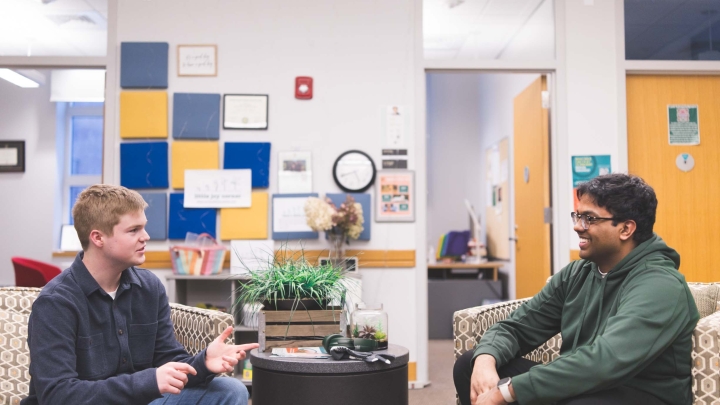
Peer wellness coaches Raghav Kanzaria ’27, left, and Charlie Betts ’27 support fellow students looking for connection. “I see myself primarily as a listener and supporter, helping them define friendship on their own terms,” Betts says. (Photo by Katie Lenhart)
You’re not only peer wellness coaches—you’re also friends. How did your friendship begin?
RK: We’re both pre-med and take a lot of classes together. We started getting dinner with people from our chemistry class, then breakfast after our early classes, and it just grew from there.
CB: We had similar academic interests and overlapping friend groups. We play sports, watch football together, and just hang out. Having shared academic goals helped us relate.
RK: And through each other, we also discovered new interests, like skiing and racquet sports, so that’s been great too.
What does healthy friendship look like to you right now?
CB: A healthy friendship is built on mutual respect and shared interests—something you can do or talk about together.
RK: Also, the ability to spend a lot of time together without pressure. We go to class, study, hang out without feeling forced.
What advice do you often give students who feel like “everyone else already has their people?”
CB: Putting yourself out there. It’s basic advice, but it’s the only way. Don’t assume you’re weird or different—just do whatever interests you.
RK: I agree with that. Neither of us are naturally extroverted, so the first couple of months of trying something new can feel uncomfortable. But it pays dividends down the road. No matter what you enjoy, there is a place for you here.
CB: And also try your best to be easygoing. You’re not doing something wrong— just learn to laugh at yourself.
RK: Yes, and try to be flexible. If someone suggests a new activity, say yes. You might end up really liking it.
What’s one thing you would say to people who are feeling lonely or that they haven’t found their place yet?
CB: Be patient. There are people who are in the same boat as you, even if it doesn’t look like it from the outside.
RK: And don’t be afraid to reach out—including to us. We’re here for exactly these conversations, and we’re happy to talk.
Students can schedule wellness check-ins with any peer coach or staff provider at the Student Wellness Center website.