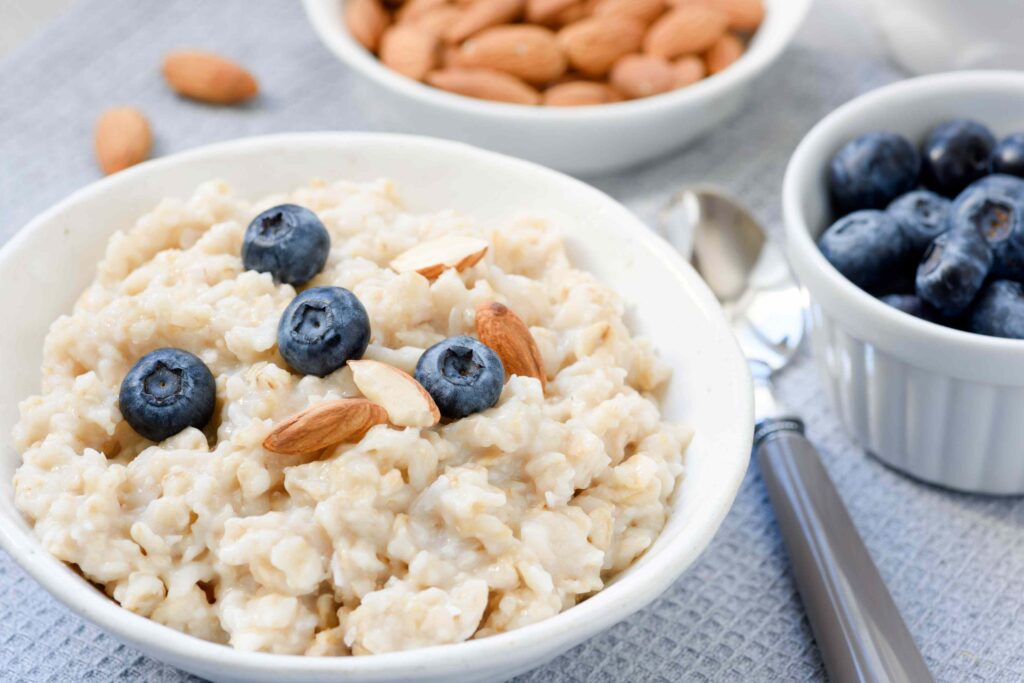
Oatmeal is a hearty, whole-grain food that can benefit your health in many ways. However, a few common oatmeal habits can derail your health goals.
A typical serving of oatmeal is equal to about 1 cup of cooked oats. Eating this amount provides you with 152 calories, 5.3 grams of protein, 27 grams of carbohydrate, and 4 grams of dietary fiber, as well as B vitamins and several minerals.
However, many people eat more than one serving at a time. This can quickly increase your calorie intake, leaving little room for other nutritious items like eggs, fresh fruit, or nuts.
Types of oats include steel-cut oats, old-fashioned rolled oats, and instant or quick-cooking oats. If you are trying to lose weight or manage your blood sugar, choose oats that have undergone less processing:
Less-processed oats, such as oat groats or steel-cut oats, retain most of the original grain and its nutrients. Your body also digests these oats more slowly, which can help support steady blood sugar levels.
Instant oats are still considered a whole grain, but they are more processed, have slightly less protein and fiber, and are digested more quickly. Studies show instant oats can raise blood sugar more quickly than rolled oats. Some instant oat packets also have added sugar, which can affect overall nutrition.
The U.S. Department of Health and Human Services developed the “Healthy People 2030” program, which aims to reduce sugar intake. They recommend that only 11.5% of your calories should come from added sugars.
These oatmeal add-ins are added sugar that contribute to that daily goal:
Sugar
Brown sugar
Maple syrup
Honey
Chocolate chips
Sweetened coconut flakes
Sweetened nondairy milk
Sweetened nut butters
Instead, try improving the taste of your oatmeal naturally with fresh fruit or add cinnamon.
Whether you are making your oatmeal in the microwave, on the stovetop, or in a rice cooker, you need to make sure you use the right liquid-to-oats ratio. If you do not pay attention to this detail you could end up with oats that eat like glue, or those that are too watered down:
Stovetop: You will need one part oats to two parts liquid, or 1/2 cup of rolled oats and 1 cup of liquid.Microwave: Start with a one-to-one ratio, or 1/2 cup of rolled oats and 1/2 cup of liquid. You can always add more liquid to get the texture you want.
Although it is fine to make your oats with water, but if you add milk to your oats, you will get a heartier, more nutrient-rich bowl of oats:
Many milk varieties, including cow’s milk, soy milk, and almond milk, provide additional protein and important nutrients.You can use Greek yogurt to make overnight oats and add important vitamins and minerals to your breakfast.
While eating oatmeal is a nutritious way to add whole grains to your diet, it is still important to pair it with a protein, a fruit or vegetable, and a healthy fat.
This helps make your meal more complete and may also help slow digestion and keep your blood sugar more stable. It can even benefit your muscle growth and strength goals.
Try pairing your oatmeal with one or two hard-boiled eggs. You can also add peanut butter, nut butter, or nuts to your oatmeal to boost its protein content.
If you want a tasty bowl of oatmeal with rich, nutty, toasty flavors, add a pinch of salt before cooking. Salt acts as a flavor enhancer, bringing out any of the spices or flavorings you have added, like cinnamon, nutmeg, or vanilla. It can also keep you from adding too much sugar in an effort to improve the taste.
Overall, the role of salt in oatmeal is to balance and enhance flavors, prevent blandness, and deepen flavor profiles.