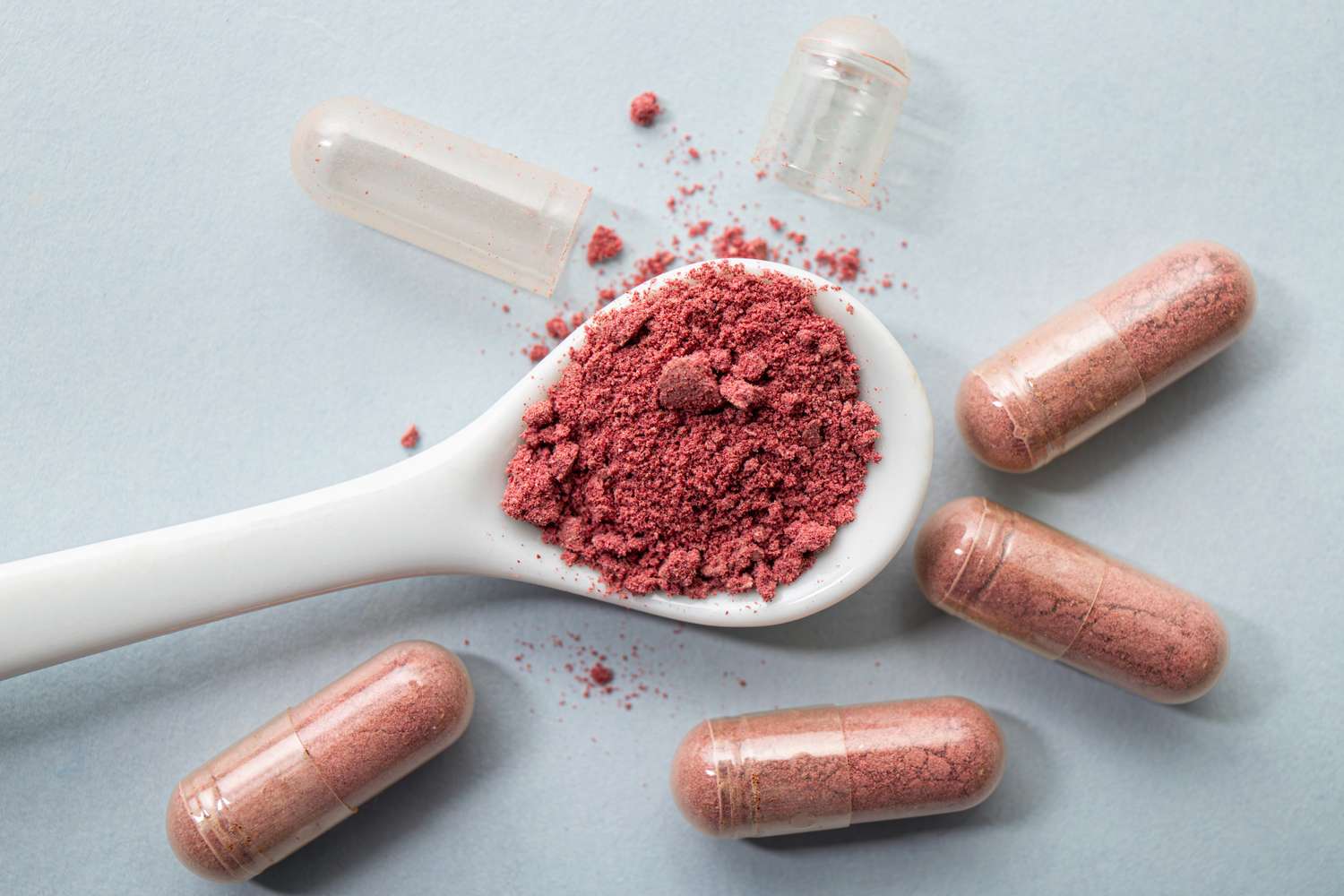
Cranberry products, including cranberry extracts and supplements, are commonly used to help prevent urinary tract infections (UTIs) and reduce inflammation. However, taking too much can lead to side effects.
1. Digestive Upset
Oral cranberry products, like cranberry pills, are generally well-tolerated without side effects. However, taking high doses can cause side effects such as diarrhea, abdominal discomfort, and nausea.
Take precautions when giving cranberry juice to children, as it can cause severe gastrointestinal problems.
2. Kidney Stones
Kidney stones can be a side effect of taking cranberry pills. Cranberry juice and other formulations are rich in calcium oxalate. Increased consumption can significantly raise oxalate levels, increasing the risk of oxalate stones in the kidneys.
According to studies, cranberry juice has a minimal effect on oxalate levels in healthy populations. However, overall, the relative risk is increased in people with a kidney stone.
If you have a history of kidney stones, ask your healthcare provider before taking cranberry products.
3. Drug Interaction Side Effects
Cranberry pills contain certain constituents that can affect the metabolism or mechanism of action of other drugs. It is better to avoid taking cranberry extract products with certain medications to avoid interactions.
Interaction With Omeprazole
Consuming 250 milliliters (mL) of cranberry juice in combination therapy with omeprazole, amoxicillin, and clarithromycin can increase the rate of Helicobacter pylori (a bacteria that infects the stomach) eradication.
Studies also suggest that drinking cranberry juice with omeprazole may reduce omeprazole’s efficacy, as cranberry juice significantly lowers gastric pH (the acidity in your stomach) for one hour. It can decrease how well omeprazole works.
Regular consumption of cranberry juice should be avoided by people using long-term treatment with omeprazole and other proton pump inhibitors (PPIs) as well. Consult a healthcare provider when taking cranberry pills during treatment with a PPI.
Interaction With Warfarin
Jantoven (warfarin) is widely used as an anticoagulant (blood thinner), which helps prevent blood clots. However, to do this, blood thinners slow the time it takes blood to clot, which can increase bleeding risks.
Many drugs and dietary supplements, including cranberry, can also cause fluctuations in how long it takes the blood to clot, potentially leading to bleeding complications.
Taking cranberry juice and warfarin together can result in an interaction, potentially increasing the anticoagulant effects (slowed blood clotting) of warfarin. Taking warfarin and cranberry pills together requires careful INR monitoring.
Small amounts of juice are not expected to cause such an interaction, but people using warfarin should avoid taking large doses of cranberry pills.
Interaction With Salicylic Acid
Cranberry pills naturally contain salicylic acid. Salicylic acid is a naturally occurring anti-inflammatory compound structurally similar to aspirin.
Regular consumption of cranberry juice may increase salicylic acid absorption and concentration in the blood. Cranberry pills can cause side effects in people allergic or sensitive to salicylates and aspirin. Use caution when taking these drugs with cranberry supplements.
What Are Cranberry Pills Used For?
At present, cranberry products are mostly promoted for their effectiveness in UTIs. They may help prevent symptomatic UTIs in some women. However, it is not recommended as a treatment for existing UTIs in any population.
There is limited scientific research available regarding the therapeutic efficacy of cranberry products. More research is required to establish their effect.
Cranberry products contain proanthocyanidins (PACs), a natural antioxidant. It prevents E. coli (a bacterium that causes 80% of UTIs) from sticking to the bladder wall, helping prevent UTIs.
Cranberries have been used for decades. In 2020, the Food and Drug Administration (FDA) approved the health claim that 500 milligrams per day of cranberry pills, capsules, or supplements or 8 ounces/day of cranberry juice may help improve symptoms of UTIs in women.
The claims do not include other conventional foods or food products such as dried cranberries or cranberry sauce.
Verywell Health uses only high-quality sources, including peer-reviewed studies, to support the facts within our articles. Read our editorial process to learn more about how we fact-check and keep our content accurate, reliable, and trustworthy.
Cranberry. In: LiverTox: Clinical and Research Information on Drug-Induced Liver Injury. National Institute of Diabetes and Digestive and Kidney Diseases; 2012. Accessed January 30, 2026.
National Center for Complementary and Integrative Health. Cranberry.
Gamage KN, Jamnadass E, Sulaiman SK, et al. The role of fluid intake in the prevention of kidney stone disease: A systematic review over the last two decades. Turkish Journal of Urology. 2020;46(Suppl 1):S92. doi:10.5152/tud.2020.20155
Siener R. Nutrition and kidney stone disease. Nutrients. 2021;13(6):1917. doi:10.3390/nu13061917
Wiesner A, Zwolińska-Wcisło M, Paśko P. Effect of food and dosing regimen on safety and efficacy of proton pump inhibitors therapy—a literature review. International Journal of Environmental Research and Public Health. 2021;18(7):3527. doi:10.3390/ijerph18073527
National Institute of Health and Care Exellence. Cranberry drug monograph (interactions).
Aston JL, Lodolce AE, Shapiro NL. Interaction between warfarin and cranberry juice. Pharmacotherapy. 2006;26(9):1314-1319. doi:10.1592/phco.26.9.1314
Duthie GG, Kyle JAM, Jenkinson AM, et al. Increased salicylate concentrations in urine of human volunteers after consumption of cranberry juice. J Agric Food Chem. 2005;53(8):2897-2900. doi:10.1021/jf040393b
Cochrane. Cranberries for preventing urinary tract infections.
US Food and Drug Administration. FDA Announces Qualified Health Claim for Certain Cranberry Products and Urinary Tract Infections.

Ayesha Gulzar is a clinical pharmacist interested in medical research, pharmacy practice, and medication therapy management. Dr. Gulzar has been working in medical communications, writing medical and clinical research for patients and health professionals in the United Kingdom.
Thanks for your feedback!
What is your feedback?
Helpful
Report an Error
Other