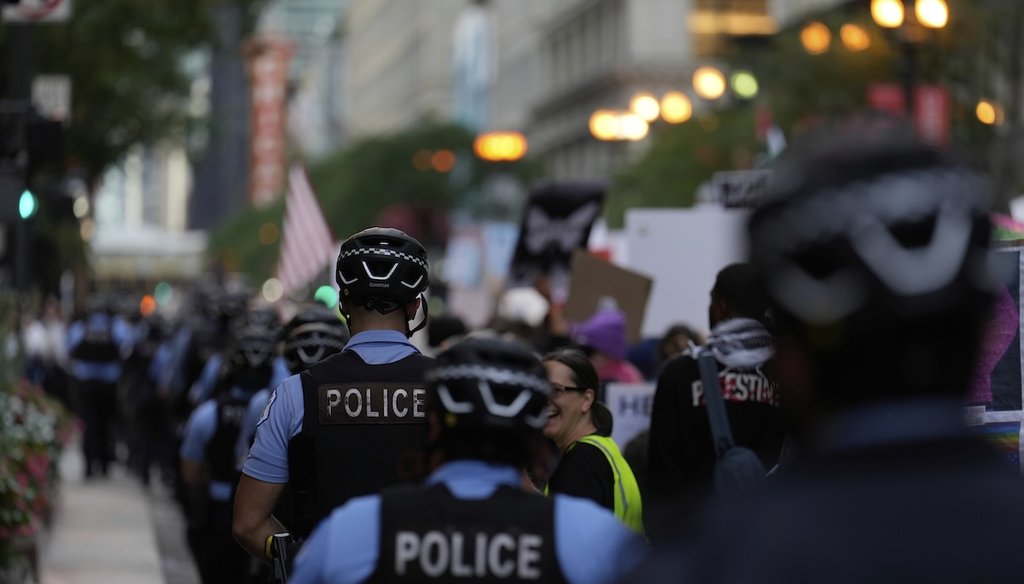
During his 2024 presidential campaign, Donald Trump promised to increase liability protections for police officers.
Once in office, Trump issued an April executive order directing the attorney general to provide legal support for law enforcement officers facing expenses and liabilities for their actions while performing official duties. This included “the use of private-sector pro bono assistance.”
The legal doctrine of “qualified immunity” protects police officers and other government officials from being held liable for actions performed in the course of their duties, but it’s not all-encompassing. Although members of Congress have filed legislation both expanding and ending qualified immunity, none of the legislation has made it far during Trump’s second term.
“The president does not have authority to make changes to qualified immunity on his own; this would take an act of Congress or changes in how the judicial branch interprets the standards for rejecting or granting qualified immunity claims,” University of St. Thomas School of Law professor Rachel Moran told PolitiFact in an email.
Before the executive order, the Trump administration struck deals with nine private law firms to provide a collective $940 million in pro bono assistance. It’s unclear how much of this has been used in cases involving law enforcement officers; the White House did not respond to our question about that.
A 2014 study found that police officers are nearly always indemnified, meaning that, in almost all cases, governments paid for settlements and judgments in lawsuits against law enforcement officers for civil rights violations. Police unions also provide legal services to members accused of wrongdoing.
When asked for comment, a Justice Department spokesperson said the agency supports officers by cutting red tape and going after wasteful spending.
Republicans are expected to file a crime bill in 2026 in response to Trump’s 2025 call to enhance protections for police officers.
“I’m also asking for a new crime bill getting tough on repeat offenders while enhancing protections for America’s police officers so they can do their jobs without fear of their lives being totally destroyed,” he said in his March 2025 address to Congress.
In broader actions related to police accountability, the Trump administration:
Announced that it is ending consent decrees — agreements that hold jurisdictions accountable for reform under federal oversight — for multiple police departments. Judges have the final say in ending these agreements.
Eliminated the Biden administration’s police misconduct database, which kept track of officers with disciplinary records.
Trump promised to increase liability protections for police officers, but no legislation has passed to expand immunity for law enforcement officers. We’ll keep watching, but for now we rate this promise Stalled.