Bell peppers do it all — slice them into salads, roast them on the grill or stuff them with beans and rice. Crunchy, colorful and packed with nutrients, these versatile veggies may be some of the most underrated foods in your fridge.
Advertisement
Cleveland Clinic is a non-profit academic medical center. Advertising on our site helps support our mission. We do not endorse non-Cleveland Clinic products or services. Policy
Registered dietitian Lara Whitson, RD, LD, explains what makes bell peppers worth adding to your grocery list — and your plate.
Nutritional value of bell peppers
Bell peppers (also called capsicums) are nutrient-dense. They’re low in calories, high in vitamins and minerals, and contain almost no fat.
One cup of chopped, raw red bell pepper provides:
39 calories9 grams of carbohydrates3 grams of fiber1.5 grams of protein6 milligrams of sodium6 grams of sugar
Bell peppers also offer plenty of vitamins and minerals:
191 milligrams of vitamin C (212% of the daily value or DV)234 micrograms of vitamin A (26% DV)0.43 milligrams of vitamin B6 (25% DV)69 micrograms of folate (vitamin B9) (17% DV)2.4 milligrams of vitamin E (12% DV)
Nutrition varies slightly by color, but all bell peppers are low in calories and rich in vitamins and antioxidants.
Bell pepper health benefits
The vitamins, minerals and plant compounds in bell peppers add up to meaningful health benefits. Research shows bell peppers may:
1. Help prevent cancer
Bell peppers contain beta-cryptoxanthin, which your body converts into vitamin A. This compound may help lower the risk of certain cancers, including bladder, lung and colon cancer.
“Beta-cryptoxanthin helps protect your cells from damage that could lead to cancer,” says Whitson. “And people who eat a variety of fruits and vegetables tend to have a lower risk overall.”
2. Protect brain health
Some bell peppers — particularly red varieties — contain anthocyanins, pigments that give them their deep color. These natural compounds may help slow memory loss and cognitive decline as we age.
“There’s no magic food to prevent dementia, but anthocyanins are linked to better brain health,” clarifies Whitson.
3. Improve digestion and colon health
Most people don’t get enough fiber — and that can lead to digestive issues like constipation. Most adults should aim for 25 to 38 grams of fiber a day. A high-fiber diet has many benefits, including making stool softer and easier to pass.
“Bell peppers offer fiber without many calories, making them an easy way to boost your intake,” says Whitson.
Fiber may help lower your risk of colon cancer, too.
The many ways to use bell peppers
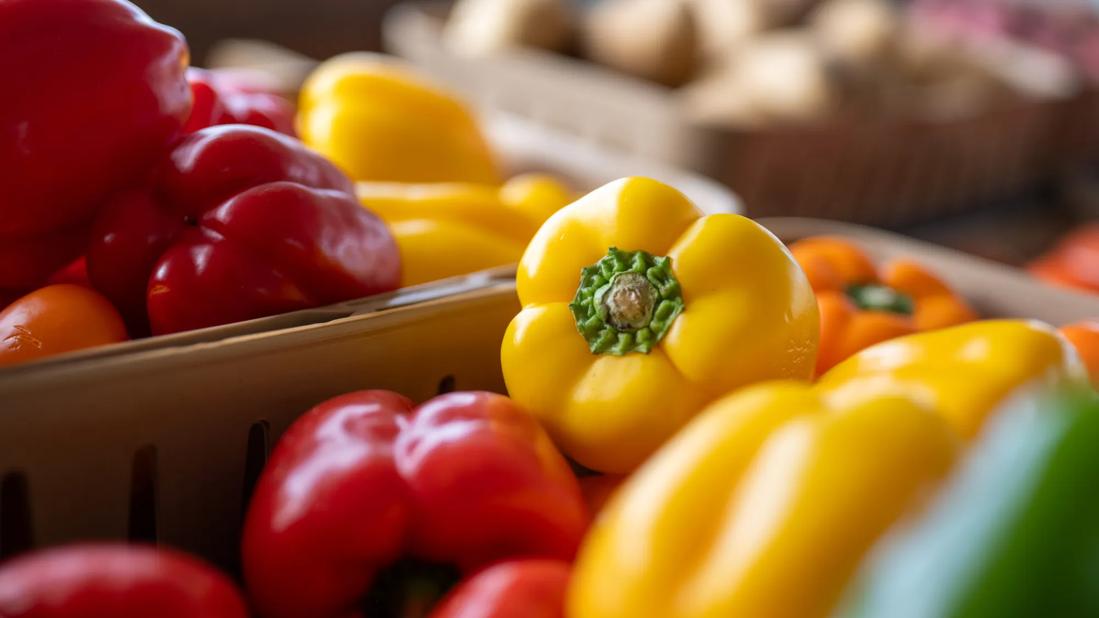
Bell peppers are technically a fruit — a type of berry — but you’re more likely to find them in a stir-fry than a dessert. Their flavor depends on their color:
Red peppers are the sweetest because they ripen the longest.Green peppers are picked early and have a more bitter taste.Yellow and orange peppers fall somewhere in between.
Despite the name, bell peppers aren’t spicy.
“They’re the only type of pepper without capsaicin, the compound that gives chili peppers their heat,” says Whitson.
Their crisp, mildly sweet flavor makes them incredibly versatile. Use them in:
Pastas: Roast red peppers and add them to cream-based sauces or stir into macaroni and cheese.Salads: Add color and crunch with slivers of raw bell peppers or whip up a fresh salsa.Sandwiches: Layer roasted peppers into grilled cheese or deli sandwiches.Snacks: Dip raw slices in hummus or blend them into a roasted red pepper hummus.Soups: Dice and sauté peppers before adding them to veggie soups or stews.What color bell pepper is the healthiest?
Each color of bell pepper has a slightly different nutrition profile:
Red peppers are highest in beta-carotene.Orange peppers have the most lutein and zeaxanthin, which support eye health.Yellow peppers are especially rich in vitamin C.
“Aim for a rainbow on your plate,” says Whitson. Not a fan of red peppers? Try red cabbage, beets or other colorful fruits and vegetables. The more variety you eat, the more nutrients you’ll get.