Every cell in your body relies on protein, but fresh meat, fish, and dairy may spoil before you have time to eat them.
[1]
That’s why it’s a smart move to stock up on healthy, shelf-stable sources of protein for those times when you can’t get to a grocery store.
Nutrition pros say these seven shelf-stable options, which include vegan proteins, high-protein snacks, and other long-lasting protein sources, deserve a spot in your kitchen. They can live in your pantry for months, ready for whenever you need them to make a nutritious and satisfying meal.
1. Canned FishIf canned fish only calls to mind tuna, there’s more than one fish in the grocery store aisles. A small can of tuna, roughly 3 ounces (oz) of fish, provides 16 grams (g) of protein,
[2]
and salmon and sardines both have 21 g.
[3]
[4]
Canned mackerel has even more, with 20 g.
[5]
“Most Americans are falling short,” says Joan Salge Blake, RDN, a doctor of education and a nutrition professor at Boston University. “But with canned fish, we have an excellent way to eat fish without cooking.” Canned fish is also cheaper than fresh fish and can save time and money on lunch.
“You can buy a salad and add your own protein,” Blake says. “That’s usually a lot cheaper than getting a salad with the protein already on it.”
2. Dried LentilsFor just a few dollars, a 1 pound (lb) bag will produce four to five cups of cooked lentils.
[8]
With 9 g of protein per half-cup,
[9]
it has roughly the same amount as 3 ounces (oz) of tofu.
[10]
And unlike many other dried legumes, lentils are quicker prep, since they don’t need to soak for hours.As a plant-based protein, lentils provide a host of anti-inflammatory antioxidants, such as vitamin E, zinc, and selenium. Studies link them to a lowered risk of diabetes, obesity, and cardiovascular disease.
[11]
To use them, empty the package into a strainer and remove any debris. Rinse, then put in a large pot with three cups of water or stock per cup of lentils. Bring to a boil, cover, and simmer. Whole lentils like brown, green, or black will cook in 15 to 20 minutes, while split red lentils are ready in less than 10 minutes.
[12]
“I freeze cooked [legumes] in ziplock bags,” says Hope Barkoukis, PhD, RDN, the chair of the nutrition department at Case Western Reserve University School of Medicine in Cleveland. “Anytime I want to make soup, chili, or stew, I throw in a bag.”
3. Canned BeansWhen you don’t have enough time to soak dry beans, reach for a can of them instead — which are fully precooked. There are dozens of varieties on grocery store shelves, and they average 8 g per half-cup serving.
[13]
Research shows that people who eat beans regularly have a healthier diet overall than those who don’t. People who ate the most beans also had lower BMIs and body weight.
[14]
When shopping, opt for low-sodium or no-salt-added if you want to use the cooking liquid, says Blake. Regular canned beans usually cost less, but if you rinse them before using, about 40 percent of the sodium will go down the drain.
[15]
Beans are also the ideal substitute for meat in soups, stews, and chili, because they offer substantial fiber while being low in fat and cholesterol.
[16]
“In recipes that call for ground beef, if it calls for 2 lb, just use one and add a can of beans,” Blake says. “You’ll still have that meaty flavor, but it will cost less.”
4. Nutritional YeastNutritional yeast, also called “nooch,” is a savory, nutty deactivated yeast that’s used as a vegan seasoning or dairy-free cheese substitute.
[17]
The amount of protein it contains will vary by brand, it contains roughly 5 g in just 2 tablespoons (tbsp) — the equivalent of an egg.
[18]
[19]
Fortified nutritional yeast contains B vitamins — you’ll get more than your daily value of B12, thiamine, and B6. B vitamins provide energy, and because your body can’t store them, you need to get some every day. Plus, nooch has 2 g of fiber, including a type that protects your heart and lowers your risk of diabetes.
[18]
If you’re unfamiliar with how to use it, nooch comes in different forms. Use flakes if you’re looking for a cheesy popcorn topping; powder dissolves quickly in vegan cheese sauces; and granules give a concentrated punch to soups and stews.
“Nutritional yeast can replicate Parmesan,” Barkoukis says. “I like to sprinkle it on vegetables before roasting, to sneak in some nutrition. Typically, it’s gluten-free and dairy-free.”
5. Nut and Seed ButtersThe exact amount of protein found in these popular pantry staples depends on the nut and the brand. A 2 tbsp serving of peanut butter has the most, with 8 g.
[20]
The same amount of almond butter has almost 7 g,
[21]
and cashew butter has about 4 g.
[22]
“They’re a good source of mono- and polyunsaturated fats,” Blake says. “When you replace saturated fat with more foods with these types of fats, that can help lower your bad LDL cholesterol.”
Check labels when buying nut butters. Ideally, the ingredients list will have nothing but nuts, and not added sugars and oils. When paired with fruit, it’s an ideal healthy snack.
“Take an apple or a pear, slice it, and add some nut butter,” Blake says. She says this combo has an energizing and satisfying effect, since it contains protein, fat, and fiber.
Because nut butters are calorie-dense, it’s important to keep an eye on portion sizes. A serving size is typically 2 tbsp.
[23]
6. Canned ChickenRotisserie chicken is great to have in the fridge, but don’t sleep on keeping canned chicken in your cupboard. It’s a protein powerhouse: You’ll get 21.5 g in a 3 oz serving. It’s also a lean source of animal protein, with one serving containing only 2 g of saturated fat.
[24]
Chicken is a complete protein, which means it contains all nine essential amino acids needed for muscle growth and brain function.
[25]
Research has found chicken to have mostly neutral effects on health — it won’t increase your odds of conditions like heart disease or diabetes, but it probably won’t protect you, either.
[26]
Look for cans that specify breast meat only, either low-sodium or no salt added, says Blake.
“Use it for chicken salad, mixed with mayo, or put it in casseroles,” she says. “It’s all cooked, so you can take canned chicken, add taco seasoning for a kick, and put it in a burrito or taco.”
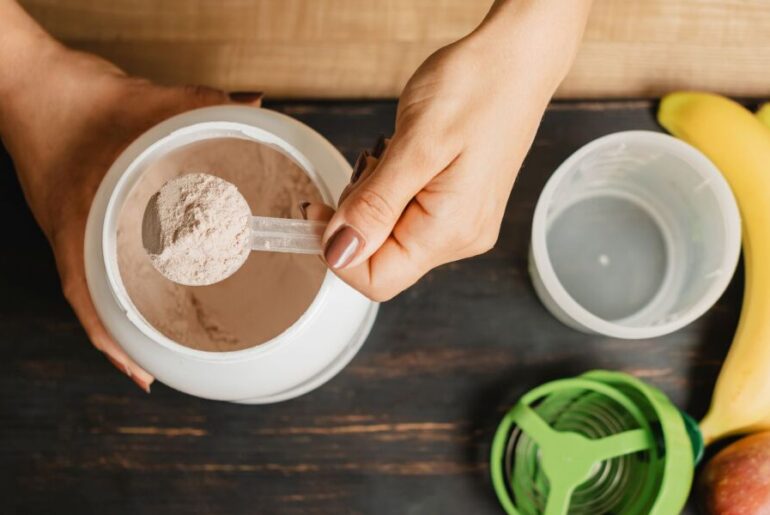
7. Protein PowdersProtein powder is a processed nutritional supplement made from animal or plant sources. Both Barkoukis and Blake prefer people get their protein from food, but it gets the job done in a pinch. While the content varies by brand, most come in at 20 to 30 g per serving.
[27]
A review of research found that protein supplements can help lower blood pressure, cholesterol, and blood sugar, mainly through their effect on metabolism, hormones, and cardiovascular function. But that same paper cautioned against overuse, due to a risk of kidney trouble. People who consume more than 40 g per day of whey protein may experience adverse effects.
[28]
If you’d like to keep some on-hand for smoothies, know that the U.S. Food and Drug Administration classifies protein powder as a supplement, so it’s regulated differently from food.
[29]
“Because of that, make sure you’re buying a reputable brand that’s accurate about its protein content, with nothing else in it,” Blake says.
To be safe, look for third-party certification from an organization like NSF. You may also want to discuss if protein powder is the right fit for your individual health, and about any potential drug interactions or safety concerns.
The TakeawayProtein is the primary building block of the body, shelf-stable options are a smart backup when fresh foods aren’t available or they’ve spoiled in your fridge.Many pantry-friendly protein sources usually cost less than fresh meat, and they can last for months, helping stretch grocery budgets.Shelf-stable proteins, which include legumes, nut butters, and canned fish and chicken, also help support heart health, build and maintain muscle, control blood sugar control, and improve overall diet quality.