Disclaimer: This episode of Mayo Clinic On Nutrition is brought to you by an educational content sponsor, National Dairy Council, a non-profit dairy nutrition research and education organization that shares science-based information on dairy’s nutritional benefits for health and wellness. Please visit USDairy.com/NationalDairyCouncil for educational content relevant to today’s topic: Unlocking the Food Matrix
Food is more than just the sum of its parts. Nutrients in supplements act differently than the same nutrients in whole foods. And the way those nutrients are packaged, bonded, and processed all factor into what’s called a food’s matrix.
On this episode of On Nutrition, we talk with registered dietitian and senior vice president of nutrition affairs at the National Dairy Council, Sally Cummins. She’ll share the science behind the food matrix of dairy, and how you can see the food matrix of all types of foods in your everyday life.
Listen to Unlocking the food matrix
Read the transcript:
Tara Schmidt: This is “On Nutrition,” a podcast from Mayo Clinic where we dig into the latest nutrition trends and research to help you understand what’s health, and what’s hype. I’m Tara Schmidt, a registered dietitian with Mayo Clinic in Rochester, Minnesota. In this episode, “The Food Matrix.”
Food is more than just the sum of its parts. Nutrients in supplements act differently than the same nutrients in whole foods, and the way those nutrients are packaged, bonded, and processed all factor into what’s called a food’s matrix.
Sally Cummins is a registered dietician and the senior vice president of nutrition affairs at the National Dairy Council. She and her team focus on science-backed education on the health benefits of dairy foods, often explained by the food matrix of dairy; once you’ve listened to this podcast, I bet you’ll be seeing the food matrix of all types of foods in your everyday life. Hey Sally, thanks for hanging out with me today.
Sally Cummins: So happy to be here, Tara. Thanks for having me.
Tara Schmidt: I know we’re getting sciencey today. We just need to start with a super simple definition of the food matrix, because for most, that might be an unfamiliar term.
Sally Cummins: Yeah.
Tara Schmidt: What are we talking about?
Sally Cummins: I’ve heard people equate it to a symphony.
Tara Schmidt: I love this analogy.
Sally Cummins: It really puts it into context. You walk into the concert hall, and you start to hear the symphony warming up, and individual instruments are playing, and you hear their unique tone and timbre, and it’s interesting. But it’s when they come together, and they play in harmony, that there’s something really magical that happens there.
That’s the magic of the matrix. It’s when all these compounds and vitamins and minerals come together to nourish our bodies in interesting ways. But the exciting thing is it’s really changing how we think about how food nourishes us. Probably back when we were studying nutrition as dietetic interns and students, we really had a focus on individual nutrients.
Thinking about how calcium supports your body, or how saturated fat impacts your body? Now we’re starting to look at all the parts of the food. All the vitamins, minerals, proteins, carbohydrates, fatty acids, these interesting things called bioactive compounds. Even the structure of the foods.
It’s a solid food or a liquid or a gel, how that all works together, and how that interaction of all those components influences how we digest foods, absorb them, and how they fuel our health outcomes.
Tara Schmidt: You brought up a good point that you and I, as dieticians, have probably had to do a little bit of unlearning of the assumptions that we made about “bad nutrients.”
Or things that we should limit. But we’re going to talk a lot today about how it depends on where you’re getting those nutrients from. In what package, in what symphony did it come along with? Because there might be other players in the game.
Sally Cummins: Yeah. It’s really changing the way we think about nutrition and moving from this isolated look at nutrients alone to a whole food. Food first perspective, which for me is a lot more fun.
We always want to help people build healthy diets, and it’s so much easier to do that when you take this food-first approach and focus on the food itself and how you can incorporate that into lifestyles that people love and enjoy.
Tara Schmidt: When I think about the food matrix, it gives, say, patients or members, or literally anyone who eats food a little bit more, an opportunity to enjoy the foods that they love. You mentioned, without the guilt, depending. We always have to look at the big picture. We always have to look at your pattern of eating, as I say.
But it gives people more, maybe some food freedom, because of what we’re learning about these nutrient packages. I’m excited to teach people more, too. Where did the idea of the food matrix come from? Is this nutrition science evolving? Do we know the background of how this came to be?
Sally Cummins: It’s helpful to take a step back. I have the benefit of working with some amazing nutrition scientists and researchers, and they always remind me that nutrition is really a very young field if you think back on it. The first vitamin was discovered only about a century ago, a hundred years ago.
By the 1950s, all the major vitamins had been discovered and associated with serious deficiencies. We think about vitamin C and scurvy, or vitamin D and rickets, or iodine and goiter. That was kind of the beginning of nutrition, science, and implementation of nutrition science, if you will.
The beautiful thing was that it really had an impact on public health, that led to the fortification or adding nutrients to food to reduce or prevent nutrient deficiencies. Milk was fortified with vitamin D to prevent rickets, and iodine was added to salt to prevent goiter. It was really very, very helpful.
That same laser focuses on nutrients, which has become known as the reductionist approach. It was so successful that they also applied it to associating it with chronic diseases as well. Diseases like heart disease, cancer, or diabetes, and that’s when fat, saturated fat, and cholesterol kind of became the causes of heart disease, or salt as the culprit for high blood pressure.
But then what I love about nutrition is it’s a living, active field. Then we started to see that whole foods behave a little bit differently than what we might have expected. And we were starting to see outcomes that challenge conventional thinking.
Whole milk and dairy foods were part of healthy eating styles that supported health and longevity, or cheese, despite being higher in saturated fat and sodium, didn’t impact our bad cholesterol, our blood pressure, the way we thought it would. That’s when we really started to explore that a little bit more.
That’s when the concept of the food matrix started to emerge when researchers recognized that foods weren’t just the sum of their nutrients, but it was how they were naturally bundled together. And those interactions inside the food changed how our body absorbed them and used those nutrients.
Now we’re seeing the matrix really become more core of our understanding of food-based dietary guidance, healthy eating patterns, and personalized nutrition, which is so, so hot these days.
Tara Schmidt: I love it. Like I said, we don’t usually get overly into the weeds of the science on the show. We usually stay a little bit more surface level, a little bit more practical.
But it’s important to explore this, especially because when we talk about the food matrix, it’s more like you said, than surface level, we’re actually kind of looking deeper than just the nutrition label. I do a lot of education on nutrition labels. That’s a standard thing to do sometimes with a patient.
How does the concept of the food matrix differ from the nutrient composition of a food that consumers may see at their grocery store?
Sally Cummins: Really, the matrix goes way beyond the label. The label tells us about 13 select nutrients in foods, but that’s just part of the story. There are about 30 essential nutrients, and thousands of bioactives, so clearly there’s no way you can capture all of that on a food label.
But what we know it’s not just what’s in the food, but how all those components, the vitamins, the minerals, the protein, fat, carbohydrates, bioactives, how they’re all naturally packaged together, that makes a difference. It helps us see beyond the label and consider the interaction of the nutrients and how they work to nourish our body.
Tara Schmidt: Can we do a few definitions, because people probably know about bioavailability a little bit, but we also talk in the matrix discussions, and I learned this from, from your colleagues about bioaccessibility.
Sally Cummins: Sure.
Tara Schmidt: Can you explain that to us?
Sally Cummins: When you eat a food, your body has to break it down so nutrients can be absorbed, and so bioaccessibility is how much of that nutrient is freed up during digestion so your body can absorb it.
Then after that, your body needs to absorb it and use it, and that’s where bioavailability comes in. That’s the amount that actually makes it into your bloodstream and gets used for your body. One of my favorite examples is if you think about spinach. Spinach has iron, but not all of it is bioavailable because of compounds that block that absorption.
But vitamin C can boost bioavailability by helping your body absorb more of it. Another way to think about it is like a bank account, so bioaccessibility is like having your money in your account. You can see it, and you can withdraw it. And bioavailability is like the money you actually spend after withdrawing it. It’s what you can use.
Tara Schmidt: We also know that processing food impacts its bioavailability. Whether we chop or especially boil is a great example. Maybe we blend or we cook. Can you talk about an example where its bioavailability changes?
Sally Cummins: Sure. Carrots are a great example. If you think about if you’re chopping it or boiling it or blending it, it can change, and so with carrot chopping, it doesn’t reduce its bioavailability very much, but cooking it can actually make some of the nutrients, like beta-carotene, more available because heat breaks down those cell walls.
Tara Schmidt: Perfect. Again, we’re utilizing the processing, and again, that’s why we always have to remind people that processing food does not equal bad. In this case, the quote processing is cooking the carrot, but we just improved the amount of vitamins that the body is now able to utilize.
Sally Cummins: Right. That could probably be a whole other conversation and podcast.
But diving into processing a little bit more and understanding how it helps keep our food safe, makes it more accessible, and just the positive roles that food processing can play as well.
Tara Schmidt: Food safety is a great example. Pasteurizing milk is absolutely critical.
Sally Cummins: It’s a great example, about the positive role of food processing.
Tara Schmidt: Speaking of milk, why do you feel like dairy is at the forefront of this research? We have food matrices within all of our food groups. You’re most familiar with dairy, but what do you feel makes dairy so unique in this kind of topic?
Sally Cummins: I get really excited about this, Tara. This is where the nutrition nerd comes out. We think about dairy foods. Sometimes we might say dairy foods, sometimes we might talk about milk, cheese, and yogurt, like different types of dairy foods. But dairy foods in general are wonderfully complex and unique. We look deeper than protein, fat, carbohydrates, and vitamins.
It’s in minerals. For me, the real aha came when I learned that milk fat is the most complex of all naturally occurring fats, with over 400 different types of fatty acids.
Tara Schmidt: Oh my gosh.
Sally Cummins: Making it especially intriguing to nutrition researchers and a topic of ongoing scientific exploration is also always surprising for me. When we talk about fatty acids, it’s common for a lot of people to think about dairy foods and saturated fat. But the reality of it is, within those 400 different types of fatty acids, 29% are monounsaturated. In fact, more than 20% of it is oleic acid, and that’s the same fatty acid, the heart-healthy fatty acid found in olive oil.
It’s really these unique fats and short-chain fatty acids, medium-chain fatty acids, odd-chain fatty acids, trans fatty acids that are contained within something we call the milk fat globule membrane. And that’s kind of where a lot of the magic happens. It’s really much more complex and interesting than just thinking of it as protein or fat or vitamins and minerals, and that’s when we started to see some interesting and maybe unexpected benefits.
Tara Schmidt: Wow, so there’s actually more healthy fats in dairy than we may have thought. But does knowing the science drive you nuts when people make blanket statements about individual food groups or nutrients? Like, do you just want to scream, ‘It’s more complicated than that!’?
Sally Cummins: I know, I know. I feel like everybody just wants a very simple answer, and probably you and I have both encountered people just saying, tell me what to eat, and we probably can do that, right?
Well, it’s complex why foods are complex and unique. Nutrition doesn’t have to be complicated. There is a gray area, and helping people understand that and choosing foods that they enjoy, and that they can build healthy eating patterns with. We all know, we’ve heard the statement before, it’s only healthy if you eat it. It’s that aspect of helping people embrace foods they enjoy and build them into healthy eating patterns.
Tara Schmidt: Yes, I love it.Food labels give a lot of information, but even the most detailed labels aren’t able to give the whole picture. If nutrients are the instruments in a symphony, the food matrix is the sound of them all coming together to play a piece of music.
One thing to think about when thinking about a food matrix is the concept of bioavailability versus bioaccessibility. Bioavailability is the total amount of nutrients that can theoretically be absorbed, and bioaccessibility is what actually gets absorbed. The food matrix affects this, and so does processing! Cooking certain vegetables, like carrots, for example, can increase the amount of vitamins and minerals you absorb when eating them. And certain combinations of nutrients increase the bioavailability of others, like how vitamin C can increase the absorption of iron.
If all of this sounds a little confusing, just remember, choosing what to eat doesn’t have to be complicated. Consuming the beautiful matrices of whole foods and enjoying everything in moderation will help create a healthy eating pattern that you can actually stick with. Next, let’s get a little deeper into Sally’s bread and butter — and dish about dairy.
Let’s talk more about the nutrients kind of available in dairy products. You’ve mentioned it, in a simplified form, of course, which is more than this, but we’ve got protein, we’ve got vitamin D, we’ve got calcium, we’ve got phosphorus, we’ve got these fatty acids.
Does it depend on the product, or are the nutrients available different depending on how it’s been processed?
Sally Cummins: Every dairy food begins with milk. Milk is the foundational ingredient of dairy foods. An eight-ounce cup of milk provides 13 essential nutrients, like protein and key nutrients. People aren’t consuming enough potassium, calcium, and vitamin D. I see it as protein plus, because yes, it provides protein, but so much more.
Then it’s how. That milk is transformed into products like cheese, yogurt, or kefir that can impact its nutrient profile. Sometimes those are concentrated. If you think about Greek or Icelandic yogurt, it’s really thick. You tend to have more protein in a Greek or Icelandic yogurt than you might have in milk.
Then sometimes some of the other nutrients might fall off as well. It is that transformation from milk to cheese or yogurt that impacts the nutrient profile.
Tara Schmidt: How does fermentation with something like yogurt or kefir expand or change the dairy matrix?
Sally Cummins: With fermentation, it’s usually when you’re adding live and active cultures. You might see that on your yogurt container containing live and active cultures, and that transforms the milk into the yogurt or the kefir, and that adds probiotics, and it changes the matrix. Oftentimes, it actually improves digestibility and nutrient absorption. That’s why you also see sometimes when people say they have issues with lactose intolerance.
That they might be able to tolerate yogurt. Or cheeses are better than liquid milk. And part of that is because those living and active cultures can break down that lactose, and it can help them tolerate it and enjoy it more.
Tara Schmidt: When we talk about the kind of necessary processing, things like pasteurization or homogenization, when it comes to dairy food specifically, do we now still get to count those foods as “whole foods”? You and I both preach a whole food diet or kind of plant-forward in most cases, but make sure you’re getting essential nutrients from a wide variety, blah, blah, blah.
Sally Cummins: Right.
Tara Schmidt: Do we still get to call these things whole foods, even if they’ve been processed?
Sally Cummins: Absolutely. And again, it goes back to what we talked about on that spectrum of processing. And the different roles that processing plays. We also know that a lot of the science and research that’s been done on whether it’s cheese or yogurt or pasteurized or homogenized milk, those health benefits and outcomes have been seen with foods that are in the marketplace.
We know that if you go to the grocery store, it’s going to be pasteurized milk. It’s going to be homogenized milk. Certainly, we’re seeing that it’s the foods that are in our marketplace that are having a positive impact on health.
Tara Schmidt: There’s such a difference between a gallon of milk that has, again, appropriately been pasteurized and an ultra-processed food in which you have absolutely no idea where it’s started from, or you couldn’t name the first 15 ingredients.
That’s not always the case, but I think there’s a pretty big difference between this food was processed to help make nutrients more bioavailable to make sure that nutrients, that pregnant women or children may be lacking in have in their diet fortification, for example, and — I’m not going to call it a snack food, but again, a snack food that you have no idea why it’s the color of neon green. That’s not necessarily natural, we could say.
Sally Cummins: We also probably came up on the 80/20 principle too. Eighty percent of the time, you really are striving to do your best and build those healthy diets, and then there’s that 20% of the time that you have a little bit more leeway to enjoy some of the fun foods.
Does the food matrix point to any benefits of whole-fat dairy?
Tara Schmidt: Let’s talk about how to understand the benefits, potentially, of full-fat dairy, when we’re thinking about it in this term of the “food matrix.”
Sally Cummins: What is exciting is how clear and consistent the science is on this topic. There have been more than 30 years of research from around the world that shows that whole milk and other full-fat dairy foods offer a health advantage.
That’s an aha that this is something that we’ve been thinking that we need to probably limit, but really the science is clear that there’s a clear role and benefits for full fat dairy foods, and so they demonstrate that dairy foods at all fat levels, from fat free all the way to whole milk, provide essential nutrients that support bone health, healthy growth in children, lower the risk of heart disease and type 2 diabetes.
Just doubling down on the fact that it goes well beyond a single nutrient. There are nutrient-dense whole foods that support balance, flexibility, and well-being at every age.
Tara Schmidt: I like that you even just mentioned, Sally, skim milk too, because I wanted to be clear that we’re not now pushing whole fat dairy on people if they prefer, or are for whatever reason consuming low fat or fat free. I’ll just give an example.
My mom drinks skim milk. She loves skim milk. That’s what we were brought up on. That’s her preference. I don’t have to convince her to drink whole milk. We’re cool with you drinking skim milk, Mom.
Sally Cummins: Right. When you look at it, the recommendations are for adults to get about three servings of dairy foods a day, but the reality of it is we’re falling low on that. We’re only getting about half that, 1.5, and so we have a gap to fill. Maybe we can look at ways to take a step back and see how people like to consume their dairy foods, and then find some flexibility in that to allow them to build those healthy diets the way they like and enjoy.
And so it is a term that’s referred to as fat flexibility. If your mom loves skim milk and she’s consuming three servings of skim milk a day, but wasn’t hitting those three servings a day, you could take a step back and explore why.
Is it from a taste perspective, or is it from a lactose intolerance perspective? And then finding those routes to help her build that diet. I, opposite of your mom, always use the example of my husband, who really likes to start his day with a latte in the morning, like coffee and milk.
He likes whole milk. He likes that creamy texture, the whole milk. It’s part of his morning ritual. But throughout the course of the day, we use a reduced-fat Greek yogurt or sometimes fat-free yogurt, whichever one we grab. And we use that and mix it with fruit or oatmeal sometimes, for dips.
There’s a lot of flexibility. There are a lot of options in the dairy case to help people build those healthy diets.
Tara Schmidt: My mom might be purposefully having skim milk and enjoying it because she wants to “save room for more cheese in her diet.” So we can take anyone’s preferences and their health concerns.
I always use examples of my patients in cardiac rehab . “Hi Terry, you’re not going to make me drink skim milk, are you? I grew up on a dairy farm and I really want to drink whole.” And I say, “It’s okay, Mr. Smith. I promise you that you can drink whole milk.” And we’re also going to talk about the other sources of saturated fat in your diet.”
We’re going to talk about how you’re preparing food, and we’re going to talk about how often you drink skim milk. Maybe it’s just a latte in the morning, or whole milk, etcetera. We can be flexible. Dieticians are flexible. You guys, we’re cool. We can make it work, I promise.
Milk contains 13 essential nutrients that nourish our bodies, and the food matrix of different dairy products can change the balance of those nutrients.
Greek yogurt has more protein than milk, and fermented drinks like kefir have lower amounts of lactose. If you’re looking for more or less of a nutrient, maybe because of lactose intolerance, it’s still possible to consume dairy if you’re aware of the differing food matrices.
Next, we’re going to talk about the state of food and go a bit further into how processing affects various types of food matrices, even the types of processing you probably don’t think of as processing. Do you have anything to say about chewing? Is this a relevant thing?
Sally Cummins: With chewing, people sometimes forget that digestion starts in the mouth.
Tara Schmidt: Salivary amylase, everyone!
Sally Cummins: Absolutely. It’s the first step. We’re talking about bioaccessibility and bioavailability. That’s that very first step, where you’re starting to break down the matrix a little bit so the food can go through that process within your body.
Tara Schmidt: Also in the same respect, we’ve probably both educated people on the state of the food. Let’s talk about eating an apple versus eating apple sauce, versus drinking apple juice. Is the difference, let’s say, in the rise of blood sugar? A versus B, versus C?
Is that also part of this food matrix topic that we’re talking about?
Sally Cummins: It certainly can be. Researchers have found that how a food is prepared can change how your body responds to it. To your point about apples, in one study, people ate the same amount of carbohydrates from apples in three forms.
They had full apples, they had apples that were blended into a puree, and they had fiber-free apple juice. Their blood sugar went up about the same in all cases. But interestingly, their insulin, that hormone that helps manage your blood sugar, spiked higher after the juice and the puree compared to the whole apple.
It tells us that the natural fiber structure in fruit is broken down in that juice or puree, and your body processes that sugar differently.
Tara Schmidt: Okay. Can we just say that I did not know you had an apple example when I asked you that question? I feel like we’re on the same wavelength, and I love it.
Sally Cummins: We are caught in the matrix!
Tara Schmidt:When we’re cooking, do you ever talk to people about prioritizing combinations of food to maximize the reactions? I know I’ve definitely done it to someone who has an iron deficiency or is at risk of an iron deficiency, but doesn’t eat red meat. I say, “Okay. Now you have to select non-heme iron sources. You’re more likely to have non-heme iron, and I want you to pair that with vitamin C.
Okay. That could be a spinach salad with strawberries. It’s just like an example that I have in my head. Do you have any other examples of these matrices that really do improve health outcomes?
Sally Cummins: This is also one of those areas of nutrition that I get really excited about.
Tara Schmidt: We’re so nerdy right now.
Sally Cummins: I know. Some people call it synergies. Nutrient pairings or synergies. There are food groups for a reason. It’s really important to have a plate that has different colors and textures because you’re getting different nutrients from those different colors and textures and food groups.
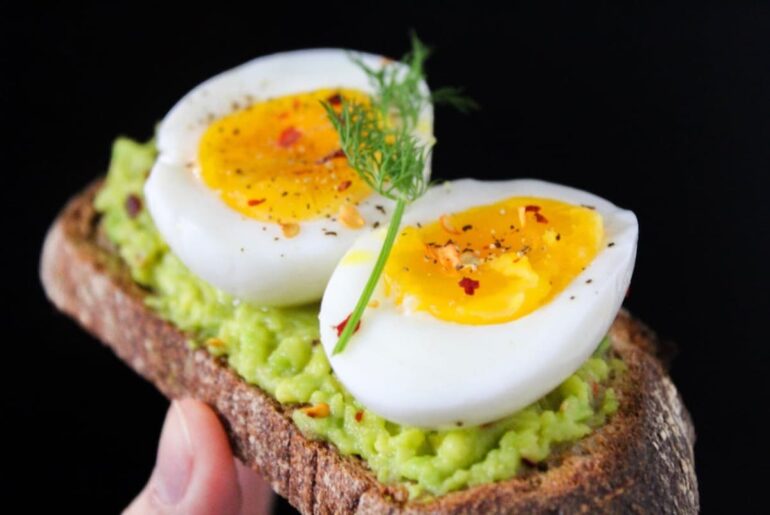
I love the example that you had of pairing iron with vitamin C. I always think about strawberries on a spinach salad or lentils and bell peppers together. But it goes beyond that. We’ve learned that fats can help release fat-soluble vitamins. If you think about maybe putting avocado on your kale salad, you’re getting vitamin K from your kale, and that fat from the avocado is helping with that.
Or sautéing your carrots in olive oil. That’s a good pairing and synergy. Then lycopene, which is in tomatoes. It’s like one of those. We’ve been talking about bioactives and those health components. And that’s also absorbed better with fat.
Maybe if you’re making tomato sauce, you put a little olive oil in it. Or there’s the reason why salsa and guacamole are a perfect pair, because the fat from that avocado paired with the lycopene in the salsa is really helpful.
Tara Schmidt: And again, these are not rules. It’s not like you’re not going to get the benefits of a spinach salad if you don’t have avocado or strawberries or peppers on it, but we’re just geeking out and sharing the magic that nutrition can be.
This is not about rules. This is not about you’re not going to get any benefits if you don’t do it this way. This is more about, “Hey, look how cool food science is? This is really meaningful.”
Sally Cummins: Right, right. That’s what I always think about. We, again, don’t need to make nutrition or healthy eating complicated. But there are some ways that you can add things up.
Tara Schmidt: That’s awesome. Sally, you and your team are absolutely amazing. You’re so smart. I’ve learned so much since knowing you and working with you. I want to just thank you again for your time and bringing us all of your knowledge today about this. Super cool — although a sciencey topic — I love it.
Sally Cummins: Oh, thank you so much for having us, and I love geeking out on nutrition with you anytime, Tara.
Tara Schmidt: Wherever there is food, there are food matrices that inform how our bodies break down, digest, and absorb their nutrients. The food matrix is affected by how something is prepared, processed, cooked, fermented, and even how it’s paired with other foods!
It can be a fun game to come up with different ways to synergize nutrient absorption, like pairing lentils with red peppers to better absorb the iron, or adding olive oil to tomatoes to absorb more lycopene, but rest assured, you don’t need a chemistry degree to have a healthy eating pattern. Invisible, but essential — the food matrix works behind the scenes, helping us get the most from each bite.
Sign up to receive Mayo Clinic Press emails.
Find us online at Mayo Clinic Press for more health and wellness articles, podcasts and books.
Do you have feedback, questions or topic suggestions? Email us at mcppodcasts@mayo.edu.
Relevant reading
Face in the Mirror
A gripping tale of redemption and resilience, an injured young man desperate for a second chance finds unexpected hope in the hands of a visionary medical team.