Despite all the buzz surrounding magnesium, nearly half of Americans don’t get enough of the mineral from their diet. Supplements can help.
Magnesium is a cofactor in more than 300 enzyme reactions, meaning it’s involved in a wide range of processes in the body, according to the National Institutes of Health (NIH). “It plays a big role in things like muscle and nerve function — that’s what it’s primarily known for,” says Jessica Cording, RD, the author of The Little Book of Game-Changers. “It’s also been shown to be beneficial for blood pressure and blood sugar regulation, along with managing anxiety and promoting more restful sleep.”
It’s the sleep support that has gotten the most attention lately. Magnesium has been called “the new melatonin” thanks to an arsenal of research suggesting it has sleep-enhancing benefits. A 2022 scientific analysis of more than 7,500 people found a link between participants’ magnesium status and their sleep quality. A small double-blind placebo-controlled trial found that people who took a magnesium supplement had “significant improvements” in sleep quality, sleep duration, and mood compared with those who took a placebo. And a more recent 2025 randomized placebo-controlled trial of 155 people with poor sleep quality found that those who took a daily magnesium supplement had a “significantly greater” drop in symptoms of insomnia compared to those who took a placebo
Some science also suggests that magnesium may help lower the risk of headaches and even impact processes that are linked to colorectal cancer risk. Magnesium may also help to relieve muscle cramps, according to Keri Gans, RDN, CDN, a nutrition consultant and host of The Keri Report.
There are several different types of magnesium, and each works on the body differently. However, magnesium oxide and magnesium glycinate are the most common types found in supplements, according to Cording.
Supplements in general aren’t tightly regulated by the Food and Drug Administration (FDA), making it hard to know whether you’re getting what the label says. With that in mind, we consulted dietitians for their expert recommendations on the magnesium supplements to take. Here’s what they shared about what to look for in a magnesium supplement, plus the products they’ve seen patients have success with.
Read more: Best NAD supplements, according to the experts
What is magnesium?
According to the National Institutes of Health (NIH), magnesium is a mineral that’s naturally present in many foods. It’s a required compound in more than 300 enzyme systems that regulate reactions in the body, including the breakdown of protein, muscle and nerve function, blood sugar control, energy production, and blood pressure regulation. Magnesium plays a role in bone development, nerve impulse conduction, muscle contraction, and normal heart rhythm, too.
Recommended intakes of magnesium vary based on your sex and whether you’re pregnant or breastfeeding. It’s typically recommended that adult women get between 310mg and 400mg of magnesium a day, while adult men should have between 400mg and 420mg a day.
Do magnesium supplements work?
Research backs the use of magnesium supplements for a wide range of needs, including sleep support, anxiety management, and more, Cording explains. Every person’s needs are slightly different, making it important to check in with a healthcare provider before taking a magnesium supplement. This is also just a good idea to do in general, Cording says. “Touch base with your doctor if you have any underlying conditions because magnesium does play a role in muscle and nerve function, along with blood sugar regulation,” she says.
What is the best magnesium supplement?
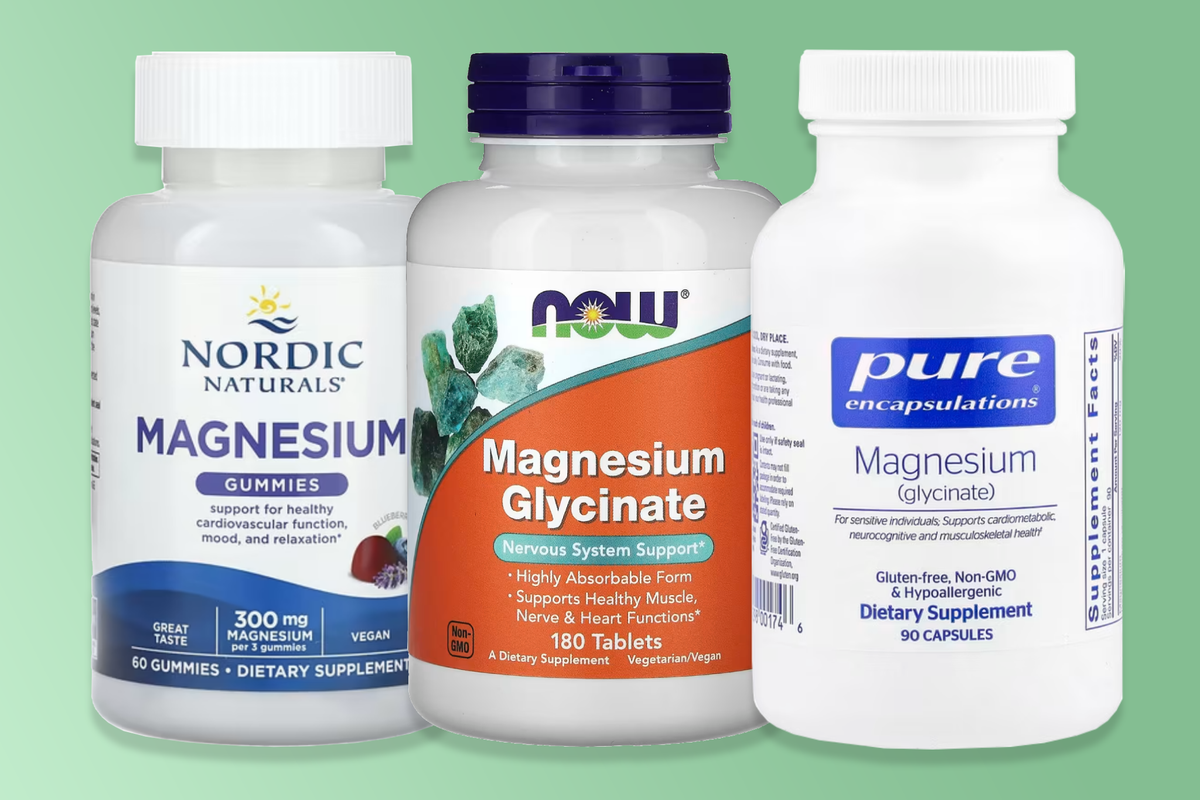
The Now magnesium glycinate is a budget-friendly, expert-trusted option. If you prefer to drink your supplement, the powdered Thorne magnesium bisglycinate is a popular choice; just be aware that it is the most expensive option on our list. For those who want a little help with meeting magnesium recommendations, the Pure Encapsulations magnesium glycinate has a lower dosage than many others. Whatever you try, look for reputable brands and those that undergo rigorous testing.
Read more: What are the benefits of taking magnesium?