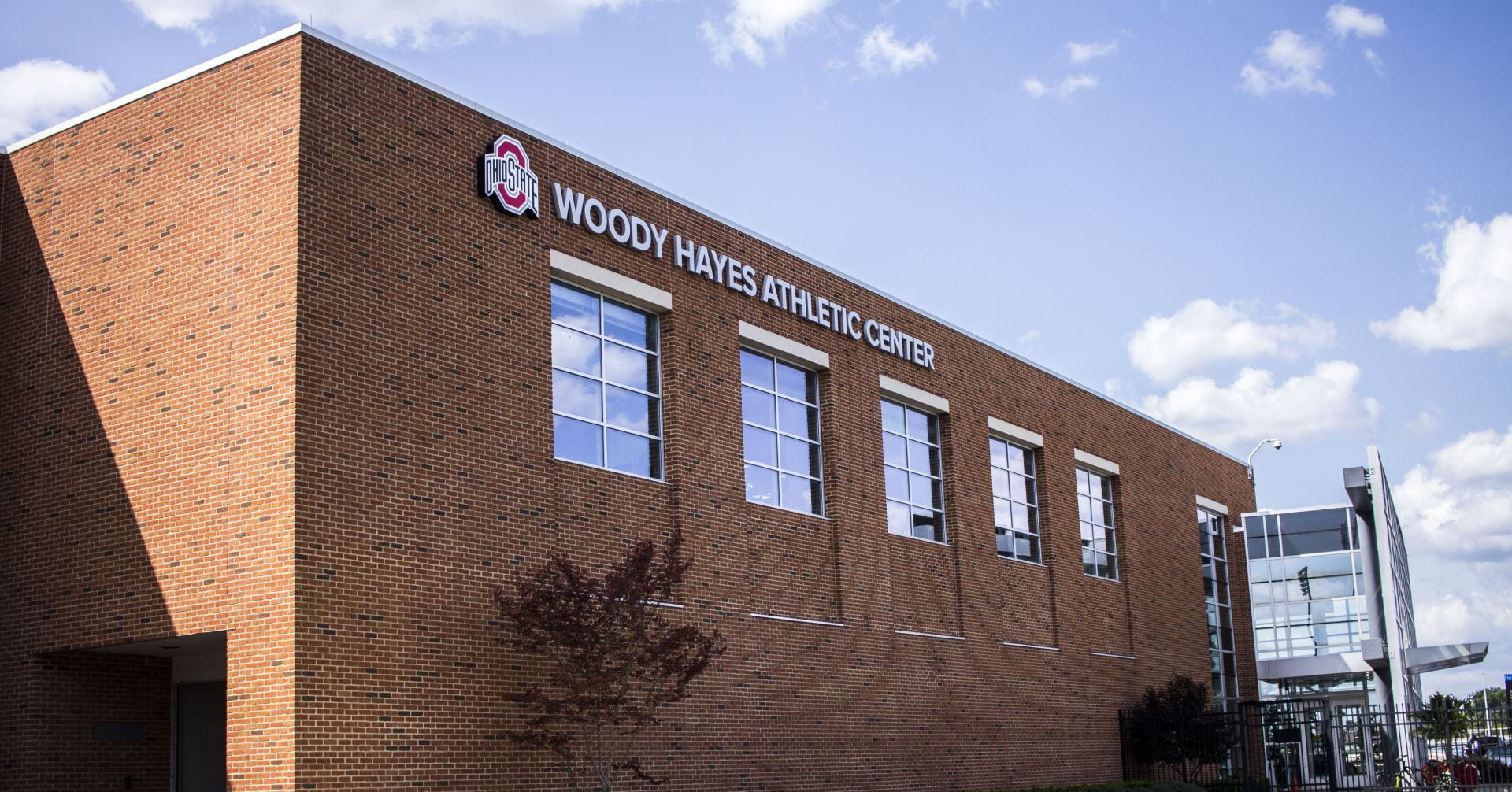
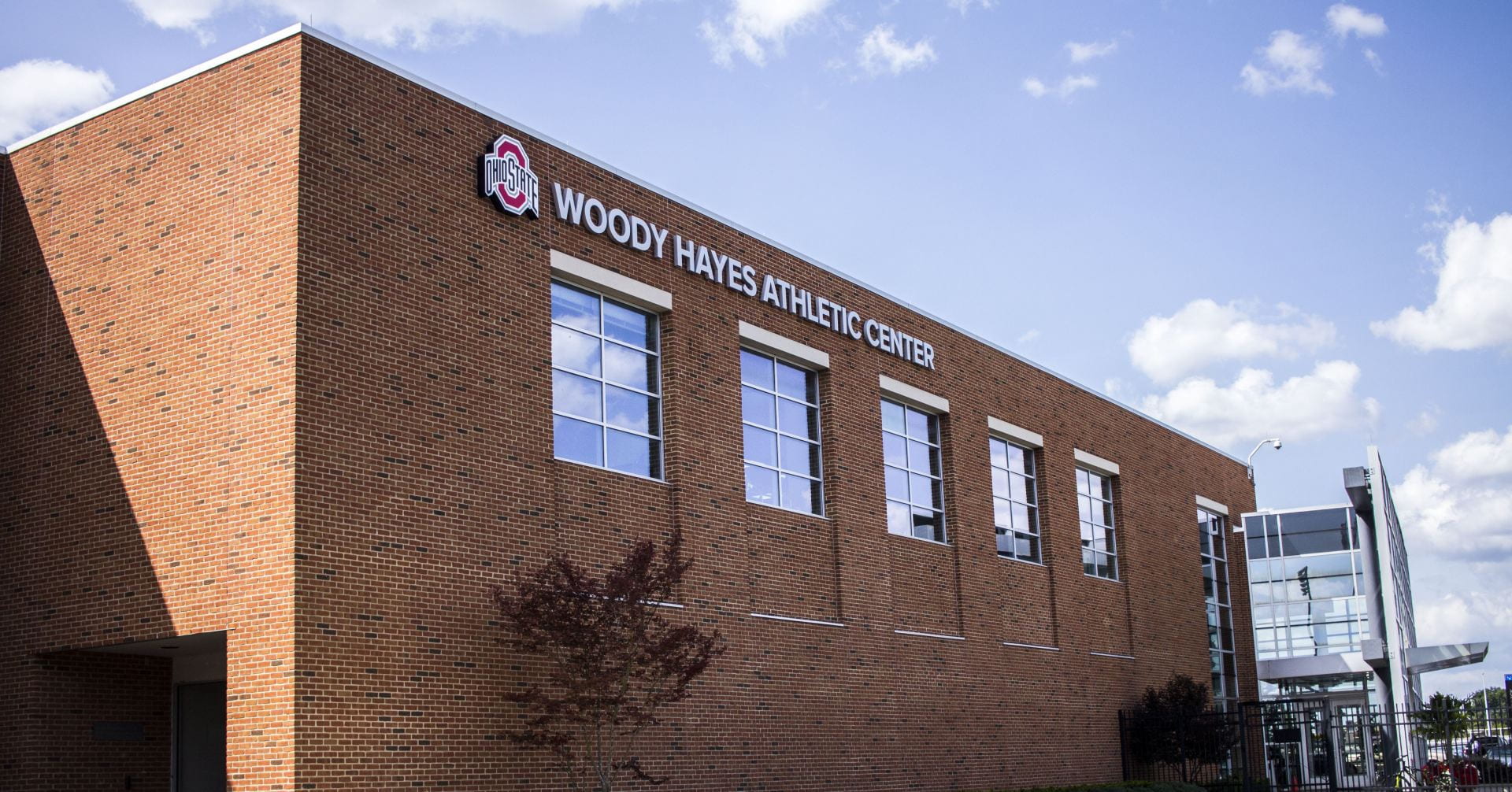
The Woody Hayes Athletic Center serves as the daily home for Ohio State football, where preparation begins long before kickoff inside the program’s fueling zone. Photo Credit: Sandra Fu | Managing Sports Editor
Editor’s note: This inside look at the Ohio State football team comes from Jason Moore, a defensive lineman on the Ohio State football team. Moore is also a third-year journalism student at Ohio State.
On a typical weekday morning inside the Woody Hayes Athletic Center, workouts may not have started, but the work already has.
Smoothies are blending. Protein portions are weighed. Hydration levels are being checked. While fans focus on touchdowns and tackles, the real work for the Ohio State Buckeyes football team begins hours earlier in the fuel zone in the Woody.
“We don’t just feed football players,” team nutritionist Kaila Olson said. “We fuel performance.”
Olson, alongside assistant nutritionist Sarah Takach, oversees customized nutrition plans for more than 100 athletes. Every detail, from calories to carbohydrate timing, is carefully calculated based on position, workload and body weight goals.
An offensive lineman maintaining 310 pounds has dramatically different needs than a defensive back focused on speed and explosiveness, and Takach said there is no “one-size-fits-all” plan.
“Calories, protein intake, hydration [are] all individualized,” Takach said. “We look at their training phase, their recovery, even how much they’re sweating in practice.”
Players regularly undergo body composition scans and hydration testing.
Even slight dehydration, Olson said, can affect reaction time and muscle recovery. In a sport where fractions of a second matter, nutrition becomes a huge competitive advantage.
For defensive back Inky Jones, adjusting to the program changed his understanding of performance.
“When I first got here, I thought eating more was enough,” Jones said. “But it’s really about what you’re eating and when you’re eating it.”
Jones, now a senior, follows a structured meal plan designed to help maintain weight. Heavy training days require increased carbohydrate intake for energy. Recovery days shift toward muscle repair and the control of inflammation.
“It’s strategic,” Jones said. “I feel the difference.”
Sophomore defensive back Miles Lockhart experienced a similar wake-up call.
During his high school days, Lockhart admitted to eating whatever he wanted, but that changed once he set foot on campus.
“Here, they broke down exactly how much protein I need to build muscle and stay lean,” Lockhart said.
One of the most visible parts of the program is the fueling station that is stocked daily with recovery shakes, fruit, lean proteins, yogurt and complex carbohydrates. After practice, players don’t have to guess what to eat. It’s already planned and prepared.
“It makes it easy,” Lockhart said. “You finish practice and you know exactly what your body needs.”
But beyond the meal plans and protein shakes, Olson and Takach emphasize education. They want players to understand the science behind their plates.
“Our goal is that they leave here knowing how to fuel themselves for life,” Olson said. “Whether that’s in the NFL or in another career.”
Part of the learning experience is having players take health quizzes every week and having a PowerPoint on the TV screens all over the Woody at all times.
Nutrition staff members also collaborate closely with strength coaches and trainers. GPS tracking during practice measures workload and exertion levels. If data shows increased strain, post-practice nutrition can be adjusted immediately.
“It’s constant communication,” Takach said. “Nutrition is part of the performance team.”
The payoff, players say, often shows up late in games.
“Fourth quarter used to feel like survival,” Jones admitted. “Now I still feel fresh and explosive.”