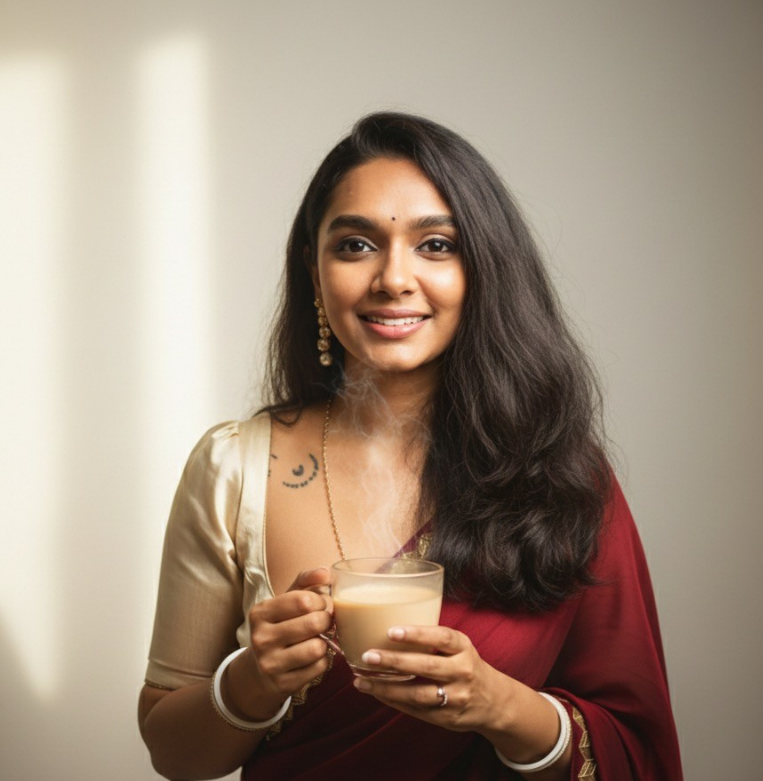
When Neha Shah moved to the United States, she did not expect her own kitchen to become a site of confusion.
“The foods looked familiar,” she recalls. “But my body was reacting very differently. Digestion changed. Inflammation increased. Energy felt less stable.”
That experience became the seed for Diaspora Nutrition, the consultancy she founded in 2014 to bridge ancestral Indian food wisdom with modern nutrition science.
Today, Shah is a nutrition practitioner and holistic health expert, trained at the Institute of Integrative Nutrition. She has worked with more than 1,000 clients and built a community of over 67,000 followers who turn to her for culturally grounded, practical guidance that does not shame food or chase trends.
In an exclusive conversation with The American Bazaar, Shah shares insights about immigrant bodies, misunderstood carbs, and why the answer may not be quinoa, but better rice.
“Immigration is a complete shift in the food ecosystem”
Shah says Diaspora Nutrition was born from lived experience, not theory.
“After moving to the U.S., I noticed something I hear from so many South Asians now,” she says. “I was eating foods that looked familiar on the surface, but my body was reacting very differently.”
What changed was not simply geography. It was sourcing, processing, storage, and the broader food environment.
“I stopped asking only, ‘What is this food called?’ and started asking, ‘How was it grown, processed, stored, and prepared?’ That’s where healing began for me,” she explains. “Not by abandoning Indian food, but by returning to Indian food wisdom with better sourcing in the U.S.”
That philosophy remains the foundation of her work: helping immigrants stay rooted in their culture while rebuilding health in a foreign food system.
Why generic wellness advice fails immigrants
Scroll through mainstream nutrition advice online and you will likely see calorie charts, macro breakdowns, and Westernized “healthy swaps.” Shah believes that approach misses the lived reality of immigrant families.
“The biggest gap is that mainstream nutrition advice often gives immigrants generic and colonized wellness rules but no cultural navigation,” she says.
A South Asian immigrant, she argues, is not just trying to “eat healthy.” They are preserving identity, cooking for a family, navigating American grocery stores, and managing symptoms like bloating, fatigue, and inflammation.
“My message resonates because I speak to what people are actually dealing with,” she says. “Why does the same meal feel different here? Why am I reacting to foods I grew up eating? How do I shop in the U.S. without losing my Indian kitchen?”
Her answer is not restriction. It is recalibration.
What “culturally competent nutrition” really means
For Shah, culturally competent nutrition rests on three pillars: culture, context, and body reality.
Culture includes the foods, habits, and rituals families actually live with. Context means understanding the U.S. food environment, work schedules, and ingredient quality. Body reality refers to digestion, blood sugar, inflammation, and metabolic patterns individuals are experiencing.
“Food is not just fuel,” she says. “It is identity, family, memory, and daily structure.”
If advice ignores that, she warns, people either feel misunderstood or attempt plans they cannot sustain. “Culturally competent care is not translation. It is designing health guidance that works inside someone’s real life.”
Rethinking the carb conversation
Western diet culture, Shah argues, often frames ancestral foods as obstacles.
“It misunderstands that not all food problems are behavior problems,” she says. “Many immigrants are blamed for ‘eating too many carbs’ or ‘not adapting,’ when the real issue is often food quality, processing, sourcing, and food environment overload.”
A homemade Indian meal made with stone milled flour, quality fats, and properly prepared ingredients, she notes, is vastly different from a version made with ultra-processed substitutes.
“The one size fits all model says, ‘Just eat less and swap rice for quinoa, wheat for oats or ghee for tallow.’ My work says, ‘Let’s understand what changed in the food system, and rebuild your health without disconnecting you from your culture.’”
Why ancestral wisdom still matters
Long before kombucha became trendy, Indian kitchens were fermenting ‘dahi,’ buttermilk, and ‘kanji.’ Meals were built around cooked foods, seasonal rhythms, soaking and sprouting, spice tempering in ghee, and steady eating patterns rather than constant snacking.
“Modern metabolic health science keeps validating these principles,” Shah says. “Digestion support, blood sugar stability, food synergy, preparation methods that improve tolerance. Today all of these traditional solutions are a part of ‘Alternative Medicine’ when in fact it is the OG medicine.”
She is careful not to romanticize the past. Instead, she advocates what she calls a modern diaspora application: keep the principles, adapt the sourcing, and make it practical for life in the U.S.
Skip the diet aisle, start with grandma
When asked about healthier swaps, Shah does not point to gluten free snack packs or low fat labels.
“I usually tell people not to start with ‘diet products.’ Start with better versions of your real foods.”
Instead of low fat flavored yogurt, she suggests plain whole milk yogurt or homemade dahi. Instead of packaged “bliss balls,” she recommends nuts and dates or traditional ‘laddoos’ made with peanut, sesame, jaggery, coconut, or sattu.
Instead of refined canola oil, she advises wood pressed peanut, coconut, sesame, or mustard oil. Instead of ultra processed gluten free breads, she encourages freshly stone milled flours, heritage wheat, or millets.
“My philosophy is simple,” she says. “Don’t swap Indian food for Western diet food. Swap low quality ingredients for high quality, culturally familiar ingredients.”
What she eats in a day
Shah’s own routine reflects her teachings.
“My daily diet is simple, Indian rooted, and built around digestion and circadian rhythm,” she says.
Breakfast may be warm amaranth porridge with almonds, dates, and saffron. Lunch and dinner follow a thali structure of grain, legumes, curry, and a side salad, often ending with fermented buttermilk. A teaspoon of ghee appears regularly in meals and even in bedtime milk.
“I don’t build my day around restriction,” she says. “I build it around steadier energy, digestion, and practicality.”
Preparation methods matter as much as ingredients, especially for immigrants navigating new inflammatory triggers in a different food landscape.
Question the label, not your culture
One professional principle she applies at home is skepticism toward marketing.
“Don’t outsource your health decisions to labels,” she says. “Where is this coming from? How is it processed? Is it culturally aligned? Does my body actually feel good on it?”
She rejects extreme diets and perfectionism in favor of consistency and traditional structure. “Sourcing and preparation have a much bigger impact than constantly starting over.”
The future of diaspora wellness
Looking ahead, Shah envisions a wellness movement that is culture rooted, systems aware, and community led.
“The next phase of health education for immigrant communities will move beyond generic ‘eat clean’ advice,” she says. Instead, she points to culturally competent nutrition care, sourcing literacy, ancestral food preservation, low toxic living practices, and community based healing support.
“Diaspora families do not need another diet trend,” she adds. “They need a roadmap for staying healthy in a foreign system without losing the foods and traditions that gave them health in the first place.”
Through Diaspora Nutrition, Shah is trying to build that roadmap, not as a quick fix, but as a long term ecosystem for immigrant health.