The Harmonized System (HS) is the global classification framework used by customs authorities to organize and monitor international trade.
Used by more than 200 countries and economies around the world, it underpins international commerce, determining how the vast majority of goods and products are described at borders, which tariffs apply and how trade flows are measured.
But until now, dietary supplements were a gray area, often classified differently by customs administrations, sometimes as food preparations and sometimes as medical products. This has historically caused legal disputes and inquires at global borders, resulting in administrative burdens, escalated costs and delivery delays.
As a result, the World Customs Organization conducted a seven-year formal review process to clarify contradictory classification practices. The intergovernmental organization has now announced that dietary supplements will be recognized as a distinct category from Jan. 1 2028, following their incorporation into national tariff schedules.
“This decision formally recognizes supplements as a distinct food category in global trade. That clarity is an important step toward modernizing trade rules for the sector,” Simon Pettman, executive director of the International Alliance of Dietary Supplement Associations (IADSA), told NutraIngredients. “However, we now need to see consistent and appropriate implementation into national systems.”
“This change should reduce classification disputes at the border. That means fewer delays and greater predictability for companies operating across multiple markets and a more level playing field for compliant businesses.”
WCO clarifies definition of a dietary supplement
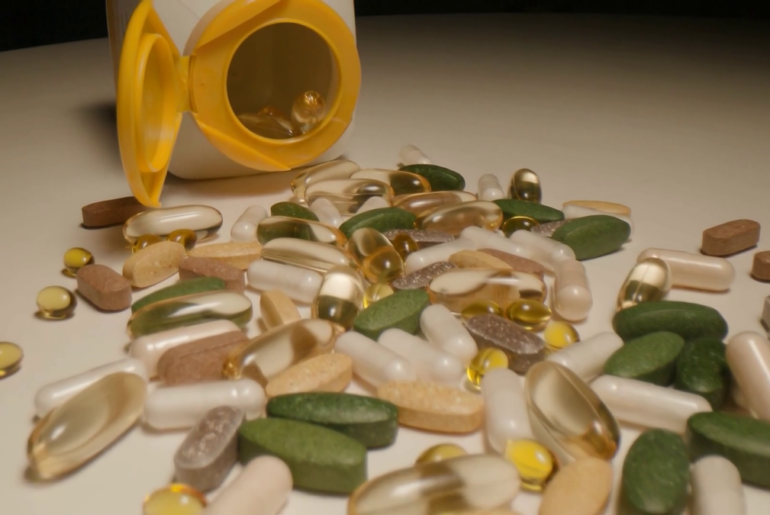
The World Customs Organization’s formal review process has led to a number of clarifications. Firstly, the body has officially defined dietary supplements as “concentrated sources of nutrients or other substances with a nutritional or physiological effect, typically presented in measured doses such as capsules, pills, tablets, ampoules or cachets, or in packings for retail sale.”
The previous HS did not include a comprehensive definition of dietary supplements, meaning that goods were spread among various headings based on their composition.
With input from the Food and Agriculture Organization and the World Health Organization, the WCO created a new heading (21.07) which is split into two subheadings to reflect packaging differences:
2107.10: Dietary supplements put up in measured doses (capsules, pills, tablets, ampoules and cachets intended for single doses), whether or not in retail packaging.21.07.90: Dietary supplement preparations in retail packings but not presented in measured doses.
New notes (4 and 5) to Chapter 21 also define the concepts of “dietary supplements” and “measured doses” for the purposes of heading 21.07, which will make it possible to distinguish between products and assess the product transfers arising out of the amendment.
By enhancing their visibility in the HS, the World Customs Organization seeks to ensure consistent and uniform classification of dietary supplements for the customs community and trade operators, support the effective application of customs procedures and regulatory measures, and provide policymakers with clearer and more reliable data on this stream of trade.
To prepare for the transition, Pettman said companies should monitor guidance from governments, national customs agencies and trade associations before the new rules come into place in 2028.
“In broad terms, governments are likely to reassess how food supplements are currently classified within national customs and tariff systems as they prepare for the updated approach, identifying where clearer guidance may be needed to ensure consistent application,” he said. “The transition is expected to be largely technical in nature, but cooperation between authorities and trade associations can help share practical expertise, support a common understanding of the new category and reduce the risk of disruption to trade as the classification comes into force.”