Curating thoughts and emotions is not a new concept. If you grew up in the 2000s, you’re likely familiar with series like Diary of a Wimpy Kid, Dork Diaries and Gossip Girl, which inspired many to pick up a lined Moleskine notebook and write down their deepest, darkest secrets.
On Tuesday, Feb. 24, Marna Franson, a spiritual consultant on campus, along with NMU Wellbeing, offered students an opportunity to learn about the benefits and mediums of journaling.
“Our life is our biggest gift, so how do we capture that moment and stay in it?” Franson asked. “How do we listen to what wants to come instead of forcing it out?”
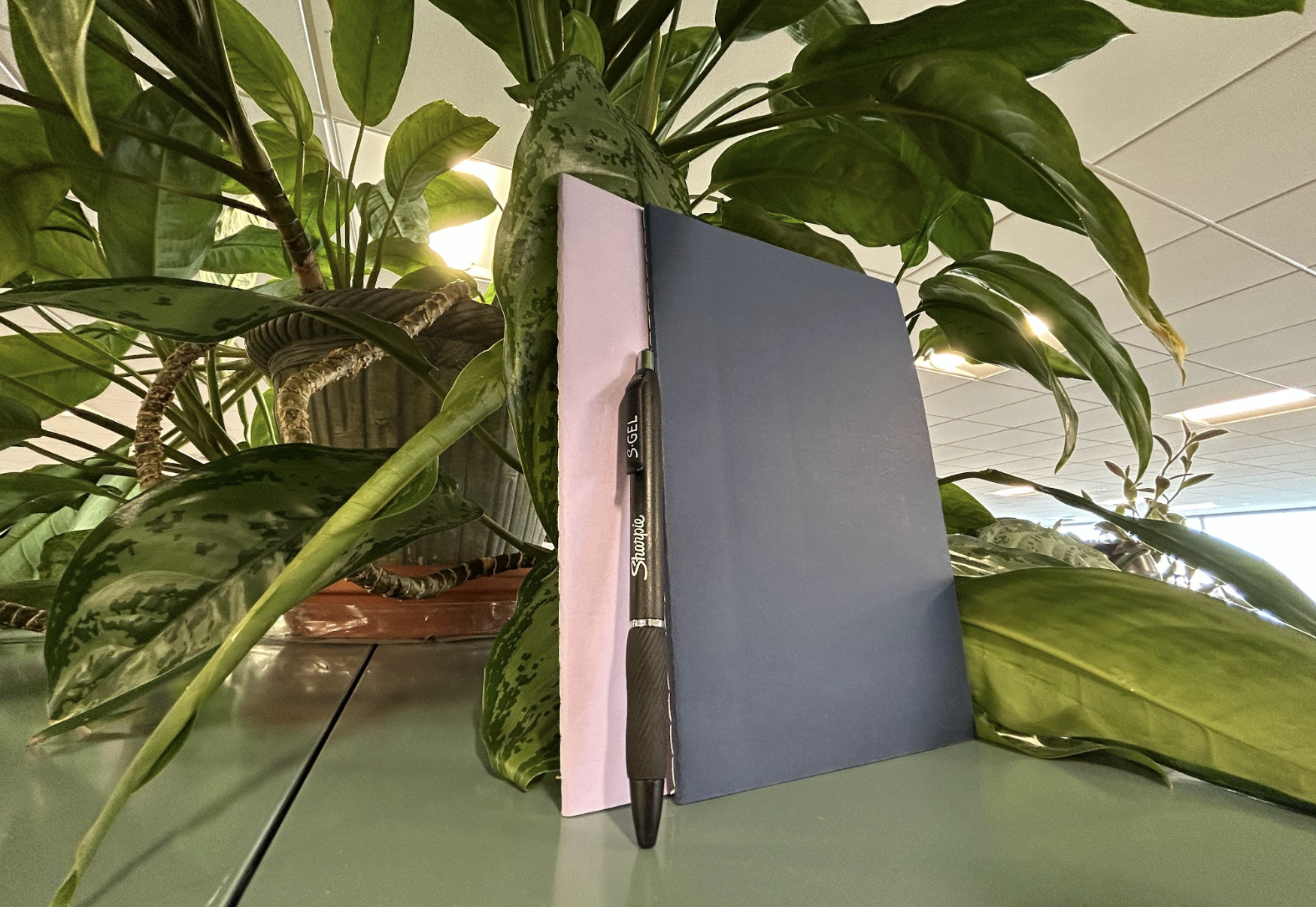
NMU Wellbeing aimed to answer these questions by providing students with journaling materials and guidance, creating a space that encouraged honesty, vulnerability and courage. Each student received two small notebooks of their choice and a few prompts to guide them through the journaling process.
Story continues below advertisement
“One part of spiritual well-being is keeping track of ourselves,” Franson said, “Gaining access to the parts of ourselves that we don’t always pay attention to in our busy lives.”
But how do you start? A simple method Franson introduced involves writing down the 10 most important things in your life, and then, on another page, listing five things you were grateful for that day. This simple act of gratitude and awareness forms the foundation for introspection in a way that isn’t overwhelming or complicated.
“Life is cacophonous—humanity is not for wimps. We need a way to deal with it that won’t take us out,” Franson said. “Journaling captures our lives and gives us the permission and space to process not only what we do but the meaning behind it.”
Taking the time to reflect on our lives can be intimidating—holding up a mirror is difficult when you haven’t seen your reflection in a while—but doing so regularly can help maintain and enhance spiritual health.
“If you don’t know where you are in life, you’re just going to project it onto everybody else,” Franson said. “Something magical happens when you think about yourself and connect your brain to your hand. Recording our lives helps us be courageous.”
Despite the many benefits of journaling, commitment can be difficult. It takes as much discipline to consistently reflect on the highs and lows of life as it does to show up regularly at the gym or achieve academic success.
“We make discipline an ‘I should’ instead of an ‘I get to,’” Franson said. “Viewing things as an opportunity instead of a challenge is a decision, and making that decision is the hardest part.”
If you want to prioritize your spiritual health but missed Tuesday’s event, don’t worry. NMU Wellbeing plans to organize a second journaling seminar that will feature “junk journaling,” which incorporates collages, quotes, and cutouts into a personal and creative piece of art.