Think twice before throwing on a pair of running sneakers for an aerobics class or weightlifting session. These types of workouts call for training shoes: lightly cushioned, flat, firm sneakers that prioritize stability and keep you grounded. “Think of them as your jack of all trades gym shoes,” says Dr. Alicia Canzanese, a podiatrist at private practices in Pennsylvania and a certified athletic trainer. “They’re made for HIIT workouts, CrossFit, weight training and short running or jumping exercises.”
To help you find the right pair of training shoes, I spoke with experts about what to look for when shopping. The NBC Select staff have also been testing training shoes for the past three years, so I rounded up our favorite options across support level, price and activity type.
How I picked the best training shoes
While shopping for training shoes (also often called workout and gym shoes), experts say it’s important to think about the following factors, all of which I considered while curating my list of recommendations.
Activity: For stationary activities like weightlifting and using gym equipment (cable machines, for example), go with flatter, minimalistic options, says Canzanese. For activities that require short bursts of running or jumping, like HIIT, go with training shoes that have a bit more cushioning to support your feet and absorb impact.Stack height: Stack height is the amount of material between your foot and the ground. It generally equates to how much cushioning a shoe’s midsole has, meaning the portion of foam that connects the shoe’s outsole to its upper (the area that covers the entire foot). A taller stack height means more cushioning, while a shorter stack height means less, says Canzanese. Compared to running shoes, training shoes typically have a shorter stack height and less cushioning because they’re meant to be firm and stabilizing. Even the most cushioned training shoes you’d wear for HIIT workouts won’t be as soft or squishy as running shoes, says Canzanese.Heel drop: Heel drop, also called offset, is the difference between the height of the heel and toe of a shoe. Training shoes are known for having a low offset of somewhere between zero and eight millimeters, meaning they’re quite flat, says Canzanese. Flat soles give you a stable base, allow you to connect all points of your foot to the ground and evenly distribute your weight across it to aid your grip.Outsole: Experts say rubber outsoles give you the best grip on gym floors. Paired with a firm heel, they also stabilize your feet, especially when you’re landing from a jump or doing lateral movements.Toe box: Your training shoe’s toe box should be wide enough to comfortably spread out your toes and move them around. This helps you maximize the contact your foot makes with the ground, especially during exercises that require you to push off or put a lot of weight on the front of the foot. When you try on training shoes, make sure your toes don’t feel like they’re being squeezed together — if they do, the toe box is too narrow, says Canzanese.Arch support: Wearing the wrong shoe for your arches can cause pain for the bottoms of your feet, commonly felt as an uncomfortable burning sensation, says Kollins Ezekh, a certified personal trainer, boxing coach and owner of Members Only Boxing and Fitness. While shopping for training shoes, you’ll often see them labeled as neutral, cushioning or stability shoes, which tend to be best for those with neutral, high and flat arches, respectively, says Canzanese. Check brands’ websites to see if this type of language is listed on product pages, and if so, whether the training shoes you’re interested in align with your arch type. (Learn how to determine your arch type in the FAQ section below.)Size: Unlike running sneakers, which people often buy half a size larger to account for swelling and foot expansion, training shoes should perfectly fit your feet. Your feet should not slide around in the shoes whatsoever, so be sure to buy the exact size your feet measure, says Ezekh. Ill-fitting shoes can cause foot pain, blisters and calluses.Return policy: Taking a pair of training shoes for a test drive is the best way to determine whether they fit well and work for the types of exercise you do, experts say. While shopping online, check retailers’ return policies to see how long you have to decide whether you’re keeping them.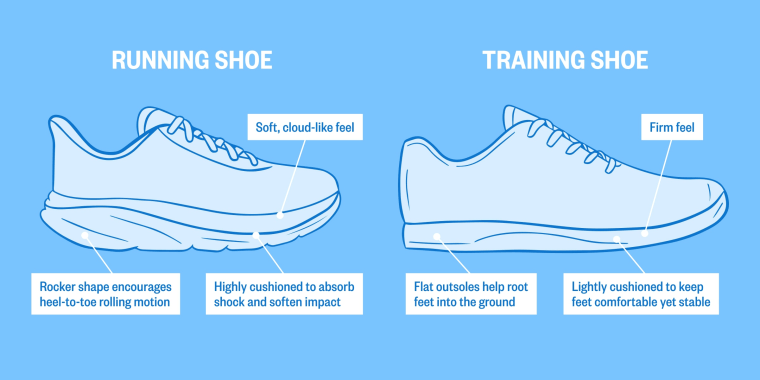 Compared to running shoes, training shoes are flatter, firmer and less cushioned, which makes them better for activities like weight lifting.Olivia Ott / NBC NewsThe best training shoes of 2026
To recommend the best training shoes, I compiled a list of experts’ favorite models and those the NBC Select staff have tested. (Brands sent the NBC Select staff courtesy samples for testing.) Not all brands disclose their training shoes’ stack heights, weights, heel drops and arch support types — if they do, I included that information. Every training shoe on this list is available in half and whole sizes, and they all come in various colors.
Heel drop: not specified | Weight: not specified | Men’s sizes: 3.5 to 13.5 | Women’s sizes: 5 to 15
What we like
Secures feet in placeFlexible mid- and outsoleReinforced heel
Something to note
Wide feet = order half size up
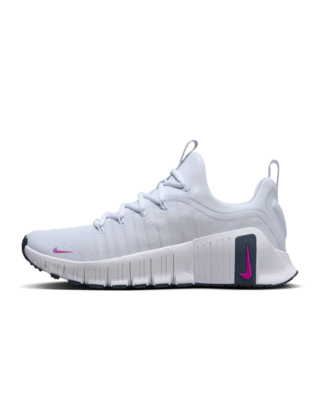
Nike’s Metcons are among the most popular training shoes for workouts, says Ezekh, who wears them during deadlifts and squats. NBC Select senior editor Nikki Brown also loves them. “They’re as comfortable as they are stylish, and extremely supportive for my very flat feet,” she says. “I like wearing them while using my vertical climber at home — they’re not too bouncy and keep my feet sturdy while I’m pushing down on the steps.” The Metcons have a flexible midsole and outsole to support your feet’s natural movements, whether you’re jumping or lifting weights. Their cushioning helps soften your impact and keep feet comfortable, and their heel is reinforced with foam to create a stable base. The shoes are also designed with grippy outsoles, breathable, lightweight, stretchy mesh uppers, and cables that connect the lacing and sole to secure the feet in place.
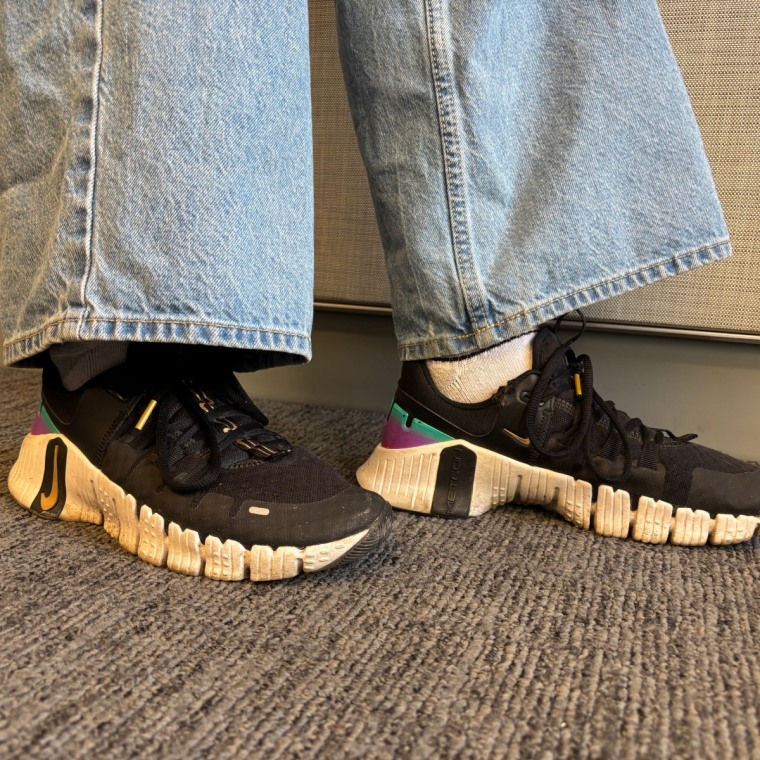 Nike’s Metcon training shoes keep NBC Select senior editor Nikki Brown’s feet sturdy while she wears them on her vertical trainer.Courtesy Zoe MalinBest for HIIT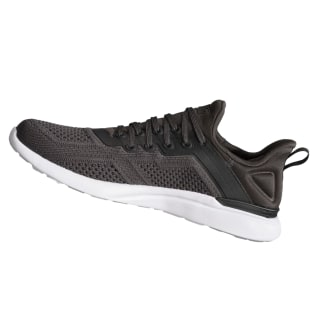
Heel drop: 8 mm. | Weight: 7.1 oz. | Men’s sizes: 7 to 15 | Women’s sizes: 5 to 11
What we like
Slip on or lace upVery lightweightMachine-washable
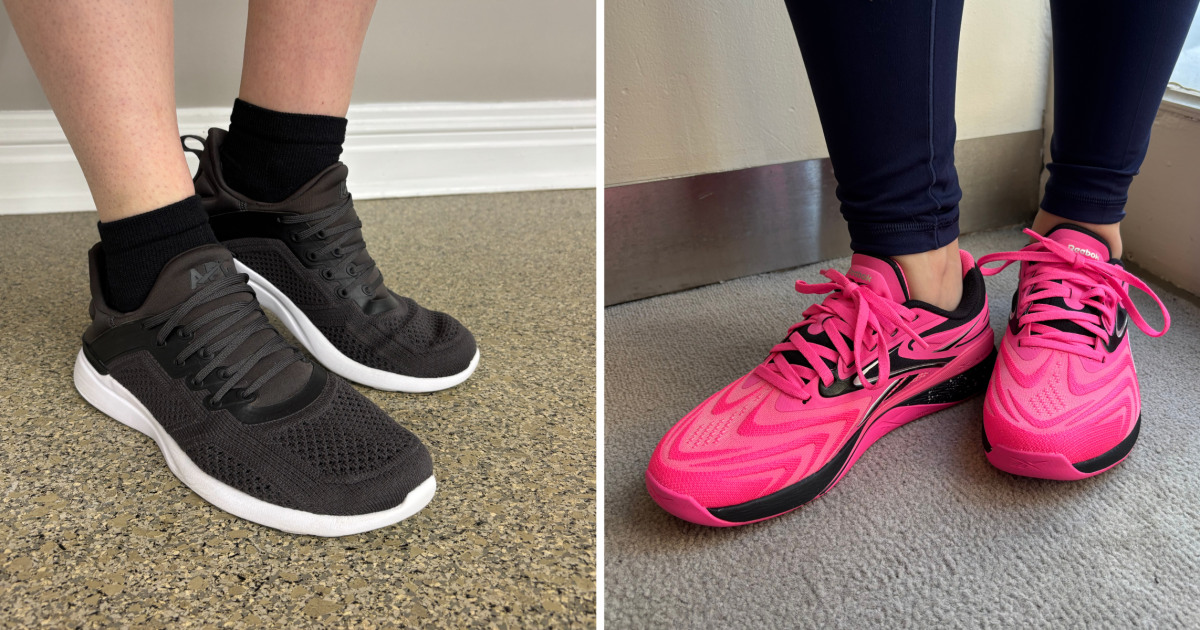
I wear APL’s TechLoom Tracers while doing HIIT workouts because they’re equally supportive during strength and cardio bursts. I find them especially beneficial for sculpt classes where I quickly switch between Pilates exercises with dumbbells and dance sections. The training shoes are designed with a non-stretch material to keep your feet centered on the footbed and offer lateral stability, according to the brand. They also have light cushioning that keeps my feet padded, but it’s not too thick, so I’m always close to the ground while training. The shoe’s collar and tongue are soft against my skin, plus its sculpted heel and rubber traction pads help me keep my balance. I also love that I can tuck the shoes’ laces in so they’re slip-ons, or tie them in a bow.
It’s important to note that these shoes have a snug fit at first, but the more you wear them, the more they loosen up. I had a hard time getting them on and off my feet for a week or two, but now I easily slip them on.
 I tuck the laces into my APL TechLoom Tracers so I can quickly slip them on and off my feet. Courtesy Zoe MalinMost basic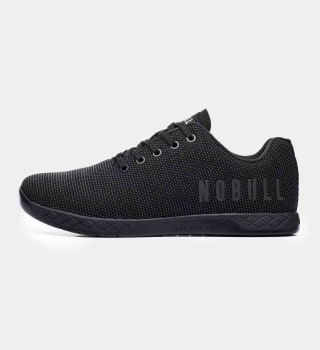
Heel drop: 4 mm. | Weight: 11 oz. | Men’s sizes: 7 to 16 | Women’s sizes: 5 to 11
What we like
Wider toe boxWater-repellentBreathable tongue
Something to note
Snug fitConsider ordering ½ size up
With their light cushioning, grippy rubber outsole and wide toe box, the NoBull Outwork meets all of experts’ specifications for an ideal training shoe. Their upper is made from the brand’s SuperFabric, a durable material treated with a water-repellent coating, and their tongue is perforated to keep your feet cool. The shoes have a snug fit, but they stretch out as you use them, according to the brand.
Heel drop: not specified | Weight: not specified | Men’s sizes: 6.5 to 18 | Women’s sizes: 5 to 19.5
What we like
Spacious toe boxDurable, grippy rubber outsoleExtensive size range
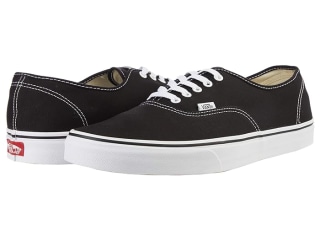
For stationary lifts like deadlifts with heavy weights, wear a training shoe with the least cushioning possible, says Canzanese. Cushioning can compress under a heavy load, which compromises your stability, form and technique. That said, Vans are a completely legitimate deadlifting shoe, as are basic Converse, says Canzanese. “They’re nice and spacious by the toe, and their outsole is completely rubber and durable, so it’s not going to compress under a heavy load. The bottoms are also really grippy, so you’re not going to slip at all.” However, since Vans are so flat and designed with little cushioning, they’re not great for training that incorporates aerobics like running or jumping. You can buy these Vans in standard and wide sizes.
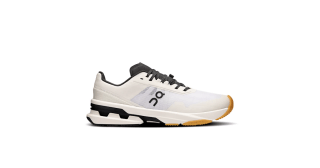
Heel drop: 6 mm. | Weight: 12.9 oz. | Men’s sizes: 7 to 14 | Women’s sizes: 5 to 11
What we like
Built-in heel stabilizersGrounded feelReduces excess movement
Something to note
Not for dynamic movements
On’s Cloudpulse Pro is one of the brand’s most stabilizing sneakers, and it has a secure, steady, grounded feel that makes it best for weightlifting and strength training rather than dynamic activities like HIIT and aerobics. NBC Select updates editor Mili Godio says they’re her all-time favorite pair after testing a handful of options for about three months. “They feel lightweight and comfortable, and provide a great amount of support,” she says. “My arches are very high, so wearing shoes with too much arch support can make them hurt over time. These offered the perfect balance.” There’s light foam cushioning in the sneaker’s forefoot area, built-in heel stabilizers that also support your foot laterally, and webbing in the midfoot area that locks it down to prevent excess movement. The Cloudpulse Pros also have a grippy outsole that gives them extra traction, especially when you’re using medium to heavy weights.
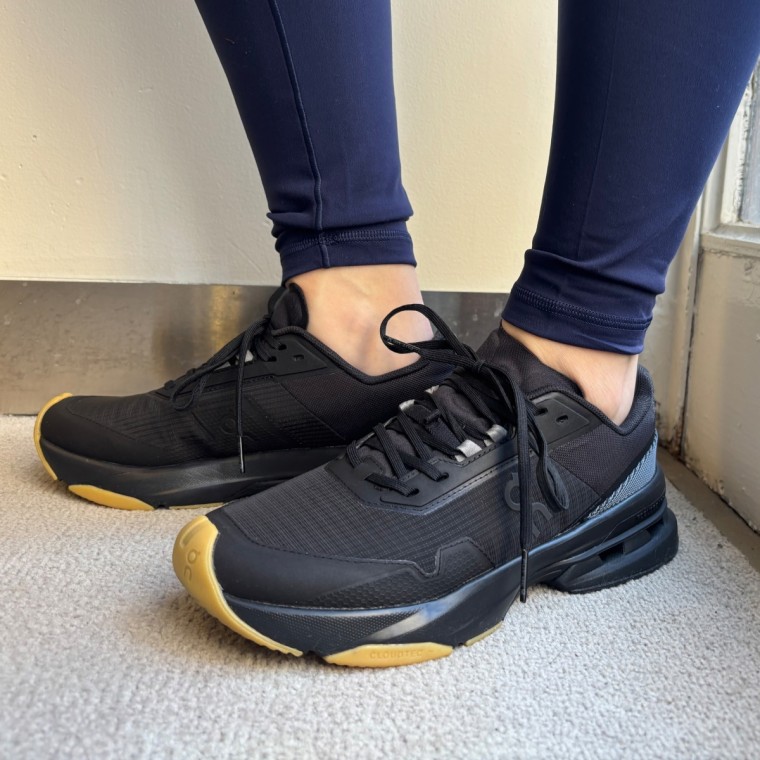 Since these shoes have a minimalist, stylish look, NBC Select updates editor Mili Godio says they go with every workout outfit.Courtesy Zoe MalinBest for stationary activities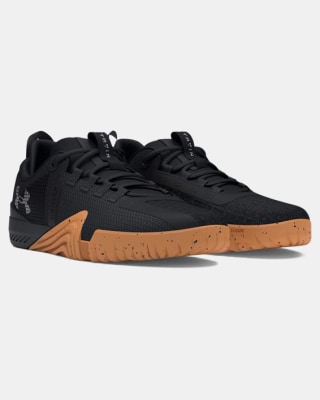
Heel drop: 2 mm. | Weight: 13.7 oz. | Men’s sizes: 7 to 15 | Women’s sizes: 5 to 12
What we like
Flat baseExtra grippy outsoleBuilt-in heel stabilizers
These training shoes have a 2 millimeter offset, making them one of the flattest pairs on this list, so they’re best for weightlifting and other stationary activities like using cable machines or similar gym equipment. The sneakers’ breathable, durable mesh upper keeps feet cool and they have a rubber outsole, plus additional rubber under the toe box to increase grip. There’s also a triangle-shaped base in the outsole that helps your feet maintain contact with the ground. The shoes are made with two heel stabilizers and dual-density foam in the midsole — there’s softer foam in the forefoot and firmer foam in the heel.
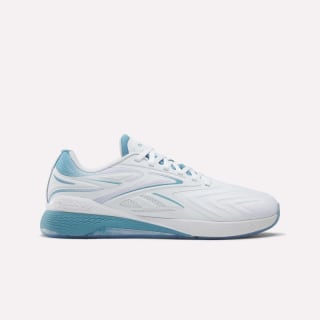
Heel drop: not specified | Weight: not specified | Men’s sizes: 4 to 14 | Women’s sizes: 5 to 15
What we like
Supports a range of activitiesSlight flexibilityWider toe box
Something to note
Nothing to note at this time
Reebok first launched its Nano training shoes in 2011 and has since updated them with new materials and technology. The Nano X5 Edge, one of the brand’s most recent models, is ideal for the gym because of how versatile they are. The shoes support your feet while you warm up on the elliptical, use cable machines, lift free weights or take strength training classes thanks to their foam midsole and flexible yet stabilizing feel, says Godio. The toe box is also wide enough to spread your toes out, helping you make as much contact with the floor as possible.
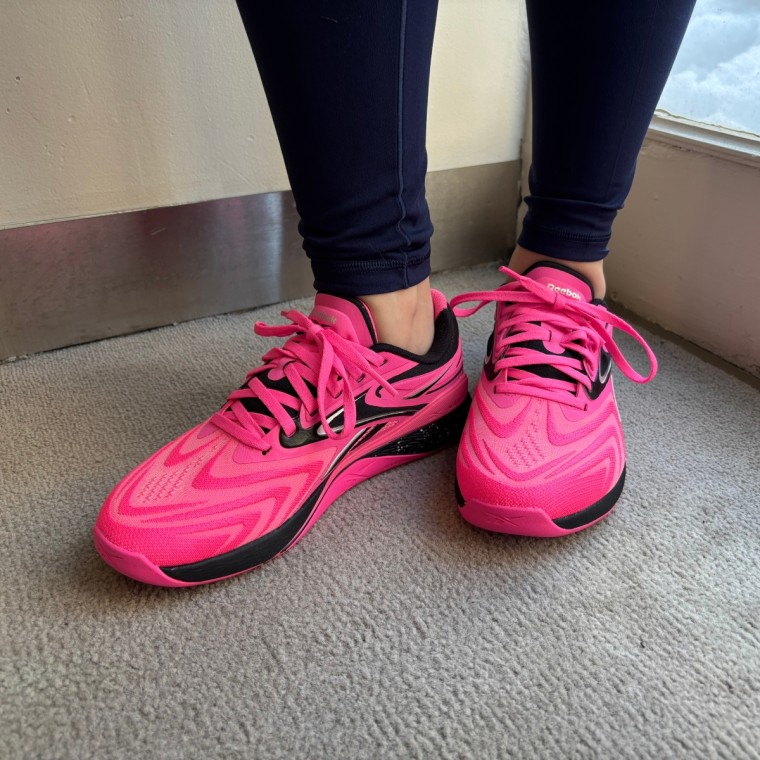 Reebok’s Nano X5 Edge training shoes come in a few neutral colors as well as vibrant shades like this pink pair that NBC Select updates editor Mili Godio tested.Courtesy Zoe MalinBest for cross-training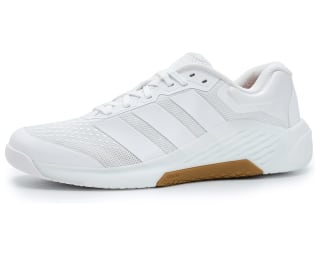
Heel drop: 5.8 mm. | Weight: 10.86 oz. | Men’s sizes: 4 to 18 | Women’s sizes: 5 to 12
What we like
Ideal for aerobics and weightsWider fitHeel stabilizers
Something to note
Nothing to note at this time
These shoes’ foam midsole makes them stable enough for heavy lifts and flexible enough for aerobic intervals that involve vertical and linear movements, as well as short runs. They have a wider fit, so you don’t have to worry if your feet swell, and there’s strategically placed cushioning in the back of the shoes to keep your heels locked in the optimal position for weightlifting. The Dropset 4s have a grippy outsole that gives you traction in dry and wet conditions, according to the brand, so you can workout in them outdoors.
Frequently asked questions
When should you wear training shoes?
You should wear training shoes that are specifically designed for the activity you’re doing to keep your feet comfortable and prevent injury, says Canzanese. So if you’re doing two distinctly different exercises, like running over a mile some days and weightlifting others, you should have dedicated shoes for each. Athletic sneakers are built around the demands of the sport or exercise they’re meant to be worn for, and if you mismatch the shoe and activity, your body won’t be properly supported. This compromises your performance as well as your overall safety, and can lead to injuries like shin splints, Achilles tendonitis, lower back pain and postural issues.
What’s the difference between training shoes and running shoes?
The difference between training and running shoes centers around how they support your feet during each distinct activity. Running shoes prioritize features that assist with the distinct forward, repetitive, linear motion of running, while training shoes are firm and stabilizing, making them suitable for a broad range of exercises in the gym or at home.
One of the biggest differences between training and running shoes is how cushioned they are. Running shoes are usually cushioned with foam to soften the impact your body feels during quick, forceful contact with the ground. People often say they feel like they’re standing on clouds, pillows or marshmallows while wearing running shoes: That’s the exact opposite sensation you want to feel while wearing training shoes, which should allow you to feel the ground beneath your feet. They’re designed with very little cushioning to be firm and stabilize you while weight lifting or during HIIT workouts.
The foam that running shoes are made with tends to give them a bit of height, and their outsole has a rocker shape to encourage the heel-to-toe rolling motion, propelling you forward. In fact, when you’re wearing a pair of running shoes and standing still, your body slightly leans forward without you necessarily realizing it. Training shoes, however, have flat outsoles, which are suitable for a range of movement patterns in many directions. Their general lack of cushioning means they have little to no height, helping root your feet into the ground and evenly distribute your weight across all parts of the shoe.
How do you determine your foot arch type?
There are three arches of the human foot, the longest of which — the medial arch — is what people are referring to when they talk about arch type. There are three arch types: flat, neutral and high. The simplest way to figure out what type of arch you have is by looking at how much of it touches the ground when you’re standing upright.
Flat arches: The arch completely touches the ground. Neutral arches: There is a little space between the ground and the top of the arch. High arches: There is a lot of space between the ground and the top of the arch.
It’s important to identify your arch type because it can help you determine which shoes will be most comfortable for your feet. While shopping for athletic sneakers, you’ll often see brands call them neutral, cushioning or stability shoes, which tend to be best for those with neutral, high and flat arches, respectively, says Canzanese. Check brands’ websites to see if this type of language is listed on product pages, and if so, whether the model you’re interested in aligns with your arch type. If you’re experiencing arch pain, experts recommend visiting a podiatrist for an evaluation and discussing the right footwear options for you.
At NBC Select, we work with experts who have specialized knowledge and authority based on relevant training and/or experience. We also ensure that all expert advice and recommendations are made independently and with no undisclosed financial conflicts of interest.
Dr. Alicia Canzanese is a podiatrist at private practices in Pennsylvania, a certified athletic trainer and a professor of podiatric sports medicine at Temple University’s School of Podiatric Medicine.Kollins Ezekh is a certified personal trainer, boxing coach and owner of Members Only Boxing and Fitness.Why trust NBC Select?
I’m a reporter at NBC Select who has covered fitness apparel and footwear for over five years, writing about topics like women’s walking shoes, women’s running shoes, training shoes, carbon-plated running shoes and running shoes with arch support. For this story, I interviewed two experts about how to shop for training shoes and rounded up their favorite options, as well as NBC Select staff recommendations. I also frequently test training shoes from different brands to stay updated on the newest models.
Catch up on NBC Select’s in-depth coverage of tech and tools, wellness and more, and follow us on Facebook, Instagram, Twitter and TikTok to stay up to date.