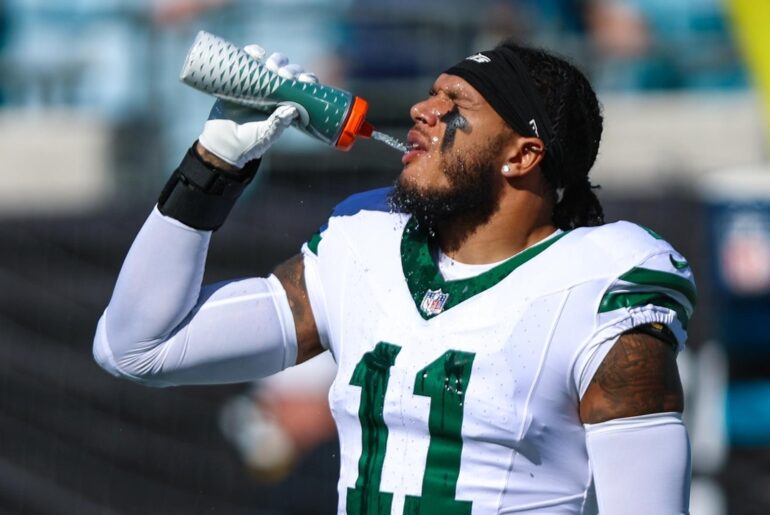
While electrolyte drinks and powders are trending on social media, medical professionals say most healthy people don’t actually need them. The supplements are mainly beneficial for intense exercise lasting over two hours or heavy sweating situations.
Social media platforms are flooded with influencers promoting electrolyte supplements and sharing homemade recipes, but medical professionals warn that many health claims surrounding these popular drinks should be viewed with skepticism.
These electrically charged minerals help control chemical processes throughout the body, according to Julia Zumpano, a registered dietitian with the Cleveland Clinic. When it comes to staying hydrated, they maintain proper fluid distribution between cells.
Our bodies primarily lose electrolytes through perspiration, especially sodium chloride found in regular table salt. Consuming excessive amounts of plain water during heavy sweating can further reduce salt levels, creating an imbalance. These specialized beverages and powders aim to restore hydration while replenishing lost minerals, typically including potassium and magnesium along with various sugar forms.
For most healthy individuals, the kidneys effectively maintain proper electrolyte balance naturally. Any excess amounts are eliminated through urination, explains Hunter Huston, a kidney specialist at Vanderbilt University who also advises a British company developing electrolyte programs for endurance athletes.
“Taking an electrolyte-enriched drink, just for health purposes, probably isn’t doing much,” he said.
Despite the surge in “rapid hydration” and “advanced hydration” products, the question remains: who truly needs them?
The story begins in 1965 at the University of Florida when assistant football coach Dwayne Douglas approached Robert Cade, the university’s first kidney researcher, with a puzzling observation about players not urinating after games.
“That question changed our lives,” Cade said.
The answer was straightforward: players couldn’t urinate because they were losing massive amounts of fluid through sweat. Cade’s team discovered that a single player could shed up to 18 pounds during one game. Beyond water loss, they were also depleting sodium and chloride while losing both plasma and blood volume, which weakened their performance and endurance.
Cade created a salty mixture to restore the water and minerals players were losing. He added sugar to help the digestive system absorb sodium more effectively. His initial attempt made him sick, but adding lemon juice improved the taste slightly. Though still unpalatable, the team’s enhanced performance became undeniable, particularly during second halves when opposing players began struggling in Florida’s oppressive heat and humidity.
Cade, who passed away in 2007, never anticipated that Gatorade would become a consumer staple.
Although electrolyte supplements seem ubiquitous today, not everyone requires them.
Huston suggests that plain water suffices for workouts under two hours. Most healthy people can handle losing approximately 2% of their body weight through sweat before experiencing noticeable effects including increased thirst, exhaustion, and muscle cramps.
Individual differences matter, however. Some people perspire more heavily or have particularly salty sweat.
Extreme athletes participating in ultramarathons often seek professional testing to measure their sweat output and receive customized nutrition strategies.
“Most folks that are exercising, that are, say, doing a marathon, are gonna be way past that two hours, and it does then make sense to be thinking about, ‘What’s going to be my fluid and electrolyte replacement plan?’” Huston said.
Darren Rovell has tracked sports drinks’ evolution from specialized products to mainstream beverages. The author of “First in Thirst: How Gatorade Turned the Science of Sweat Into a Cultural Phenomenon” and former Bodyarmor investor recalls receiving Gatorade as a high school runner with explanations that its poor taste indicated its effectiveness.
The formula became increasingly sweet during the 1990s. Following PepsiCo’s 2001 acquisition, Gatorade appeared everywhere, including pizza restaurants, raising questions about whether it had simply become another soft drink variety.
Rovell believes electrolyte companies promote the notion that their products either transform consumers into athletes or enhance existing athletic performance.
“It all starts in the aspiration of being better, but you know we do have to check ourselves,” he said.
Today’s supplements contain vastly different electrolyte concentrations, notes Patrick Burns, an emergency medicine physician at Stanford Health Care who occasionally competes in ultramarathons. With sodium levels varying by five times between brands, consumers shouldn’t assume all products are equivalent.
Burns also cautioned against excessive potassium supplementation due to potential health risks.
He observed that many brands now offer sugar-free options, despite glucose being essential for rapid sodium absorption.
“They’re not internally consistent, at all, with what they’re trying to sell you,” he said. “For optimal absorption, you need some sugar in with your salt.”
“Electrolytes can help, especially with heavy sweating or exercise, but for most people, they’re not something you need every single day, and you definitely don’t need large amounts of it,” the Cleveland Clinic’s Zumpano said.
For healthy individuals who aren’t sweating intensely, these beverages likely won’t cause harm but won’t provide benefits either.
“You’re getting extra sugar, and there’s no reason (for) rapid absorption of sodium because you’re not sodium depleted,” said Mark Segal, a kidney specialist at the University of Florida College of Medicine. Most people obtain sufficient salt and potassium from their regular diet, he explained.
Regarding homemade electrolyte powders, experts say it’s possible but requires proper knowledge. They recommend avoiding recipes from social media influencers.
“How do you know how much you need?” Zumpano asked. “There’s a large margin of error there. I’d probably just avoid it.”