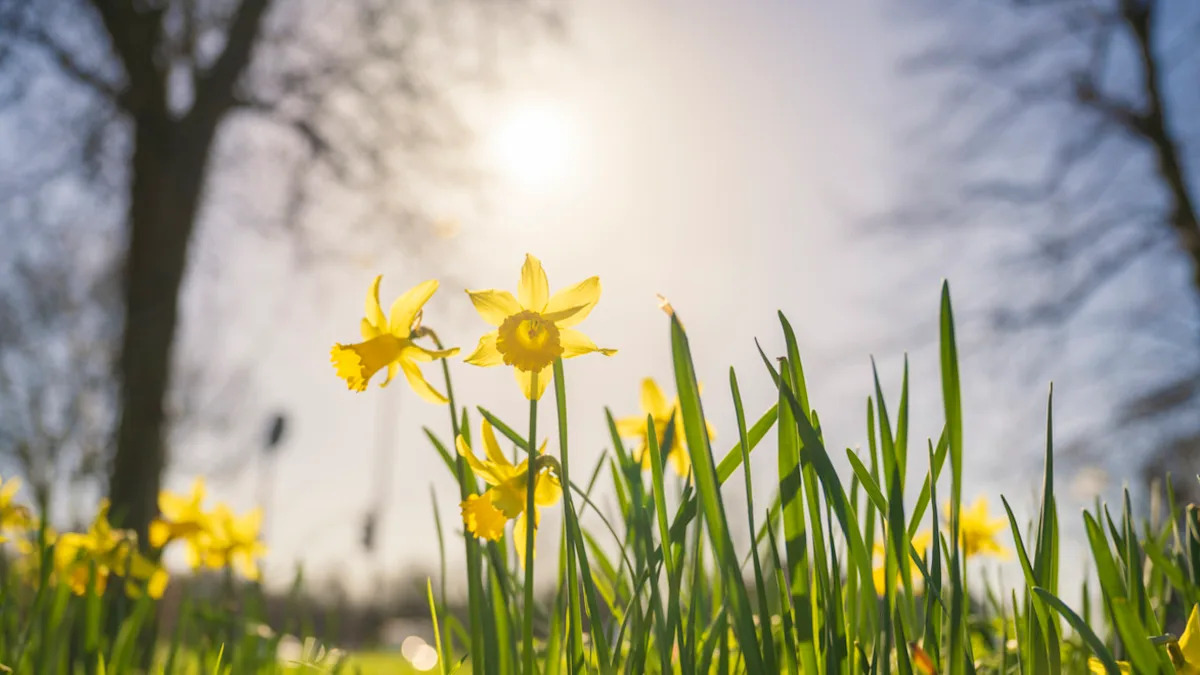
As the first tender shoots of spring emerge from winter’s barren soil, the sunny faces of daffodils are there to greet them. Rising from the earth with the promise of brighter days ahead, it’s no wonder the daffodil has been designated the birth flower for March.
When selecting flowers to celebrate a March birthday, the options span from pure white daffodils to golden yellow, apricot and even peach varieties of this cheerful bulb.
Expert florist Carmela de Castro of Orchid Republic Floral Boutique explains why daffodils make meaningful birthday bouquets: “As a seasonal spring flower, it symbolizes all good things, like hope, new beginnings and happiness.” Beyond these positive attributes, the daffodil’s bright hues lend themselves to vibrant floral arrangements as well.
Read on to learn more about the stories hidden behind the daffodil’s sunny exterior and why the March birth flower has been treasured across cultures for centuries.
Related: What Is Your Birth Flower? Find Out the Meaning Behind the Blooms for Each Month
What Is the March Birth Flower?
The March birth flower is the daffodil, known by its botanical name “Narcissus.” The most common types feature yellow trumpets surrounding a darker yellow or orange cup-like corona, and white daffodils without any yellow at all are also popular.
Depending on the type and cultivar, blooming daffodil flowers can range from early spring through early summer.
What Does the Daffodil Symbolize?
Beyond the associations of hope, new beginnings and happiness, Castro says that daffodils have special symbolism in some cultures as well, explaining: “The narcissus paperwhite varieties are also prominent in China as bearers of luck and prosperity. The myth is that if they bloom during the Spring Festival or Chinese New Year, you’ll be very lucky the whole year or season.”
Even the somber aspect of daffodils reflects optimism in its own way, according to Castro: “It is not uncommon to give daffodils as gifts to cancer patients because they represent hope for a cancer cure.”
So in sickness or health, daffodils convey faith in brighter futures.
Related: What Does the Lotus Flower Symbolize, Exactly? Experts Reveal Its Significance
Daffodils in History
Daffodils have a long documented history spanning back centuries. These spring blooms were first described nearly 2,500 years ago around 300 BC by the ancient Greek botanist Theophrastus in his book, Enquiry into Plants.
But the popularity of daffodils has grown far more recently. They were unknown to the British Isles until the Roman conquest, when they were brought over for their purported healing properties. The sap from daffodil bulbs was thought to have medicinal value.
In the 19th century, daffodil varieties and classifications expanded greatly thanks to keen interest among breeders and collectors. Still, it wasn’t until the 1930s that daffodils really took England by storm. By the 1950s, twice as many daffodils were being grown in England as tulips.
Castro references the book Daffodil: The Remarkable Story of the World’s Most Popular Spring Flower by Noel Kingsbury regarding the daffodil’s role in certain cultures: “In Muslim nations in the Middle East, fresh daffodils were planted or offered in cemeteries as a symbol of death and the afterlife.”
Even in memorial contexts, the daffodil as the flower that returns every spring carries hopeful symbolism of renewal.
Related: Why Are Poppies Used for Memorial Day? Here’s What They Mean
How To Care for Daffodils
Castro shares insider tips for enjoying daffodils longer as cut flowers, explaining: “We suggest getting your daffodils in bud form and separating them from other flowers if keeping them in a vase because their stems tend to get sappy and soggy easily. Cut the edge of the stems every couple of days and change the water frequently. Do not fill up the whole vase, keep it shallow just to keep the ends of the stems wet. They can last up to a good 10 days.”
Follow these pro recommendations and your birthday daffodils will stay perky from first unwrapping to when you blow out the last candle.
Related: What Is Your State Flower? Your Guide to All 50 Blooms from Alabama to Wyoming
March’s Secondary Birth Flower: The Jonquil
Beyond the iconic daffodil, March babies also have the option of the jonquil as their birth flower.
Resembling tiny daffodils, jonquils feature clusters of tiny, fragrant blossoms. Their scent is one difference from daffodils, as Castro notes: “Jonquils have a more intoxicating fragrance compared to daffodils.”
What Does the Jonquil Symbolize?
Given their close resemblance to daffodils, Castro says jonquils share similar symbolism: “Because of their uncanny resemblance, it’s not surprising to give you the same flower meaning as their daffodil twins. But we know that jonquils are perfect for seeking sincere apology or forgiveness.”
With a more pronounced fragrance and diminutive size, the delicate jonquil flower eschews the showy optimism of daffodils for subtle reach outs to mend relationships. So for March babies seeking reconciliation or wanting to convey heartfelt apologies, the tiny jonquil’s shy grace speaks volumes.
Related: 26 Best Easter Flowers to Celebrate the Holiday and Fill Your Home With the Beauty of Spring
Jonquils in History
While less documented than the daffodil, the jonquil shares a close kinship as a member of the Narcissus genus. Jonquils are native to the Mediterranean region and have been cultivated in similar warm climates worldwide for centuries. These fragrant flowers produce an oil used in perfumes.
Jonquils are perennial plants that flourish year after year, enabled by their underground nutrient-storing bulbs. Each spring, fresh green foliage emerges from the bulbs to provide bursts of sunny blooms. Gardeners across eras have prized jonquils both for their attractive clustered flowers and intense sweet scent.
How To Care for Jonquils
According to Castro, caring for cut jonquils would be similar to daffodils. Separate jonquil stems from other bouquet flowers, change the water daily and make neat cuts across the stems every few days to maximize their vase life.
The steadfast daffodil, reemerging every spring to trumpet in the warmer seasons, carries hopeful symbolism that spans cultures and eras. Gift its sunny optimism to the March babies in your life. And if seeking forgiveness or reconciliation is on the agenda, bring along the sweeter-scented jonquil to pave the way.
March Birth Flower Tattoos
Here’s some tattoo inspiration that incorporates the March birth flower.
This story was originally published by Parade on Mar 1, 2026, where it first appeared in the Life section. Add Parade as a Preferred Source by clicking here.