Asif M Basit, UK
 Image: Library
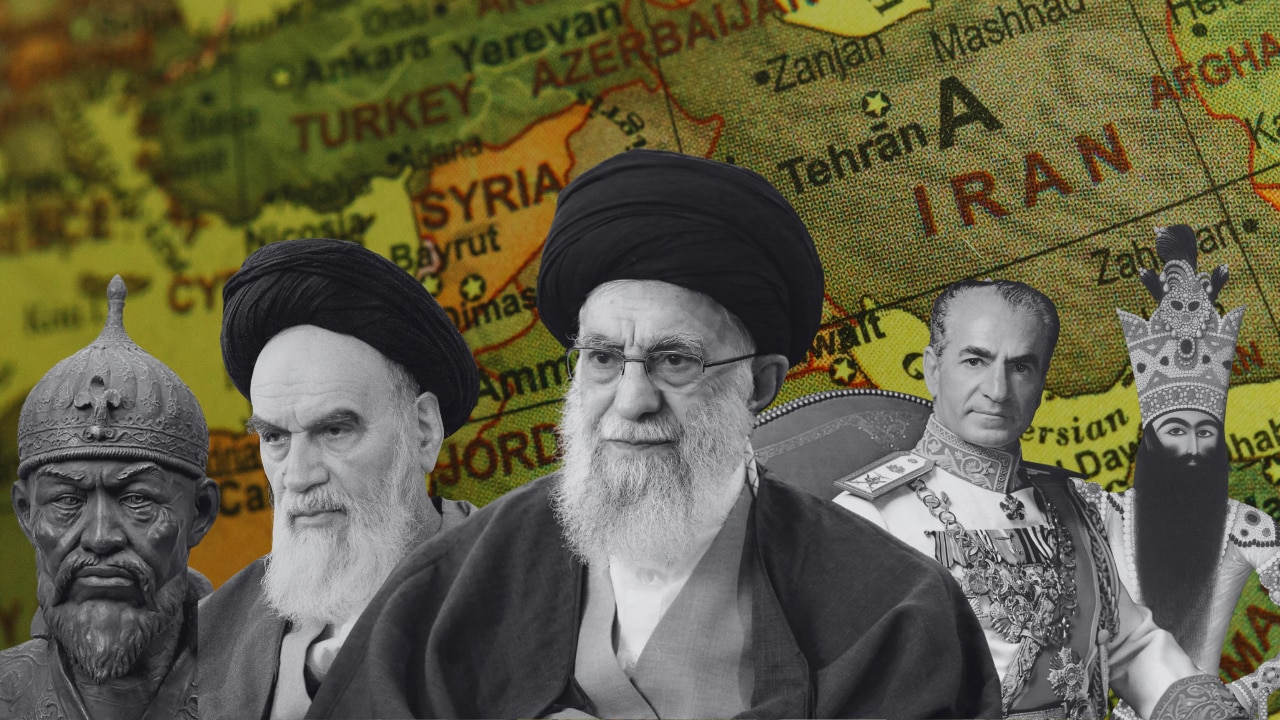
The land of Salman al-Farisi is in the news again, but not with the glad tidings associated with this Companion of the Holy Prophetsa, but with the heart-wrenching news and visuals of unrest, violence and mass disturbance. The supreme leader, the so-called Ayatollah or “the sign of Allah,” has been killed by US-Israeli forces and the populace is said to be split between jubilation and mourning.
Where other associated incidents like the killing of innocent girls in a school are heartbreaking, what is equally frustrating and astonishing is how the leaders of the so-called Muslim world have left Iran at the mercy of Western powers. And no! No one here means the political machinations of Iran; we mean the innocent civilians of Iran who are dying while their coreligionist nations sit back and see them fall.
But then, all the leaders of Muslim nations have bigger fish to fry: “I am an ally of the US. How can I speak up? What of the loans just recently sanctioned by the IMF? What of the aid I receive for providing an airbase to the US? What would happen to my trade deals with the EU? How will Saudi Arabia see my condemnation?” So many “what-ofs” and “what-ifs” are making Muslim leaders stay put.
Whether Muslim world leaders agree with Iran’s political ideology or its religious bent, the civilians of Iran remain their brethren. In this time of immense turbulence and uncertainty, they look at the Muslim world with perplexed eyes and faint hearts. And in their eyes play films (or reels to keep them modern and brief) with scenes that alternate between their glorious past, their shattered present, and their blurred future.
The land of Persia, known now as Iran, was once known for its literary, intellectual, administrative and architectural contributions to the nascent Islamic Empire – but all this happened after the time of the Holy Prophetsa of Islam. In his era, the Sassanid Empire was a superpower sitting West to the Arabian Peninsula.
The Holy Prophetsa had a bitter-sweet imagination about Persia where he saw the downfall of the Sassanid Empire as well as seeing the people of Persia to be the rejuvenators of faith when faith was to vanish from the face of the earth. (Sahih al-Bukhari, Kitab al-Tafsir, Hadith 4897)
Salman al-Farisi, with his knowledge of Sassanid military tactics, came up with the idea of a trench to be dug during the war that later became eponymic with the trench – his tuppence that saved the city of Medina. (The History of al-Tabari [trans. Michael Fishbein], Vol. 8, p. 8)
Persia, now Iran and a burning centrepiece on the global chessboard, came into the fold of the Islamic Empire in the Rashidun Caliphate of the Holy Prophetsa. Umarra ibn al-Khattab, titled Faruq-e-Azam or the Great Distinguisher, was the one to finally take over the Sassanid Empire through multiple battles, the most notable being the Battle of al-Qadisiyyah. The wound of this defeat was so deep that Umarra ibn al-Khattab was later to be martyred by none else but a Persian, Abu Lulua Firoz – thus continuing the bittersweet relation of Islam with Persia. (The History of al-Tabari [trans. G. Rex Smith], Vol. 14, pp. 89-93)
But in the decades and centuries that followed, it was from the Persians that started to emerge persons who acted as the saviours of the faith. The great collectors of Hadith like Imam Muslim, Tirmidhi and Ibn Majah – whose collections make part of the Sahih collections of Hadith- all came from Persia.
The Golden Age of Islamic scholarship owed a great deal of its glory to Ibn Sina (Avicenna), al-Biruni, al-Razi, Nasir al-Din al-Tusi, and, of course, Imam al-Ghazali. All were from the land of Persia. A great name with Persian descent that cannot be forgotten is that of Imam Abu Hanifa, whose fiqh provided a better understanding of Islam and is still seen as the most predominant Fiqh in the Muslim world. And how can the name of Jalal al-Din Rumi be left out from even the shortest list celebrating the stalwarts of the Sufi tradition of Persia.
Persian architecture influenced Islamic mosques so much so that the dome and minaret, now seen as essentials for any mosque in the world, trace their origin in Sassanid architectural designs.
We are not here to comment on the politics behind the conflict being witnessed on our TV screens and our social media feeds today. Nor are we here to comment on the Shia-Sunni divide that lends a major colour to the picture of modern-day Iran. Also, we are not here to mourn any individual.
We mourn, however, the death of Muslim solidarity. Iran – whatever its differences with the rest of the Muslim world – stands alone while other Muslim leaders sit in their TV lounges, witnessing on their television screens as the attack on Iran unfolds.
Statements condemning the attack are easy to make – it’s only just a matter of tactfully arranging a set of words. Just as easy as it is for them to be ignored in the global political theatre. Ideological legitimacy of geopolitical policy aside, Iran is a member of the Organisation of Islamic Cooperation.
The silence of OIC member states is something that shocks every Muslim. And by silence, we mean inaction. The indifference of OIC (whether it is even an organisation, or even Islamic, and whether there is anything like cooperation in this body is another question) is something that leaves Muslims feeling firm in their belief that such organisations are not the way forward in rejuvenating the lost glory of Islam.