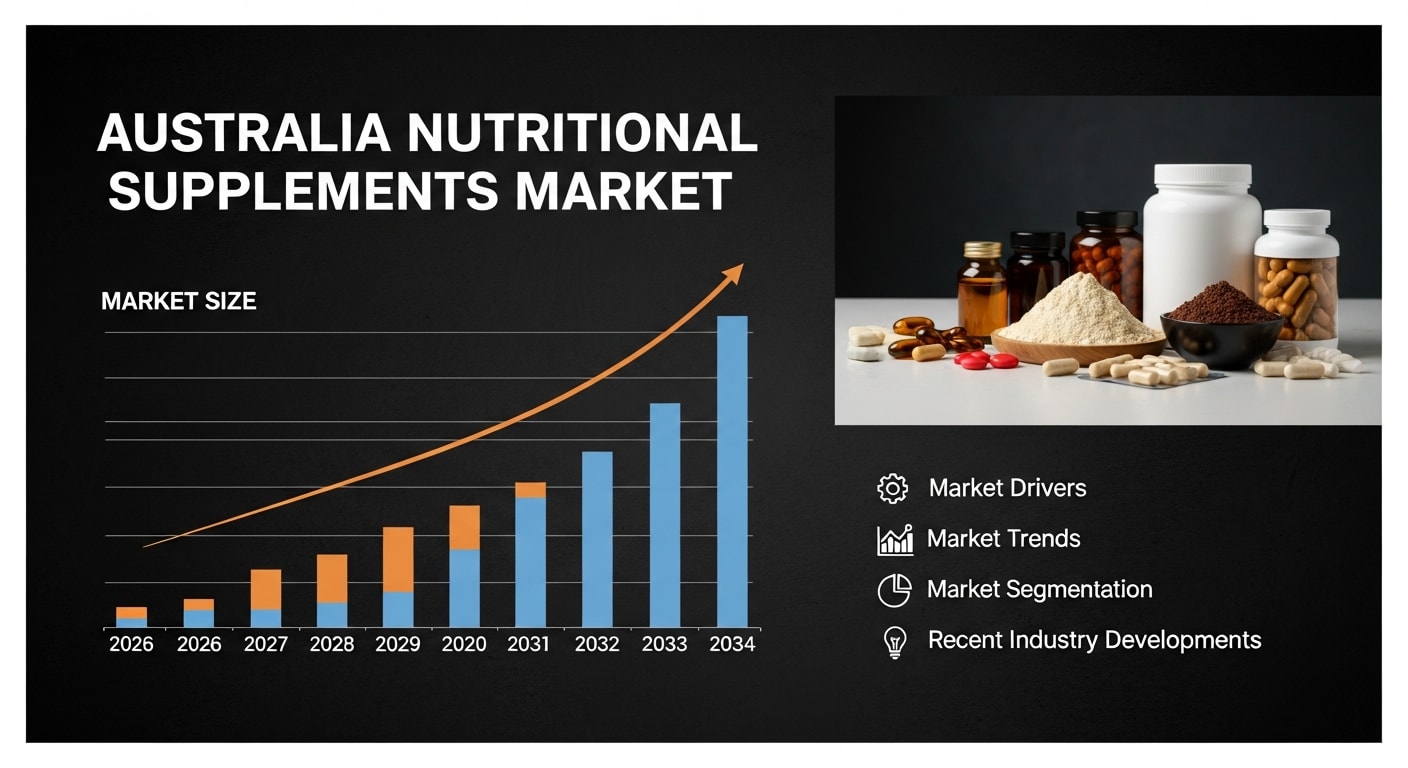
According to IMARC Group, the Australia nutritional supplements market reached USD 14.5 Billion in 2025 and is projected to grow to USD 28.8 Billion by 2034, exhibiting a compound annual growth rate (CAGR) of 7.64% during 2026–2034. The market’s rapid expansion reflects a structural shift toward preventive healthcare and wellness-focused lifestyles across Australia. Consumers are increasingly prioritizing immunity enhancement, fitness optimization, and overall well-being. Growing interest in plant-based, clean-label, and scientifically backed formulations, combined with the expansion of e-commerce platforms, is reshaping purchasing patterns and strengthening Australia nutritional supplements market share across demographic segments.
Why Should Smart Buyers and Investors Know About the Australia Nutritional Supplements Market?
Strong Growth Trajectory
A projected CAGR of 7.64% reflects sustained expansion.
Preventive Healthcare Alignment
Rising wellness awareness ensures consistent consumer demand.
Digital Retail Advantage
E-commerce growth enhances scalability and accessibility.
Innovation-Driven Differentiation
Targeted and personalized formulations strengthen competitive positioning.
Regulatory Stability
Quality standards foster consumer confidence and market credibility.
Recent Trends & Developments in the Australia Nutritional Supplements Market
October 2025:
Launch of plant-based collagen alternatives targeting beauty and wellness segments.
June 2025:
Expansion of probiotic supplement lines focusing on digestive health.
February 2025:
Growth in subscription-based supplement delivery models enhanced recurring revenue streams.
Australia’s nutritional supplements market is advancing rapidly as consumers embrace preventive healthcare, fitness optimization, and holistic well-being. Expanding from USD 14.5 Billion in 2025 to a projected USD 28.8 Billion by 2034, the industry reflects sustained demand for clean-label, plant-based, and scientifically formulated products. E-commerce expansion, product innovation, and regulatory transparency are reinforcing market stability and competitiveness. As personalized nutrition and digital health integration gain prominence, Australia’s nutritional supplements sector is positioned to remain a central pillar within the country’s evolving health and wellness ecosystem.
Australia Nutritional Supplements Market Vision 2050
1. Personalized and Precision Nutrition
Advances in biotechnology may enable highly customized supplement regimens tailored to individual health profiles.
2. Integration with Digital Health Platforms
Wearable devices and health apps could recommend supplement intake based on real-time biometric data.
3. Sustainable Production Models
Eco-friendly sourcing and recyclable packaging may become industry standards.
4. Functional Food-Supplement Convergence
Blurring boundaries between food and supplements may create hybrid wellness products.
5. Global Export Expansion
Australia’s high-quality manufacturing standards could strengthen international market presence.
What Are the Key Growth Drivers in the Australia Nutritional Supplements Market?
Rising Health and Wellness Awareness
Australian consumers are becoming more proactive in managing their health, focusing on preventive measures rather than reactive treatments. Vitamins, minerals, probiotics, protein powders, omega-3 supplements, and herbal extracts are widely adopted to support immunity, energy levels, and long-term wellness.
Growth in Fitness and Active Lifestyles
The increasing popularity of gyms, sports participation, and active outdoor lifestyles is driving demand for sports nutrition products. Protein supplements, amino acids, and performance-enhancing formulations are gaining traction among fitness enthusiasts and athletes.
Shift Toward Plant-Based and Clean-Label Products
Consumers are demanding supplements made from natural, non-GMO, and sustainably sourced ingredients. Plant-based proteins and vegan-friendly capsules are experiencing strong growth, reflecting broader dietary shifts toward ethical and environmentally responsible consumption.
Expansion of E-commerce and Digital Retail
Online platforms provide consumers with easy access to a wide variety of supplement brands and product categories. Subscription models and direct-to-consumer channels enhance convenience and foster brand loyalty. Digital marketing strategies, including influencer partnerships and educational content, further support sales growth.
Continuous Product Innovation
Manufacturers are developing targeted formulations for specific health needs such as joint support, cognitive enhancement, digestive health, and stress management. Personalized nutrition, based on genetic testing and lifestyle profiling, is emerging as a key innovation trend.
Aging Population and Chronic Disease Management
An aging demographic is increasing demand for supplements that support bone health, cardiovascular wellness, and immune function. Supplements are increasingly integrated into broader healthcare management strategies.
Evolving Regulatory Frameworks
Stricter labeling requirements and quality control standards enhance consumer trust. Regulatory oversight ensures product transparency, safety, and efficacy, supporting long-term industry credibility.