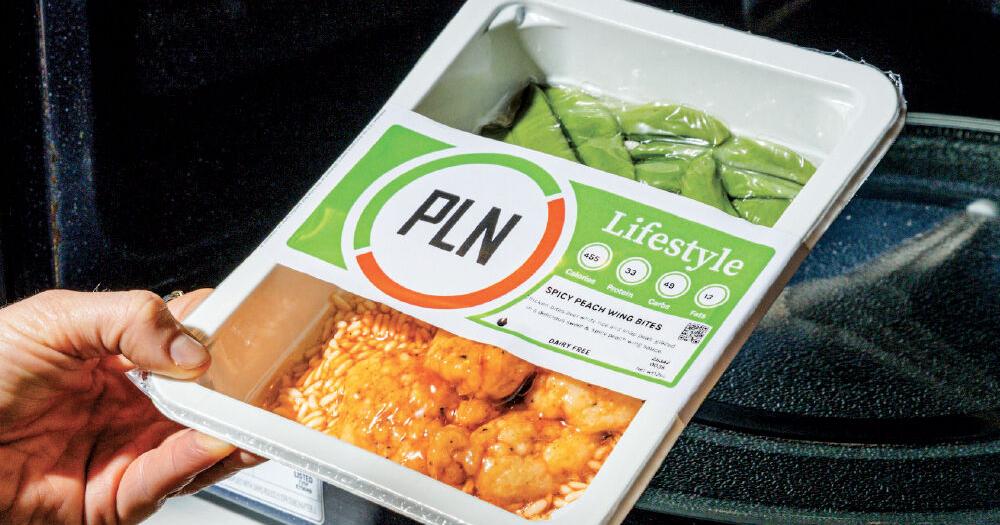

Project LeanNation has a centralized manufacturing facility where it prepares meals for distribution across its franchise network. Along with the food it sells to its members, clients can receive fitness coaching from staff at each location.
The growth in fitness and healthy food franchises in recent years has been undeniable. Tim Dougherty, the founder and CEO of Project LeanNation, is especially excited about the potential in those categories, as his brand offers both.
Founded in 2012, the concept offers ready-to-eat meals meals, along with tools for healthy eating and fitness coaching.
Franchising since 2022, the concept has grown to 34 locations in 15 states, all but one franchised. To support its meal preparation and distribution, the company built a 35,000-square-foot manufacturing facility. It’s a much larger operation than the brand’s humble beginnings, when Dougherty was making meals at his home.
Back then, Dougherty was trying to get back on his feet through fitness after a major setback. In his 20s, Dougherty worked as a stock promoter and in 2008 he was charged with conspiracy to commit securities fraud. He was later sentenced to 36 months in federal prison.
“I had this perspective that when I was going to be released, everything would be amazing, and it wasn’t,” Dougherty said. “Part of that was the personal load I was carrying. I had a fair amount of shame associated with that piece of my life. But since I was a young man, the gym’s been an anchor for me, and when I came back home, I went back to the gym.”
Working out again not only allowed Dougherty to get himself on the right track, it also opened his eyes to an opportunity. In returning to the gym, he said he noticed others who were working out and realized there were plenty more who were interested in improving their health, but didn’t have the knowledge or support to stay consistent.
“I just started making some meals for my family and friends, and I walked with people through hard times,” Dougherty said. “I’d show up at their door every Sunday, making thousands of meals in my garage. I felt like every time I was serving somebody, I was earning back a little piece of myself.”
Tim Dougherty started making meals for friends and family before launching Project LeanNation.
In short order, Dougherty was approached by a friend in the real estate business who offered a space in Rochester, New York, as a potential spot to open a storefront. In 2015, the location became the first Project LeanNation store, though there were still some growing pains.
“The next phase was getting people interested in duplication, though it took us a while to operationalize the business,” Dougherty said. “We went through licensing and opened a couple stores in Charlotte, and learned every possible hard lesson, from technology to supply chain and manufacturing, as well as standard operating procedures and member experiences.”
In Dougherty’s view, every problem has a solution, and the early struggles helped the brand improve. Eventually, leadership felt it was time to franchise to create a better platform to scale and fulfill the brand’s mission.
“I became obsessed with the operations and building things that could multiply and benefit a lot of people,” Dougherty said. “The impact has always been our goal, and we have a passion to help as many people we can get healthy. When I looked at what it would take for me to corporately grow, I saw a harder path, so franchising made the most sense.”
Because of the centralized production at the manufacturing facility, Dougherty said the brand has low operational complexity. For its members, the concept uses a technology called Body 270, which is used in both the medical world and CrossFit training. The program assesses a person’s health and can determine a caloric goal, which allows staff to design the right meals and coaching support.
Dougherty said about 20 percent of the brand’s business is through referrals and customers come in once a week to get their food and set up another appointment. Franchise locations have an average unit volume of $643,443; the investment range is $260,150 to $396,650.
Brandon Hudson, the director of growth at Project LeanNation, said the brand bridges the gap that exists in the fitness industry today.
“You have prepared meal companies like Factor and Hello Fresh, and they’re great at delivering the product to the doorstep,” Hudson said. “On the flip side, there’s WeightWatchers, Nourish and places with online coaching, but the execution of nutrition can be difficult. We have the sweet spot, and can deliver it locally in the community. We’re providing the healthy convenience of a prepared meal and educating our consumer.”