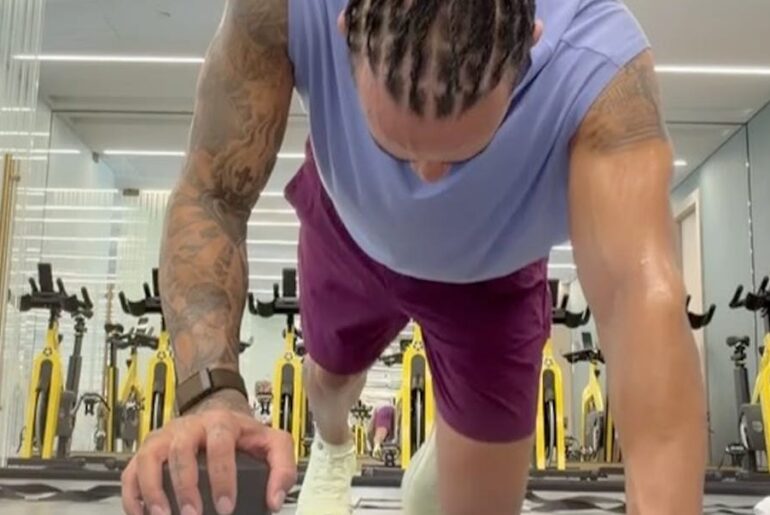
In addition to increasing mobility, working on specific upper body muscles will lead to an increase in muscle size and strength, especially in the chest, shoulders, and arms.
“This will affect the shape of the upper body by broadening the shoulders, increasing the width of the chest, and increasing the circumference of the arms,” Telegadas explains.
“As your upper body strength increases, you’ll also experience an increased ability to produce force, plus a confidence boost from the increase in feel-good hormones such as serotonin, dopamine, and endorphins,” he adds.
With resistance training in general proven to decrease your risk of all-cause mortality, upper body sessions are a no-brainer.
Some downsides to bear in mind
As any gym bro will tell you, upper body exercises aren’t a cure all. Lean on them too heavily and you’ll only cause yourself more woes.
“Gym goers can expect to see downsides if the exercises are not programmed or executed correctly,” says Telegadas. “For example, if you don’t do enough pulling movements relative to pushing movements, you could be in pain.”
Ever suffered from a bad back after banging out push-ups? This is why. As well as warming up properly, Telegadas recommends rotating your exercise plan every three to four weeks to not only avoid over-training, but to keep your muscles guessing, and adapting.
“A pull-to-push ratio of 2-3:1, with two to three pulling reps for every one pressing rep is ideal,” says Telegadas. “Don’t forget, if you’re only working out your upper body you’re leaving a lot of gains left on the table.”
Adding in lower body sessions in between your push-pull splits not only encourages a more rounded physique and level of ability, but also gives your poor chest, back, and arms time to recover.
The best upper body strength exercises to incorporate into your routine
Looking to boost your repertoire beyond the bench press? Here, Telegadas and Santos recommend their favorite upper body exercises with tips on getting them right.
Incorporate them into your routine as required, making sure to follow a balanced plan as described above.
Bench Press
“This is everyone’s favorite, so try to get it right,” says Santos, who stresses the importance of performing the movement with maximum control. “Focus on time under tension and earn the right to progress the weight,” he says. “As a general rule, ensure the bar touches your chest and you fully extend your arms to complete the repetition.”
Incline Bench Press
A variation on a classic, Telegadas advises the incline press as a great substitute for those struggling with the flat bench. “Common mistakes are the same as in the normal bench press,” he says. Make sure to go deep with each rep, take your time, and remember the incline press should land a little higher up the chest.
Z-Press
“This is a fantastic vertical push movement that will help develop shoulder and tricep strength while challenging your overhead and core strength and stability,” says Santos. Pick a medium to light weight, sit on the floor with your legs stretched in front of you, keep your chest tall and perform a traditional shoulder press while keeping in position.