Editor’s Note: Join Lexipol, FireRescue1 and our partners for First Responders Wellness Week from March 23-27, 2026. Each day we’ll focus on a different topic, providing shift briefing videos, webinars, articles, podcasts and more, all within the overarching theme of being “Total Wellness. True Readiness.” Learn how to participate.
Last month, the International Association of Fire Fighters released a position statement on NFPA 1580: Standard for Emergency Responder Occupational Health and Wellness — a standard that has raised debate about how fitness, health risk and operational readiness should be evaluated.
The standard consolidates several long-standing health, wellness and medical standards into a single, comprehensive document that affects how departments assess and manage firefighter health across the career span. The IAFF statement supports the current language in the standard as fair, scientifically grounded, and focused on appropriate health screening while preserving the distinction between medical evaluation and job performance expectations.
| BETTER EVERY SHIFT: James Geering talks 24/72 shift schedules
While the document characterizes the transition from NFPA 1582 to the consolidated 1580 as a victory for occupational health, it is essential to maintain a critical perspective on how these changes will realistically impact long-term member wellness and departmental culture. Is this truly a tool for resilience, or is it just another layer of administrative red tape that misses the mark on what it actually takes to do the job? Here’s my breakdown of the IAFF position statement and the questions we should be asking.
The big change: Moving the goalposts
NFPA 1580 replaces the old absolute 12 MET threshold that could misclassify healthy individuals and miss early risk in younger firefighters. This is big because 12 METs was the gold standard for years. It was simple: Hit the number or you’re out. NFPA 1580 scraps that for age and biological sex-adjusted percentiles.
Pro: It acknowledges biology. A 55-year-old captain and a 21-year-old rookie shouldn’t necessarily be held to the same medical baseline.Concern: By shifting to percentiles, are we lowering the bar for performance? If a 50th-percentile score for an older firefighter is significantly lower than what a fireground requires, are we sacrificing safety for medical fairness?CRF as a vital sign vs. operational reality
NFPA 1580 reframes cardiorespiratory fitness (CRF) as a medical health standard that uses age- and biological sex-adjusted percentiles to identify firefighters at elevated risk for long-term health issues.
Pro: We know sudden cardiac events are our #1 killer. If this standard identifies a high-risk member before they collapse on a scene, it’s a win.Concern: The report states this is a health standard, not an occupational performance test. My question: Can we really separate the two? If a member is medically fit by their age percentile but can’t drag a 200-lb. victim out of a structure, the standard has failed the mission. The fireground is the ultimate equalizer, and it doesn’t grade on a curve. So while we’re busy adjusting percentiles, the job isn’t adjusting with us. The smoke, the heat and that 200-lb. victim at the end of a dark hallway don’t care how old you are — they only care that you can get the job done.Supportive vs. punitive trap
The report introduces a trigger system. If you fall below the 35th percentile, the department is supposed to provide a supportive fitness program.
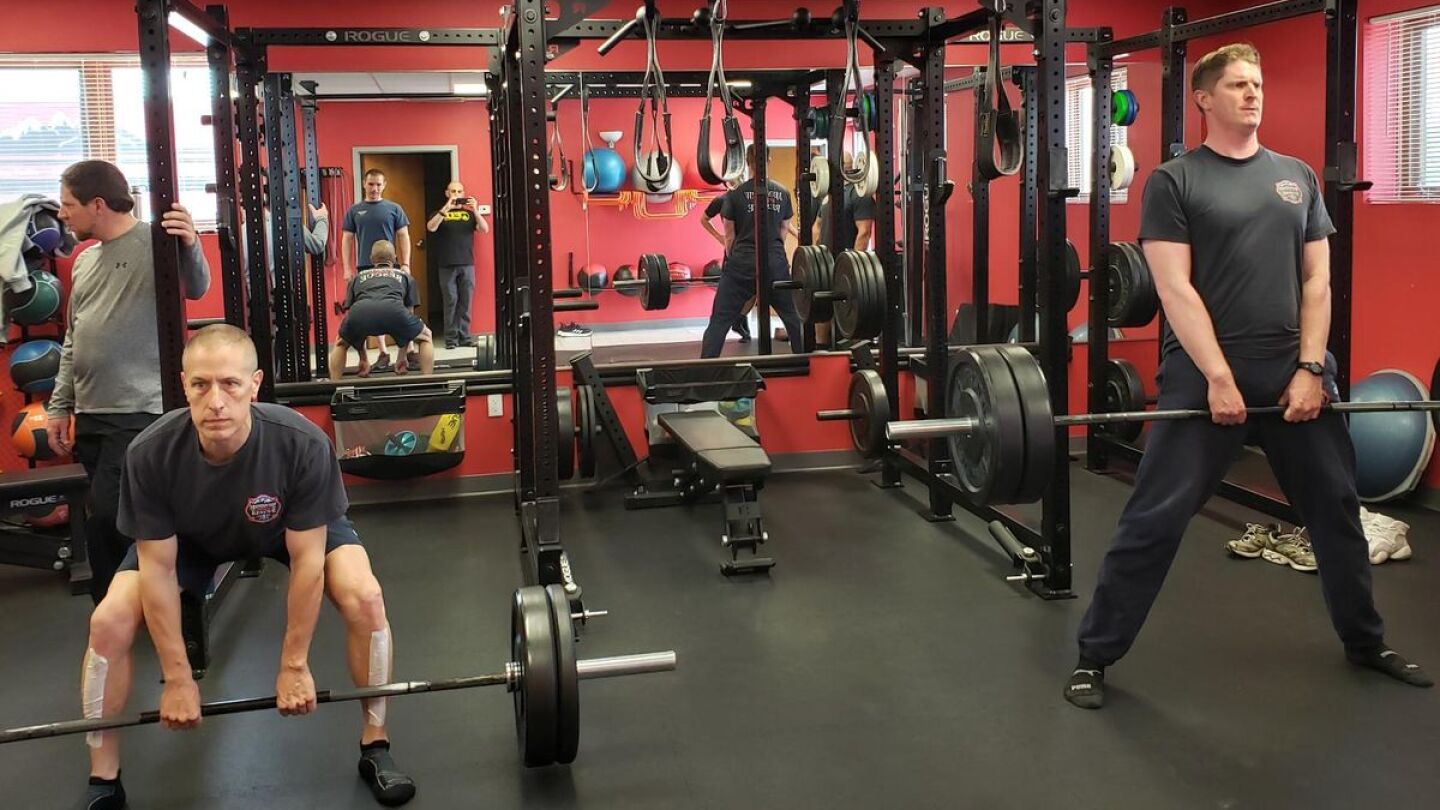
Pro: In a perfect world, this means more funding for peer fitness trainers, better gym equipment, and time on shift to work out.Concern: We don’t live in a perfect world. In many departments, supportive intervention is often code for restricted duty or an administrative headache. Will members hide their health issues to avoid being flagged by these new percentiles? Additionally, if departments don’t have a rock-solid “what now” plan for members who don’t hit the mark, will they just stop testing altogether? Without total buy-in from the industry, we risk seeing departments shy away from these assessments to avoid the headache, leaving us right back where we started.Cortisol connection
From my research on stress, I see a missed opportunity here. The IAFF focuses heavily on the output (aerobic capacity) but less on the inputs (sleep deprivation, chronic cortisol spikes, and the HPA-axis dysfunction we all face). A firefighter might fail their CRF percentile, not because they are lazy, but because their endocrine system is trashed from back-to-back 48-hour shifts. If we use NFPA 1580 data to penalize members without first addressing the operational environment that is causing their health to decline, we are simply blaming the athletes for a lack of proper coaching and organizational support.
We need to start educating our departments on the fact that a high cortisol level is just as dangerous as a high carbon monoxide reading on a sensor. The fix isn’t just telling members to “work out harder”; it’s about departments owning the recovery side of the coin. If we’re going to hold members to these new standards, we have to provide the infrastructure, create more “down-time” policies, incorporate sleep hygiene training, and a foster a culture that prioritizes recovery as much as the workload. Instead of a pass/fail trap, departments should use these assessments as a trigger for a “Total Wellness”’ intervention that connects members with a peer fitness trainer or a clinician who understands that, sometimes, the best way to improve a MET score isn’t a treadmill but rather a consistent eight hours of sleep and an endocrine system that isn’t stuck in “fight” mode. We have to be better at managing the person, not just the percentile.
My unfiltered take
Is NFPA 1580 a step in the right direction? I’m not sold yet. On paper, it’s more scientifically sound than the old 12 MET rule. It respects the aging process and prioritizes long-term survival. But for this to work, leadership has to treat it as a resource, not a requirement.
If your department uses these new percentiles to invest in you, it’s a win. If they use them to weed you out without fixing the culture of sleep deprivation and stress, it’s just 1582 in a new suit.