Each season, Bluedot Living will feature a photo essay by Yasmin Namini, a former Chief Consumer Officer at the New York Times, who is now traveling the world taking photographs. At Bluedot, we believe that celebrating the Earth’s most enchanting creatures, cultures, and landscapes will inspire us to help preserve them.
Winter scenes here lend themselves naturally to minimalist photography.
Shaped by extremes, Hokkaido, Japan’s northernmost island, is a land of vast plains, rolling hills, volcanic mountains, and windswept coastlines. Its harsh winters, driven by cold Siberian air masses, bring deep snow and long months of cold.
The island is a skier’s mecca, famous for its legendary powder — but I’m not a skier. I’m a photographer, and I have long dreamed of photographing Hokkaido in winter.
The quiet simplicity of Hokkaido’s landscapes draws photographers from around the world, as well as busloads of smartphone-camera-wielding tourists. Winter scenes here lend themselves naturally to minimalist photography. Lone trees rise from smooth white snowfields. Fences carve perfect leading lines across the land. Horizons soften into subtle gradients of light and shadow under falling snow. These are landscapes where form, texture, and negative space replace complexity.
Sign up for our newsletter, The Hub, and keep up with the latest uplifting climate action news, sustainable living advice, and Earth-conscious recipes.
Sign Up Now.
In this photo essay, I share images from Hokkaido’s winter wonderland. Hiking through knee-deep snow and standing in bitter cold for hours to make photographs may seem unusual, but for me it was relaxing, almost meditative. Thankfully, I was well prepared: three layers of winter clothing, waterproof fleece-lined boots, hat, gloves, and hand warmers … lots of hand warmers.
I invite you to explore this collection of images capturing the peaceful beauty and contemplative mood of Hokkaido in winter.
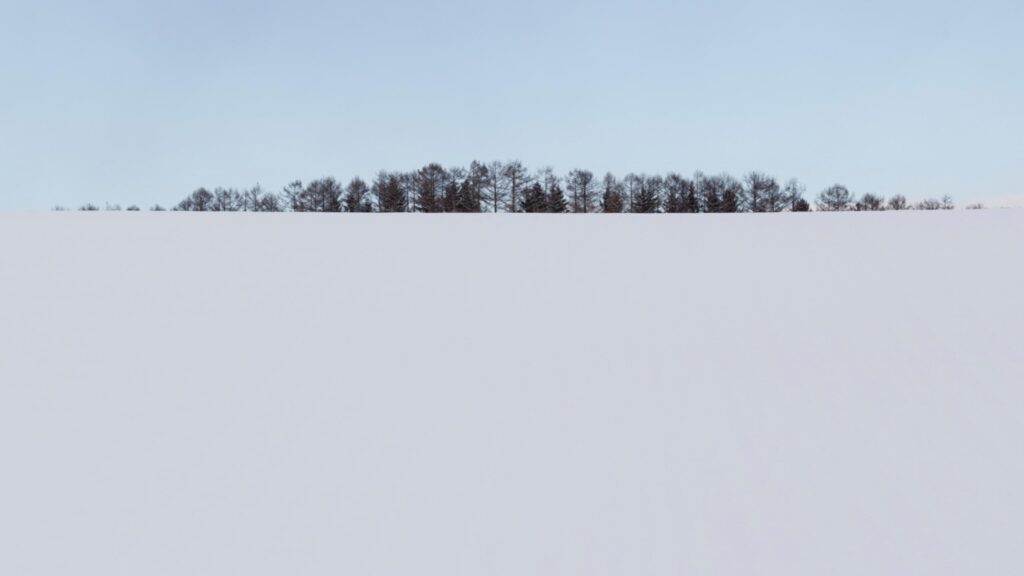
Horizon Line
A line of trees traces the horizon in Takushinkan, their dark silhouettes floating above a vast field of snow. Here, in snow and sky, the landscape speaks most clearly when it says almost nothing at all.
Equipment, settings: Canon EOS R5 Mark II; 100mm; 1/160 sec; f/11; ISO 160
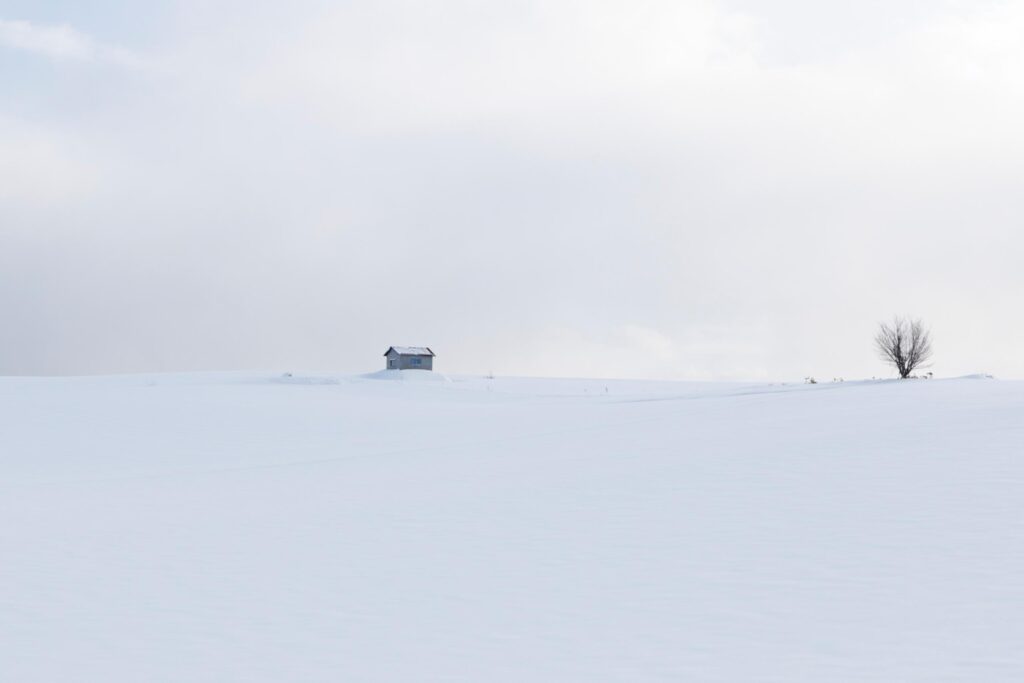
Shed and Tree
In the distance, a farmer’s shed rests on the snowy horizon in Takushinkan – inconspicuous and understated. Though manmade, its simplicity enhances the elegance of the surrounding winter landscape.
Equipment, settings: Canon EOS R5 Mark II; 61mm; 1/160 sec; f/11; ISO 160
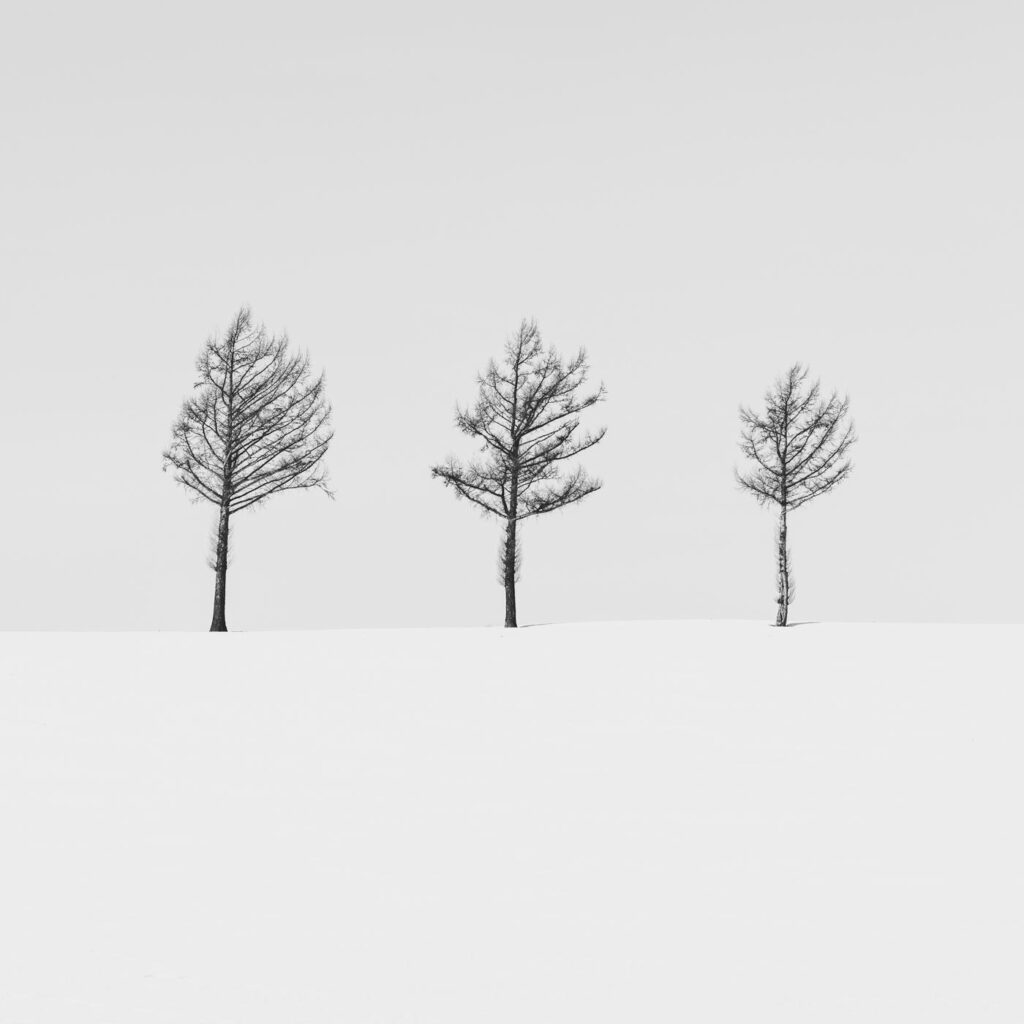
Three Trees
On the snowy ridge of Meruhen-no-oka, or “Fairy Tale Hill,” in the town of Ozora, three trees stand in simple formation. Rendered in black and white, their spacing and delicate forms feel almost storybook.
Equipment, settings: Canon EOS R5 Mark II; 105mm; 1/320 sec; f/9; ISO 100
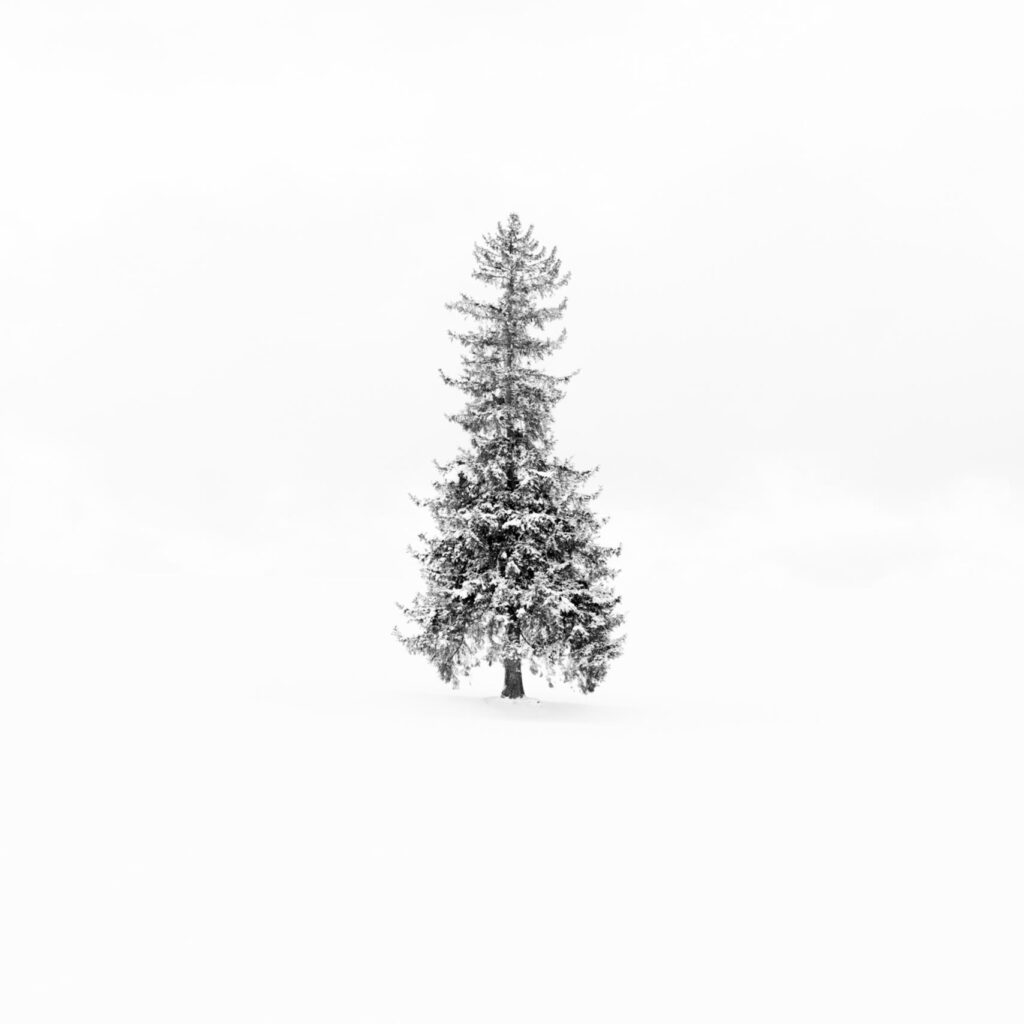
Christmas Tree of Biei
Known locally as the “Christmas Tree,” this solitary spruce rises from the snowfields of Biei. Its star-tipped, perfectly proportioned shape makes it a ready-made subject for minimalist images – and perhaps even a holiday card.
Equipment, settings: Canon EOS R5 Mark II; 56mm; 0.3 sec; f/8; ISO 100
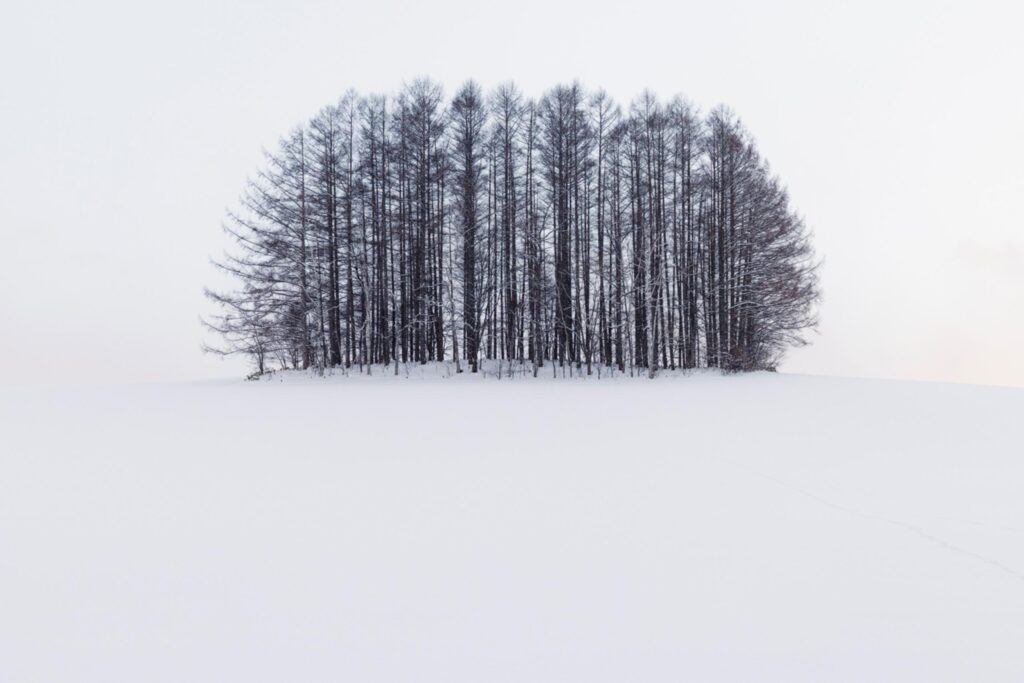
Mild Seven Hill
A cluster of larch trees crowns Mild Seven Hill in Biei at dusk, their silhouettes rising from the snow. Named after a once-famous cigarette advertisement filmed here, the hill now draws visitors from around the world for the quiet drama of its winter landscape – and, of course, selfies.
Equipment, settings: Canon EOS R5 Mark II; 47mm; 1/160 sec; f/8; ISO 250
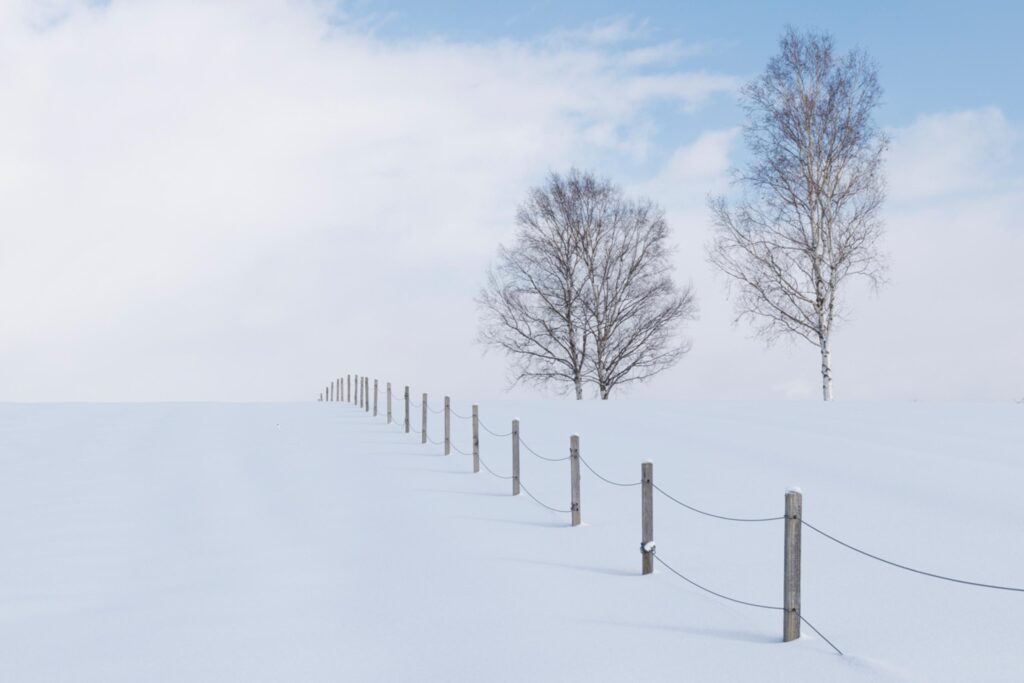
Skavla
The birches of Villa Skavla in Biei stand beyond a fence that disappears into the snow. “Skavla,” a Norwegian word for a wind-formed snow crest, lends its name to this landscape, a subtle reminder that even winter is shaped by movement.
Equipment, settings: Canon EOS R5 Mark II; 65mm; 1/250 sec; f/11; ISO 160
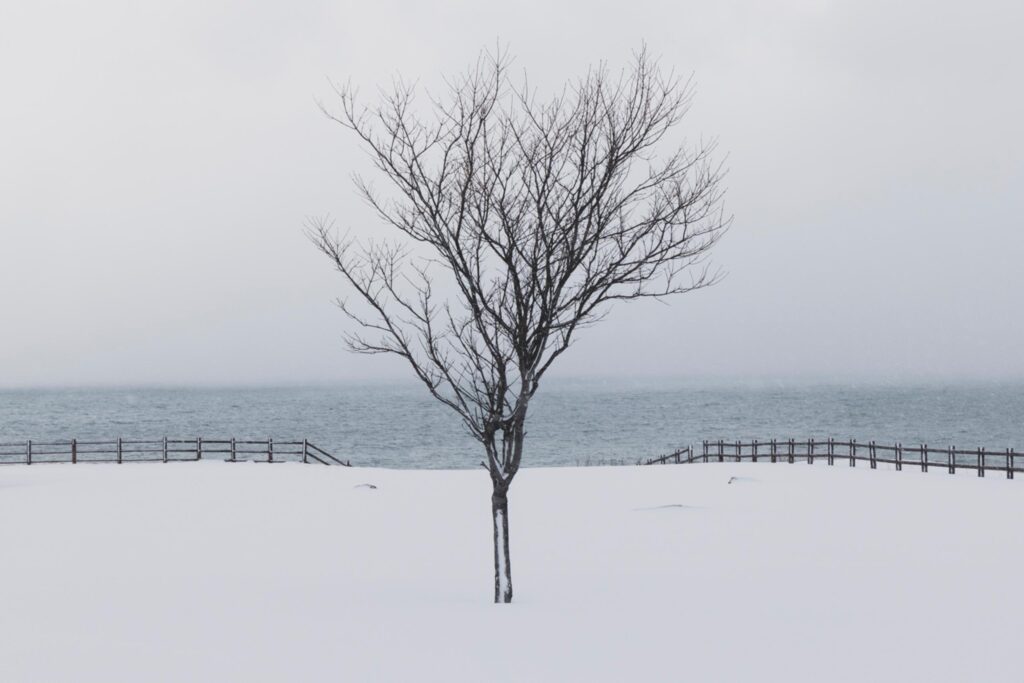
Between Land and Sea
At the top of Misakidai Park in Toyosaki, a single tree overlooks the Sea of Japan. Framed by weathered fences and softened by snow, it silently marks the boundary between land, water, and winter sky.
Equipment, settings: Canon EOS R5 Mark II; 88mm; 1/125 sec; f/11; ISO 100
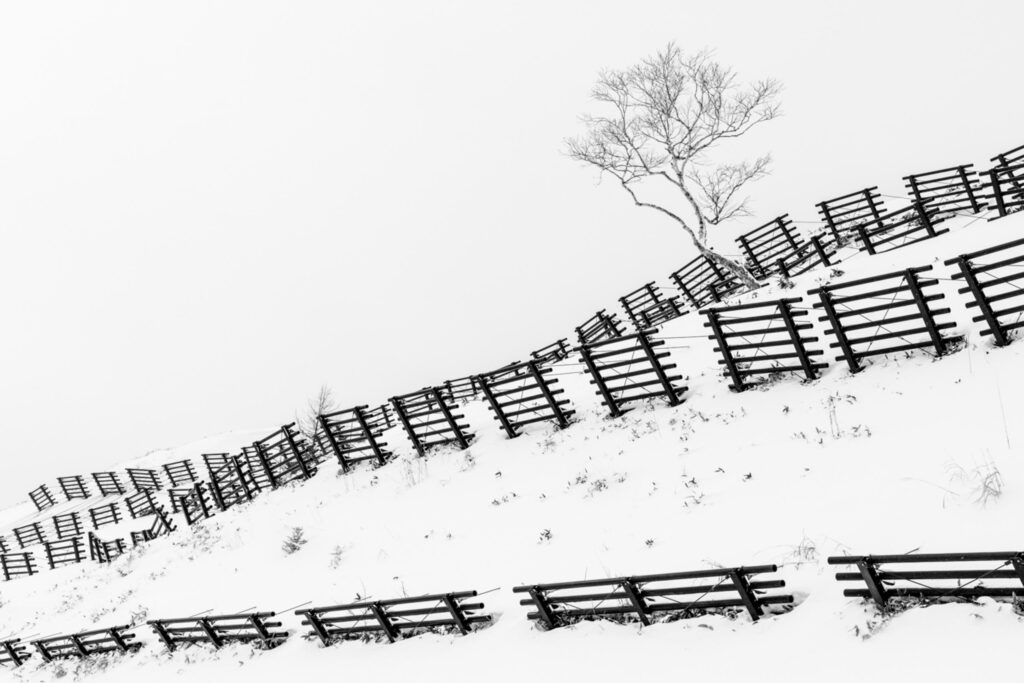
Lines of Defense
Avalanche prevention fences – designed to trap snow and protect winter drivers – climb the mountainside along a snowbound highway, transforming the landscape with their striking leading lines.
Equipment, settings: Canon EOS R5 Mark II; 50mm; 1/250 sec; f/11; ISO 160
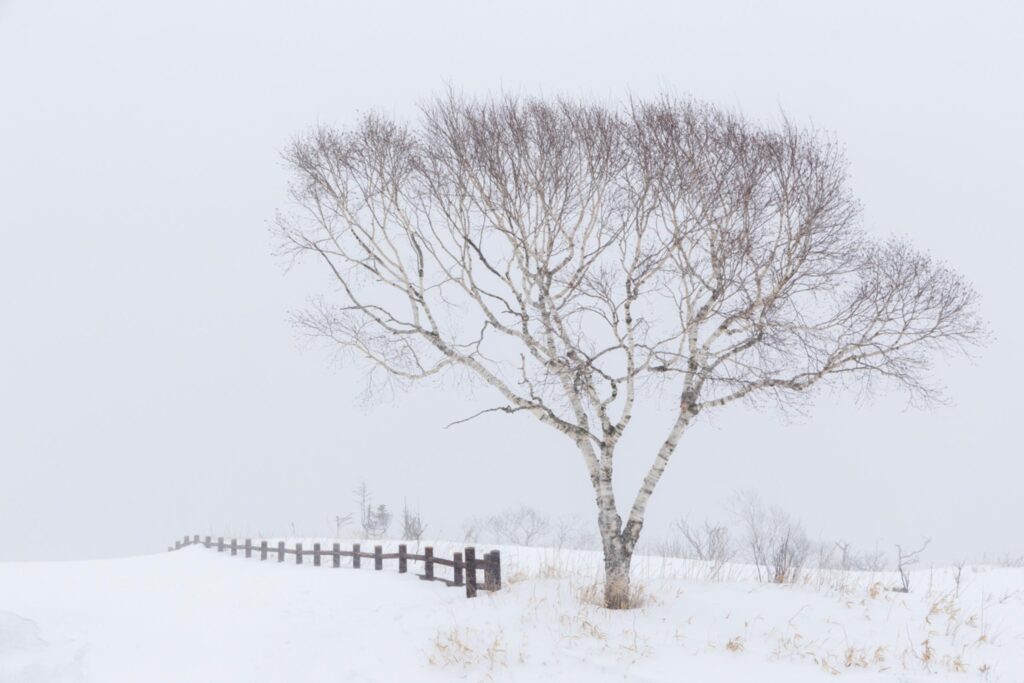
Winter Birch Tree
As snow and wind gust around me, a birch tree stands beside a fence at Lake Mashu Kamuy Terrace’s parking lot. In Hokkaido, even parking lots can become photogenic landscapes.
Equipment, settings: Canon EOS R5 Mark II; 56mm; 1/200 sec; f/8; ISO 160
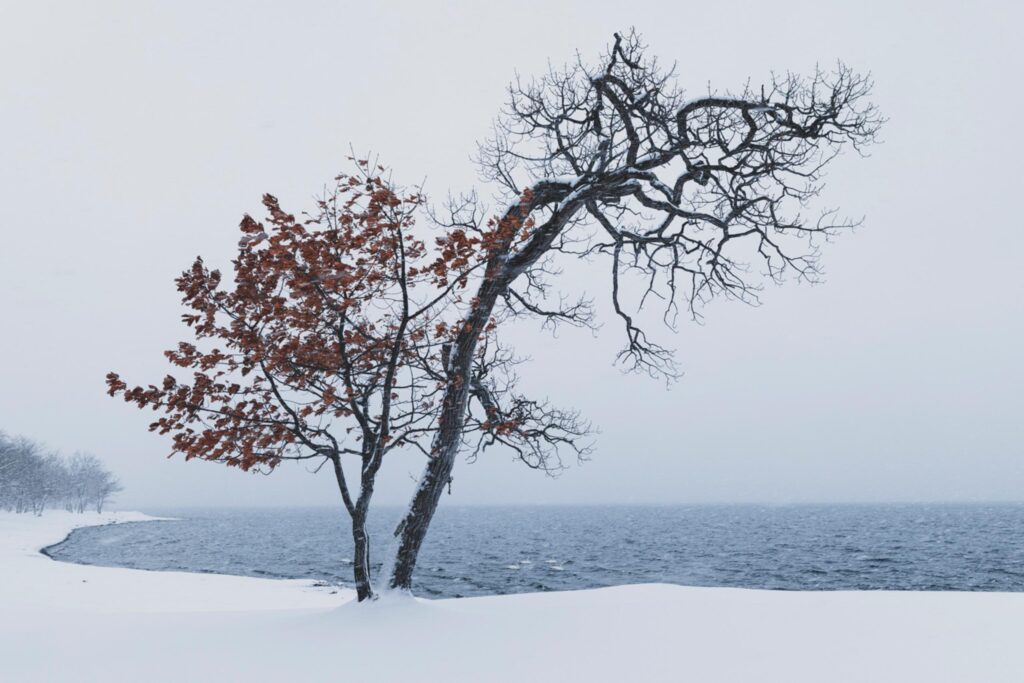
Between Seasons
As winter quietly takes hold, a tree still clinging to its fall-colored leaves stands at the icy water’s edge of Lake Kussharo.
Equipment, settings: Canon EOS R5 Mark II; 24mm; 1/125 sec; f/4.5; ISO 800
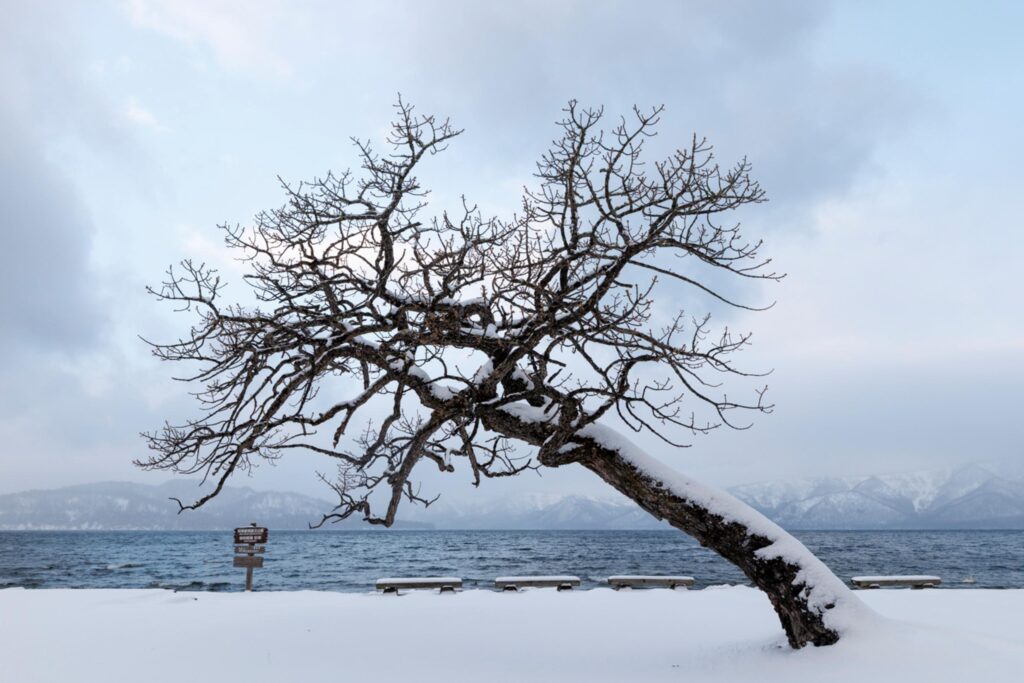
Leaning into Winter
A lone tree leans towards the winter horizon at sunrise in Sunaya, on the eastern shore of Lake Kussharo. This lakeside is known for its unique onsen – hot springs that bubble beneath the sand.
Equipment, settings: Canon EOS R5 Mark II; 26mm; 1/25 sec; f/11; ISO 160
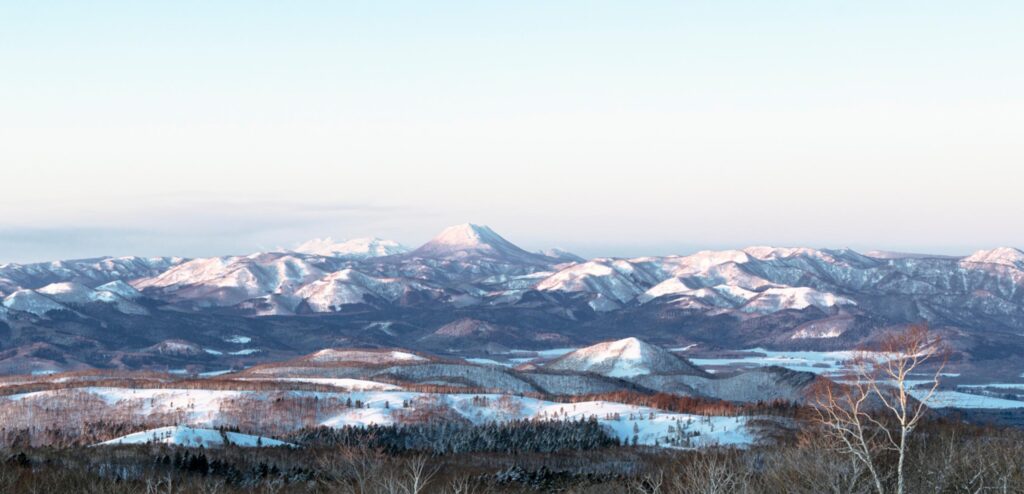
Pastel Peaks at Dawn
As the sun rises over Lake Mashu behind me, the view west from Lake Mashu Kamuy Terrace reveals a sweeping winter landscape of pastel peaks, crowned by Mount Oakan in the distance.
Equipment, settings: Canon EOS R5 Mark II; 70mm; 1/60 sec; f/8; ISO 400