A plan to prohibit Coloradans from using food-assistance benefits to buy soda and sugary fruit juices was stalled Friday by a state board after opponents argued it was an overreach that could harm the dignity and autonomy of low-income families.
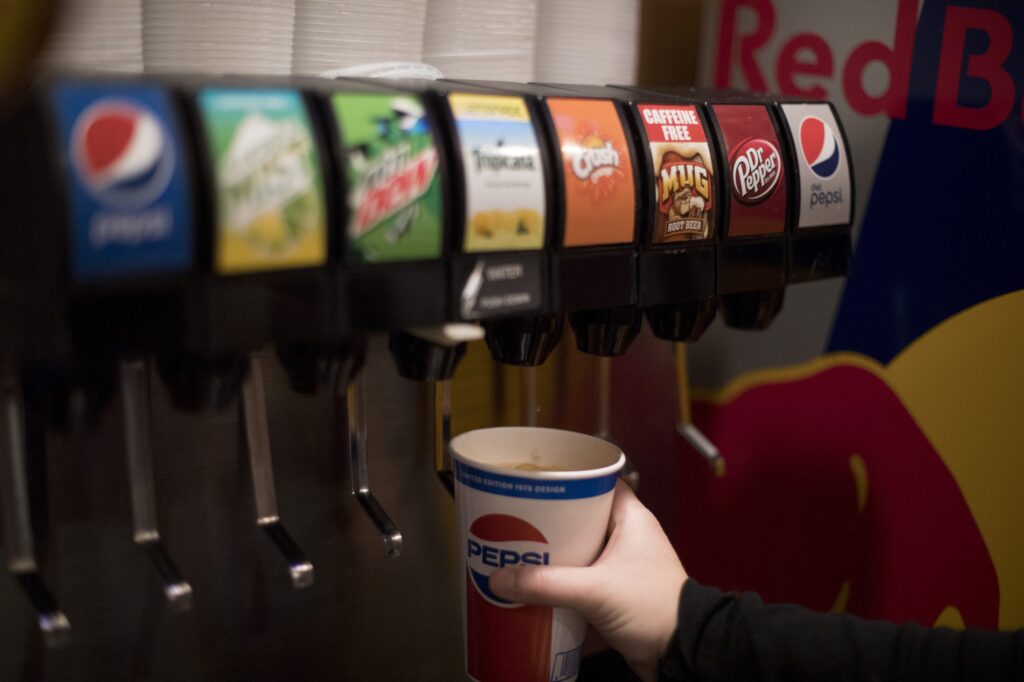
The rule would ban the use of the federal Supplemental Nutrition Assistance Program, called SNAP, to buy soda as well as juices with added sugars or artificial sweeteners.
Gov. Jared Polis won approval from the U.S. Department of Agriculture for the “healthy choice” rule in August, but needed the governor-appointed state human services board to put it in place. The final step became highly controversial, with opponents including homeless advocacy groups, Save the Children, Hunger Free Colorado and a contingent of 27 state lawmakers — all Democrats.
Opponents, including people who receive food stamps, argued the restriction would limit people’s autonomy to make their own food choices and cause more food insecurity. Testimony and debate about sugary beverages went on for about seven hours before the board voted 8-1 to delay a decision until their next meeting, on April 3. Before that vote, multiple board members said they were planning to vote against the proposal.
Dozens of people who packed the meeting in person and online were concerned that Coloradans with SNAP would face embarrassment or judgment at grocery stores if they mistakenly tried to use the benefits to buy soda or high-sugar fruit juices. People living in shelters “already experience very little choice and dignity in their daily lives” and grocery stores are some of the “few places where they can experience autonomy and normalcy,” said Julie Hall, program director for the Homelessness Awareness and Action Task Force in Englewood.
“They deserve the dignity of choice — the ability to walk into a store, select food they will enjoy, and purchase it with confidence, without fear of being denied or shamed at the register,” she wrote in a letter to the board.
Hunger Free Colorado said the rule would mean that shoppers, including those without smartphones or not fluent in English, would have to stand in grocery aisles trying to read and interpret nutrition labels. Drinks made of less than 50% fruit or vegetable juice would not be allowed. The rule is confusing enough, the organization argued, that people would not be able to buy flavored mineral water or hydration drinks like Pedialyte.
“This is not about health — it’s about hunger,” Mariah Guerrero, senior public policy manager for Hunger Free Colorado, said in a news release. “We cannot afford to increase food insecurity in Colorado under the guise of public health.”
Several people who testified at Friday’s board hearing said they or family members have Type 1 diabetes and that when their blood sugar level is low, they quickly drink juice or soda. And many others argued that Colorado should try harder to lower the cost of healthy food, rather than prohibit spending on sweet beverages.
Board member Meighen Lovelace, who built a community farm on the Western Slope and said she had received SNAP benefits in the past, said before the vote to delay that she did not support the rule change. Lovelace said it wasn’t fair to single out low-income people. “I think people of all different incomes eat sugar,” she said. “Whether you are on SNAP or privileged with great wealth, it’s important that you know that this is not great for your body. I wonder why we are deciding to ask this one population of people to think more deeply about what they are consuming.”
Similarly, board member John Kefalas, a Larimer County commissioner and former state senator, said he could not support the government “telling people what they can and cannot buy.”
Board vice chair Mychael Dave, an attorney, also said he would vote against the soda ban because there was not enough science to prove that the new rule would push people to change their eating habits. “We are saying, ‘Hey poor people, you be the guinea pigs to figure this out,’” he said.
But board member Elizabeth Lowdermilk, a psychiatrist, was among the few who supported the rule change, saying that banning the purchase of drinks with no nutritional value is not much different than the prohibition on using SNAP to buy alcohol.
In a letter to the rule-making board, seven state senators and 20 representatives, all members of the governor’s political party, asked the board to vote no. The lawmakers noted that the state is facing an $850 million budget shortfall, and that current fiscal constraints and multiple federal changes to the food-assistance program make it a difficult time for major changes, especially ones that will need “extensive staff time” for training and compliance oversight.
They also said the rule would create a burden, particularly for small and rural stores, to police what people are buying, and said they worried the rule will lead to increased hunger among low-income families. “We encourage you to consider whether this is the right moment to move forward with this restriction,” they wrote.
Health experts supported the ban on soda
Multiple doctors, however, supported the new rule. Among them was Dr. Ned Calonge, chief medical officer of the Colorado Department of Public Health and Environment, who said soda has “almost no nutritional value” and daily consumption leads to increased risk of heart disease and cancer. Calonge said he didn’t think of the rule as a ban, but a decision by the government to stop subsidizing the purchase of unhealthy drinks linked to chronic disease.
State officials said the rule change would improve health, and could save public money spent by Medicaid to treat people with diabetes and health disease in future years. Kim Bimestefer, the executive director of the state Department of Health Care Policy and Financing, which oversees Medicaid, said people with Medicaid are more likely to suffer from obesity and chronic diseases than people covered by private insurance.
“Please pass this rule so Colorado stops fiscally fueling distribution of beverages that propel the chronic diseases that impact the low-income Coloradans who we cover and serve,” Bimestefer told the nine-member board.
About 600,000 people in Colorado receive SNAP benefits, which is about 10% of the state population.
Sweetened beverages are the second-highest category of foods purchased with SNAP, behind meat and seafood, and ahead of vegetables, the third-highest category, state human services officials said. Soft drinks are the fifth-highest category of groceries purchased by families who do not have SNAP.
Sugary drinks account for about 9% of SNAP spending, compared with about 7% of grocery spending by non-SNAP families.
The state Office of Economic Security, housed within the Colorado Department of Human Services, gave the board a long list of scientific studies showing that sugary beverages contribute to Type 2 diabetes, heart disease, dental problems and even behavioral and sleep issues. One study found that 40% of children and 62% of adolescents in California drink at least one soda per day.
The goal is to align policy by moving sugary drinks into the prohibited category of purchases that already includes alcohol and tobacco, “rather than judging or directing individual behavior,” said Abby McClelland, director of the office’s food and energy assistance division.
The rule would have gone into effect in April for two years with the possibility of being extended up to five years. State officials said they planned to survey SNAP beneficiaries to assess attitudes about the program and to track shopping routines and shifts in spending.
Colorado is one of 18 states with federal approval to prohibit using food-assistance benefits to buy sugary drinks. In five states, the change went into place Jan. 1.
Colorado has three other pending requests for federal approval to change the SNAP program. These include allowing people to use food assistance to buy hot food in grocery stores, such as rotisserie chickens, as well as to spend SNAP funds for any food sold at farmers markets and for restaurant meals.
Type of Story: News
Based on facts, either observed and verified directly by the reporter, or reported and verified from knowledgeable sources.