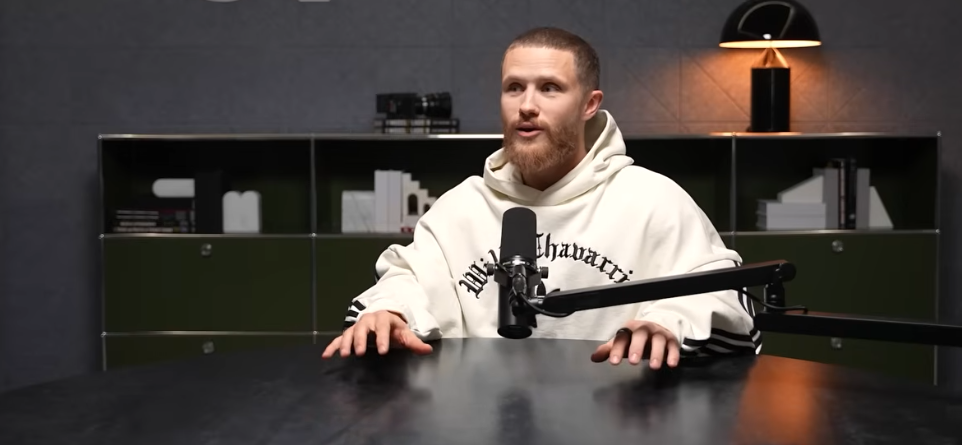
Online fitness culture can be boisterous, with glossy transformation photos, miraculous workouts, and loud promises. However, a couple approached the entire industry with something almost uncommon—evidence—somewhere in that packed digital gym. Over the years, it became apparent that Jeff Nippard and his fiancée, Dr. Stephanie Buttermore, approached fitness more like a lab experiment than a performance.
They were together for almost ten years. long enough to give followers the impression that they understood the beat of their own lives. Meal prep spread out on kitchen counters, laptops open with spreadsheets tracking calories and macros, videos recorded in tiny apartment gyms. It didn’t appear especially glitzy. Perhaps that was the intention.
CategoryDetailsNameDr. Stephanie ButtermoreProfessionFitness influencer, scientist, cancer researcherKnown ForEvidence-based fitness content, “All-In” eating experimentEducationPhD in Pathology & Cell BiologyResearch FocusMolecular mechanisms of ovarian cancerRelationshipFiancée of fitness YouTuber Jeff NippardEngagement2022Age at Passing36Social Media500K+ followers on InstagramReferencehttps://people.com/
Stephanie Buttermore was more than just a fitness enthusiast. The entire picture was never fully conveyed by that label. She studied the molecular causes of ovarian cancer while pursuing a PhD in pathology and cell biology. It’s difficult not to take a moment to consider that contrast: someone explaining protein intake to half a million Instagram followers while simultaneously studying cancer cells under a microscope.
In a world where credibility is frequently lacking, there’s a sense that this combination—scientist and fitness personality—gave her unusual credibility.
Jeff Nippard, who taught “science-based training,” amassed a sizable YouTube following. His videos frequently resembled lectures from universities rather than gym-related content. The screen displayed charts. Research was referenced. The tone was analytical and serene. The dynamic seemed almost inevitable when Stephanie appeared next to him in those early videos. It’s obvious that two people are at ease with data.
However, the quieter parts of a relationship are rarely captured on the internet. It recalls moments that went viral. When Stephanie Buttermore started what became known as her “All-In” experiment, she had one of those. She was battling intense hunger at the time due to years of bodybuilding dieting. She publicly documented the entire process—eating freely, gaining weight, and candidly discussing the psychological effects of restrictive fitness culture—instead of handling it in private.
It’s difficult to ignore how vulnerable they felt when watching those old videos. Influencers in the fitness industry seldom acknowledge uncertainty. However, she did.
She recorded herself dealing with cravings, shifting body image, and emotional fluctuations for months. The internet was fascinated by the response. A few viewers complimented the candor. Others questioned the strategy. Curiosity, skepticism, and debate were all present—exactly the kind of messy discourse that typically doesn’t make it through algorithm-driven social media.
Nevertheless, thousands of viewers who were dealing with comparable problems found resonance in the series.
With the meticulous patience of a lecturer writing on a whiteboard, Nippard continued to develop his educational platform while elucidating biomechanics and muscle hypertrophy. In those videos, Stephanie frequently participated in testing exercises, laughed in between takes, and occasionally used her own scientific viewpoint to refute his explanations.
It appeared more like teamwork than influencer marketing.
The couple then declared their engagement in 2022. For devoted followers, the news seemed almost predictable. They had already established an online life together, complete with shared routines, audiences, and projects. Two people talking about research papers one minute and gym technique the next made for an easy familiarity to watch as they interacted.
Within the fitness community, their relationship might have taken on a symbolic meaning. Evidence of the industry’s potential to transition from bro-science to something more deliberate. However, neat narratives are rarely found in life.
Jeff Nippard broke the heartbreaking news in March 2026 that Stephanie Buttermore had passed away unexpectedly at the age of 36. The announcement, which asked fans for privacy, was made on Instagram in a succinct and restrained manner. The cause of death was not made public.
The fitness community responded right away. Tributes were posted by researchers, trainers, and regular gym patrons. Some posted old videos of her talking about mental health in relation to dieting or describing metabolic adaptation. Some just penned messages of incredulity.
Online news like this is frequently followed by an odd silence. Algorithms keep suggesting exercise advice and posts keep scrolling, but for a while something seems a little strange.
It’s difficult to overlook the amount of influence Buttermore subtly accumulated over time. She didn’t rely on spectacle in her videos. They relied on explanation, which could be messy or intensely personal at times. She seemed at ease acknowledging that she was still learning in a field that frequently relies on polished certainty. Perhaps what people remember most is that honesty.
Beyond the initial message requesting privacy, Jeff Nippard has not made any significant public statements since the announcement. Respect for that silence is evident in the fitness community’s reactions. And maybe that makes sense.
Because there was something more straightforward behind the millions of views, research papers, and fitness advice: a ten-year relationship between two people who built their lives around discipline, curiosity, and a common faith in science. The narrative now seems incomplete.
However, the work—and the concepts she assisted in disseminating—continues to circulate through gyms, YouTube playlists, and private discussions among individuals attempting to gain a better understanding of their bodies.
Post navigation