IV vitamin therapy continues to grow as a wellness trend as people look for ways to feel healthier and more energetic. But can a needle prick and steady drip of a nutrient-rich cocktail really make that big of a difference?
Advertisement
Cleveland Clinic is a non-profit academic medical center. Advertising on our site helps support our mission. We do not endorse non-Cleveland Clinic products or services. Policy
Let’s take a closer look with functional medicine specialist Melissa Young, MD.
What is IV vitamin therapy?
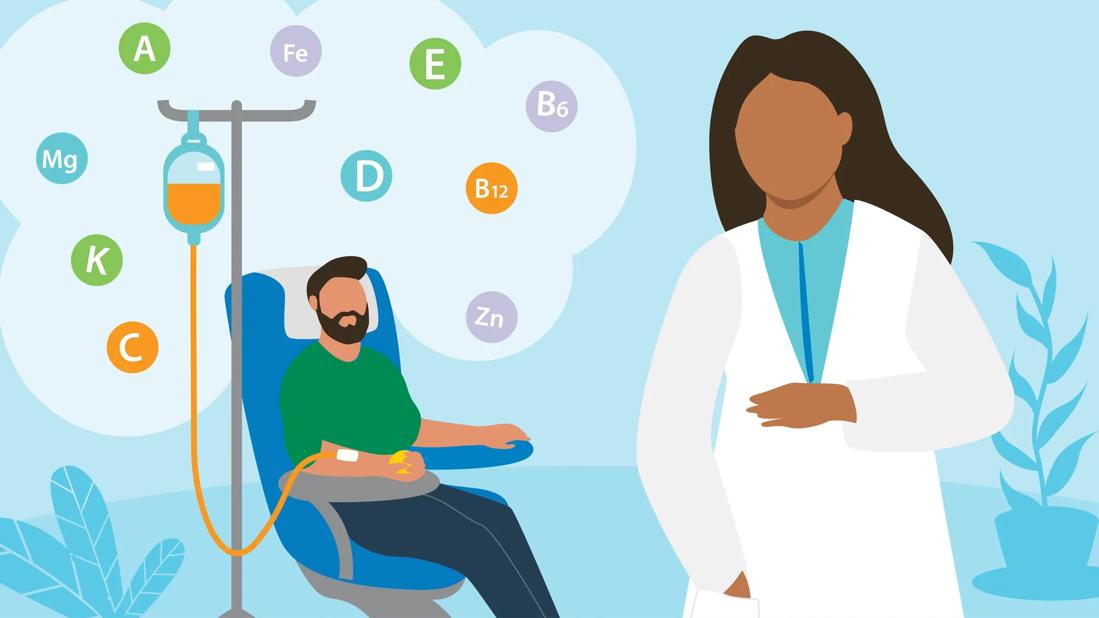
IV vitamin therapy delivers a liquid mixture of vitamins, minerals and antioxidants directly into your bloodstream through a vein, typically in your arm. It allows your body to swiftly absorb nutrients at measured doses.
“IV vitamin therapy is a more direct delivery of nutrients to your body’s cells,” explains Dr. Young. “The nutrients go right into your bloodstream, totally bypassing your gastrointestinal system.”
The growth in IV vitamin therapy has been fueled by a variety of wellness claims and testimonials linked to the potential body-boosting perks of essential nutrients. (More on that in a moment.)
But there’s limited scientific evidence that shows a direct general wellness benefit from getting IV vitamins. “We’re still looking for high-quality studies,” she adds.
Additionally, the U.S. Food and Drug Administration (FDA) has warned about the safety of IV mixtures flowing out of hydration clinics and spas. Various medical organizations (like the National Association of Boards of Pharmacy) have also expressed concerns.
Claimed benefits of IV vitamin infusions
The idea behind IV vitamin therapy as a wellness tool is to quickly and efficiently feed nutrients to your body. Done properly, bags can be formulated with precise amounts of vitamins and minerals to address goals. The process delivers almost 100% of the dosed nutrients, too.
“You eliminate the variability that comes with taking oral supplements, where your gut health and metabolism can affect what makes it into your system,” explains Dr. Young.
Reasons why people might seek out IV vitamin therapy include:
Improved mental clarity: An IV vitamin mix packed with brain-healthy nutrients and antioxidants (magnesium, B vitamins, amino acids, etc.) may purportedly sharpen your mental focus and memory.Battling fatigue: Certain nutrients — minerals like magnesium and zinc, as well as B-complex vitamins and calcium — play key roles in your body’s energy production on a cellular and metabolic level. They’re claimed to offer a boost if you’re dealing with fatigue.Immune system support: The mix of nutrients in IV vitamin drips typically includes ones that some say strengthen your immune system, like vitamin C, zinc and those B vitamins. “It can give your body’s defense system a boost,” notes Dr. Young.Migraine management: Some components of IV vitamin therapy — like magnesium, calciumvitamins B and C — have shown some promise in migraine management studies.Fast fluid intake: If you’re dehydrated, IV vitamin therapy can quickly restore your body’s fluid levels while replenishing essential electrolytes. This could aid recovery if you’re dealing with an illness (like the stomach flu), muscle cramps or a hangover.Fibromyalgia relief: A small 2009 study showed that people with fibromyalgia reported improvements in pain, depression and quality of life after eight weeks of IV vitamin therapy. (But there was no difference between the IV vitamin group and the placebo group.)
IV vitamin therapy may also be beneficial as an adjunctive treatment for chronic illnesses, says Dr. Young. “It might be something to look into if you’re not getting the relief or results you want.”
But again, researchers caution that the effectiveness of IV vitamin therapy as a “general wellness tool” remains uncertain. They note a distinction between IV therapy done for medical treatment (like to address nutritional deficiencies) versus self-care.
Risks of IV vitamin therapy
IV vitamin therapy can come with side effects, including:
Infection or bruising at the needle sitePotential vitamin toxicity if your dosage is too high (which can lead to uncomfortable symptoms like nausea or dizziness, with the worst-case scenario leading to heart damage, stroke or even death)An embolism (blockage) in a blood vessel from the injectionNegative interactions with medications you’re taking
Dr. Young also urges caution when seeking out IV vitamin therapy, given that hydration clinics and spas are largely unregulated. Ask how they formulate vitamin drips and whether there’s a licensed medical director providing oversight.
“If you see what looks like a red flag, walk away,” she advises.
Should certain people avoid IV vitamin therapy?
You should talk with your regular healthcare provider before trying IV vitamin therapy to weigh any potential risks, recommends Dr. Young. It’s best to avoid IV vitamin therapy if you’re seeing a healthcare provider for:
Heart diseaseHigh blood pressureKidney diseasePregnancyCost considerations with IV vitamin treatment
Know this going in: IV vitamin therapy can put a dent in your pocketbook. A basic session typically costs more than $150, says Dr. Young. More specialized drips can run up to $1,000.
Is IV vitamin therapy worth trying?
In certain situations, for relatively healthy individuals, it might be OK, says Dr. Young — and limited research does show some promising results.
But there are risks to IV vitamin therapy, too, as well as questions about its overall effectiveness.
And Dr. Young stresses that IV vitamin therapy is NOT a substitute for prescribed medications and a healthy diet. It also can’t erase or undo poor lifestyle habits related to nutrition, exercise, sleep and stress management.
“It’s great to want to optimize your health, but don’t skip the basics and just turn to IV vitamin therapy,” she emphasizes. “It shouldn’t be viewed as a miracle cure.”