Staying one step ahead of the grim reaper is no easy task. Research out today, however, indicates that a supplement once a day might offer some small help.
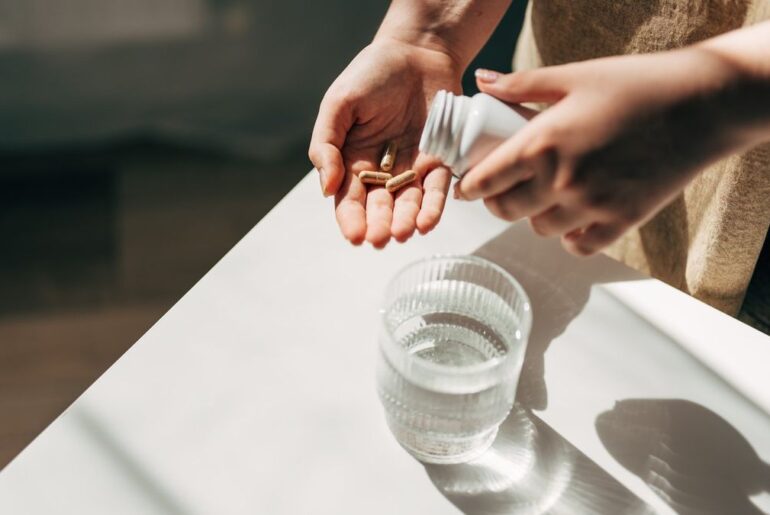
Scientists at Brigham and Women’s Hospital and others studied thousands of older adults who were asked to take a daily multivitamin and multimineral supplement. They found evidence that daily supplementation slowed down two biomarkers associated with aging by several months over a two-year span. Though modest, the findings suggest these supplements can have a positive impact on both our lifespan and the healthy years of life a person can have, the researchers say.
“Living longer is one thing; living better is just as important,” study author Howard Sesso, an associate director in the division of preventive medicine at Brigham, told Gizmodo.
The COSMOS trial
Between 2014 and 2020, Sesso and his team conducted a large-scale, randomized, and placebo-controlled clinical trial named COSMOS. It involved 21,442 men and women (average age 72) free of major chronic diseases at the start of the study. The volunteers were asked to take either a daily multivitamin, a daily cocoa extract supplement, both, or a placebo. They were then followed for several years.
The team has already published some of the findings from COSMOS. They found that people in the multivitamin group had improved memory compared to the placebo group, for instance—perhaps equivalent to a three-year delay in age-related memory decline. In this latest research, they looked at a subset of COSMOS participants (roughly 1,000) who provided blood samples throughout the study.
Though we all wear down as we get older, some people decline faster or slower than others. Scientists have started to develop “epigenetic clocks” to better estimate this true rate of aging; these clocks measure how certain patterns of DNA associated with aging or an earlier death change over time in our blood. Using the blood samples, the researchers tracked the rate of change for five different clock models among their volunteers.
People taking a multivitamin, the researchers found, experienced a noticeable decrease in two of these clocks compared to the placebo group: PCPhenoAge and PCGrimAge. These volunteers saw an average 2.6-month slowdown in their PCPhenoAge and a 1.4-month slowdown in their PCGrimAge. And notably, people who appeared to be aging faster at the beginning of the study saw a larger delay in their clocks by the study’s end. The team’s findings were published Monday in Nature Medicine.
What should this mean for anti-aging?
The researchers caution that we’re not still entirely clear how well these DNA clocks, and the potential delays we can cause to them, correlate to tangible health benefits. The COSMOS study also mostly involved older adults over 70, so there is uncertainty about how useful a multivitamin might be for middle-aged or younger adults.
“We still need to understand what an improvement in biological aging feels like beyond our DNA,” said Sesso.
At the same time, because COSMOS was a large-scale clinical trial, these findings are likely more robust than many other studies looking at aging and epigenetic clocks, Sesso added. And the main study has already identified some potential real improvements. In addition to improved cognition, for instance, the researchers have found evidence that daily multivitamin use might reduce the risk of lung cancer.
So the researchers are optimistic their work has highlighted genuine health benefits from taking these supplements, even if there are still many questions left to answer about their effects on aging. “We believe this finding could translate to the prevention of chronic disease and early death,” Sesso said.
The team plans to continue delving into its data from COSMOS and other clinical trials of supplements. And they’re calling for additional clinical research testing how other lifestyle or pharmaceutical interventions can affect our biological clocks and aging.
Age comes for us all. But scientists will hopefully continue to find ways to make that journey to the end as smooth as possible.