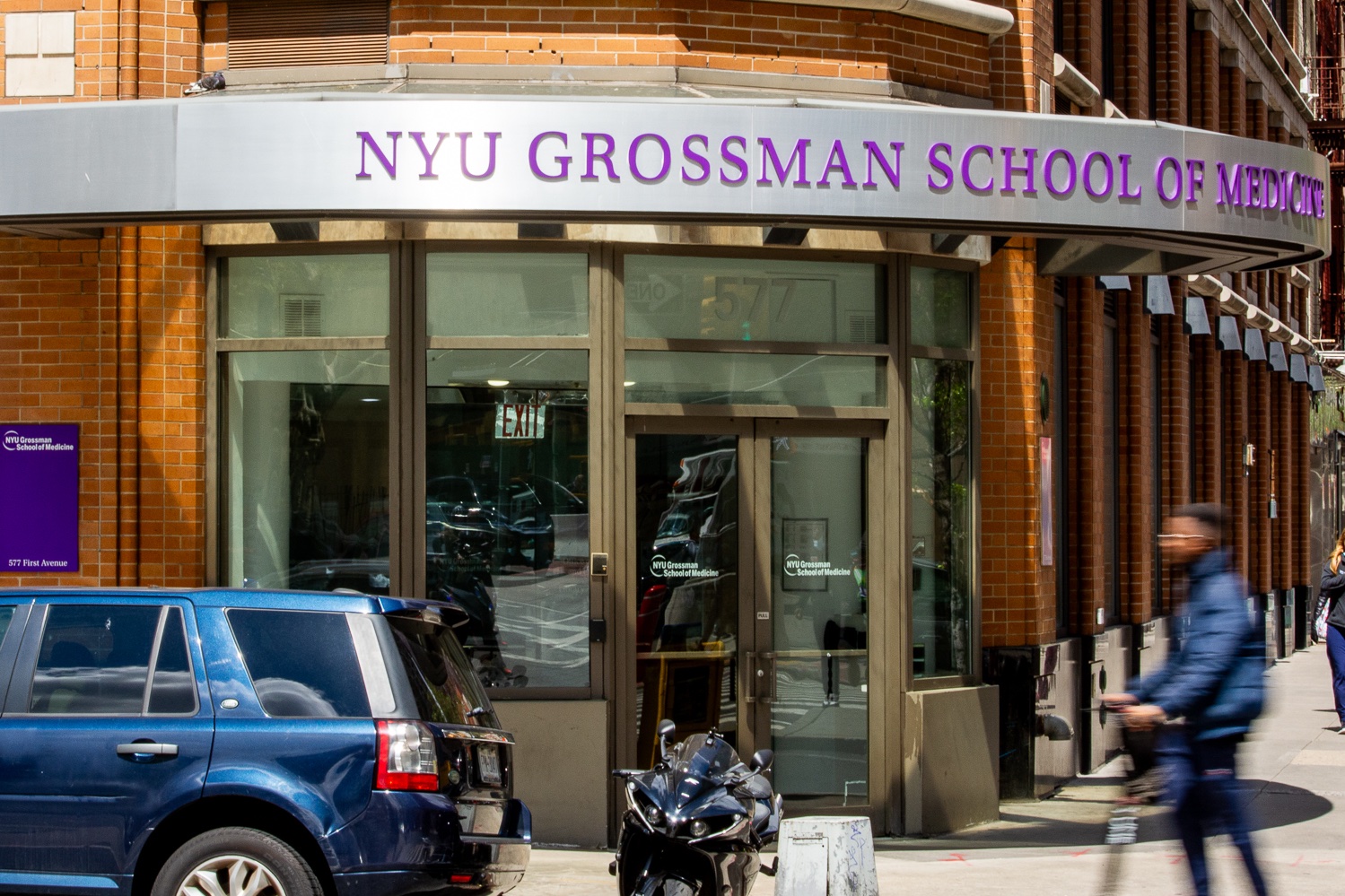
NYU’s Grossman School of Medicine reached an agreement with the U.S. Department of Health and Human Services last week to expand its required nutrition coursework, starting in the fall 2026 semester.
The agreement stipulates that the medical school requires 40 hours of nutrition classes and appoints a faculty member specifically to oversee the nutrition program. The HHS also recommended schools integrate its nutrition competency framework into their curricula to help meet those guidelines. Grossman is one of 53 medical schools, alongside the Tufts University School of Medicine and University of California, Irvine, to have committed to the agreement — known as the Advancing Nutrition Education Across the Medical Continuum initiative.
The competency framework lists 71 topics related to nutrition and how many teaching hours each one warrants. Marion Nestle, emerita professor of nutrition and public health at NYU and a top U.S. food policy expert, told WSN that because Grossman could choose which topics to teach, the medical school would not need to make significant changes to its curriculum.
“My guess is that they are already teaching a bunch of them and can probably squeeze in a few more without making any real changes,” Nestle wrote in a statement.
Nestle said that “barriers haven’t changed” since she taught medical students in the 1970s and 1980s, roughly 20 years after the American Medical Association began advocating for additional nutrition education in medical schools.
Schools can pick topics from the framework that total to 48 hours, with most counting for two to four hours. After signing the agreement, Grossman updated its MD curriculum website to include a section detailing its “robust nutrition education,” including dietary counseling and population health, that medical students are required to study.
“Most of the competencies are precisely those required for dietetic training,” Nestle wrote. “The most useful things to be taught are how to recognize a nutrition problem when it exists, how and when to refer patients to dietitians and how to tell whether the dietitian is doing a good job.”
Health Secretary Robert F. Kennedy Jr.’s initiative to expand nutrition education in medical schools has seen generally positive feedback from nutrition experts, and is based on recommendations from AMA and HHS doctors. In an interview with The New York Times, former Health Secretary Louis Sullivan criticized HHS’ efforts to “shape curriculums” at medical schools.
Kennedy has pushed for nutrition education in medical schools as part of his Make America Healthy Again agenda, which focuses on issues like processed foods, red meat consumption and vaccines. The movement has faced backlash from many nutrition experts, who have criticized Kennedy for his skepticism of mainstream medicine.
“When I first came in, I met with the medical schools and I said, ‘We want you to start teaching 40 hours of nutrition,’” Kennedy said at a Texas rally on Feb. 26. “We actually developed a curriculum that’s extraordinary. We said, ‘You don’t have to use that. Use whatever you want, teach whatever you want, but you need to teach nutrition.’”
The Trump administration has persistently threatened to cut funding from institutions that counter its ideological standpoints. NYU Langone Health canceled all gender-affirming care for minors last month amid threats to its Medicare and Medicaid funding, and NYU recently terminated its partnership with an initiative aimed at boosting diversity in business Ph.D. programs following scrutiny from the U.S. Department of Education.
An NYU Langone spokesperson did not respond to a request for comment.
Contact Zachary Karp at [email protected].