Low adopter confidence, cost and size concerns contribute to longer shelter stays for large dogs
OVERLAND PARK, Kan., March 10, 2026 /PRNewswire/ — As shelters nationwide continue to face an overcapacity crisis, large dogs are being hit especially hard. A new report released today from Hill’s Pet Nutrition (Hill’s), a leading supporter in animal welfare, found that low pet parent confidence, cost and size-related concerns are negatively impacting large-dog adoption, leading to longer shelter stays.
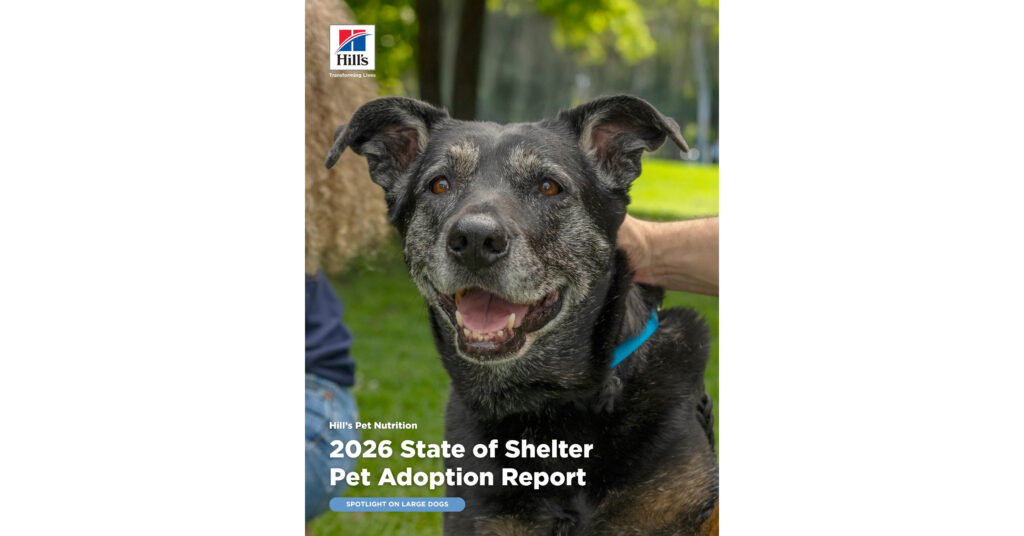
Cover of Hill’s Pet Nutrition’s “2026 State of Shelter Pet Adoption Report: Spotlight on Large Dogs.”
According to Shelter Animals Count (SAC), a program of the ASPCA, 2.8 million dogs entered U.S. shelters in 2025. Although large dogs accounted for just 26% of intakes, they experienced the longest median lengths of stay and represented the smallest share of total adoptions compared to medium and small dogs, intensifying the strain felt by shelters and rescues across the country. Hill’s created the 2026 State of Shelter Pet Adoption Report to uncover the reasons behind the stagnant adoption rates for large dogs and offer actionable insights to address this ongoing challenge.
“The 2026 State of Shelter Pet Adoption Report uses data-driven insights to help the animal welfare community identify and quantify the unique challenges affecting large dog adoption,” said Meghan Lehman, Senior Manager, Brand Engagement for Shelters at Hill’s Pet Nutrition. “By understanding and identifying the root causes of adoption hesitancy, we can empower the sheltering community to develop effective strategies that reduce barriers and improve outcomes.”
The research includes consolidated results from a proprietary, single-blind survey of 2,000 Americans with diverse socioeconomic backgrounds. Key findings included the following:
Interest in Large Dogs Is Not Universal, But Opportunities Exist:
Over a third of Americans surveyed (35%) say they’re likely to adopt a large dog, while another 19% remain neutral, indicating that the right information and support could increase interest and turn intent into large dog adoption.
Lack of Confidence Deters Large Dog Adoption:
Confidence in handling and caring for a large dog is a key differentiator between those likely and unlikely to adopt. While 89% of surveyed Americans likely to adopt a large dog report feeling confident, this sentiment drops to just 33% among those unlikely to adopt.
Financial Assistance Has the Greatest Potential Impact:
Programs and resources that reduce the costs of pet ownership are most likely to encourage large dog adoptions, with key motivating factors being lower adoption fees (34%), free or discounted training (31%), and financial assistance for initial costs (31%).
Younger Generations Are Key to Large Dog Adoption, But Face Systematic Barriers:
Gen Z and Millennials (30%) are nearly twice as likely to consider adopting a large dog from a shelter than older generations (16% of Gen X and Baby Boomers). Despite strong interest, Gen Z and Millennials are more likely to rent, live in apartments and face pet-related housing restrictions.
“The challenges facing large dogs in shelters are not isolated to any one community — they are national in scope and require shared understanding,” said Jim Tedford, President and CEO at The Association for Animal Welfare Advancement. “This report equips shelter leaders with timely, relevant data that can help guide conversations, shape programs, and strengthen outcomes for pets in need.”
For decades, Hill’s has been committed to helping end pet homelessness. Building on this commitment, Hill’s launched the inaugural State of Shelter Pet Adoption Report in 2023. This fourth edition of Hill’s annual research is the first to focus on a specific population of vulnerable animals awaiting adoption—large dogs, who often face unique challenges in finding new homes.
While pets are in shelters, Hill’s strives to make them happy, healthy and more adoptable by providing pet food through the Hill’s Food, Shelter & Love program. Since 2002, this program has supported more than 16 million pet adoptions and provided more than $300 million worth of Hill’s brand pet foods to feed pets across partner animal shelters.
Additional assets can be downloaded here.
To learn more about the Hill’s Pet Nutrition 2026 State of Shelter Pet Adoption Report, please visit HillsShelterReport.com.
About Hill’s Pet Nutrition
Founded more than 75 years ago with an unwavering commitment to science-led pet nutrition, Hill’s Pet Nutrition is on a mission to help enrich and lengthen the special relationships between people and their pets. Hill’s is dedicated to pioneering research for dogs and cats using a scientific understanding of their specific needs. As a leading veterinarian recommended pet food brand, knowledge is our first ingredient with nearly 200 veterinarians, PhD nutritionists and food scientists working to develop breakthrough innovations in pet health. Hill’s Prescription Diet therapeutic nutrition plus our everyday wellness product line, Hill’s Science Diet, are sold at vet clinics and pet specialty retailers worldwide. For more information about our products and nutritional philosophy, visit HillsPet.com.
Media Contact:
Lanie Shores, [email protected]
SOURCE Hill’s Pet Nutrition