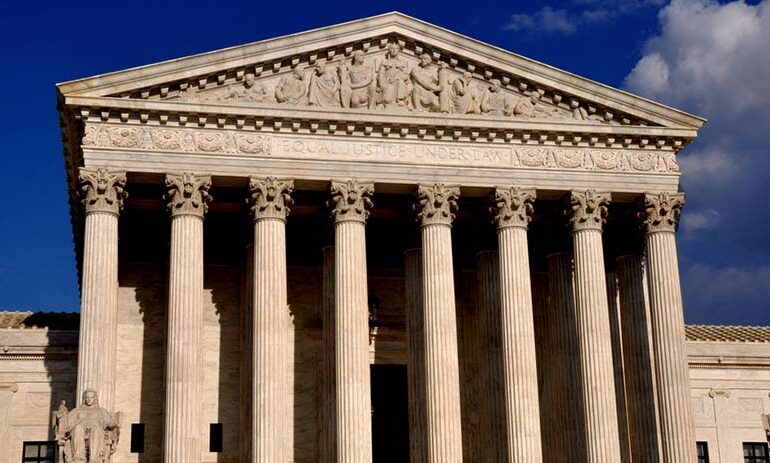
A controversial ruling by the Supreme Court of Liberia declaring that profanity and vulgarity are not protected forms of free expression has ignited a nationwide debate about the limits of speech, judicial authority, and the responsibilities of public figures in Liberia’s democracy.
At the center of the debate is the court’s February 13 contempt decision against social media personality Justin Opa Yeazean, who’s widely circulated online comments insulting the mother of the Chief Justice triggered legal action and ultimately a six-month jail sentence.
The ruling has drawn praise from some leaders who say the country must restore dignity to public discourse, while others warn that the decision risks undermining constitutional protections for freedom of expression.
Chief Justice Gbeisay says freedom of speech has limits
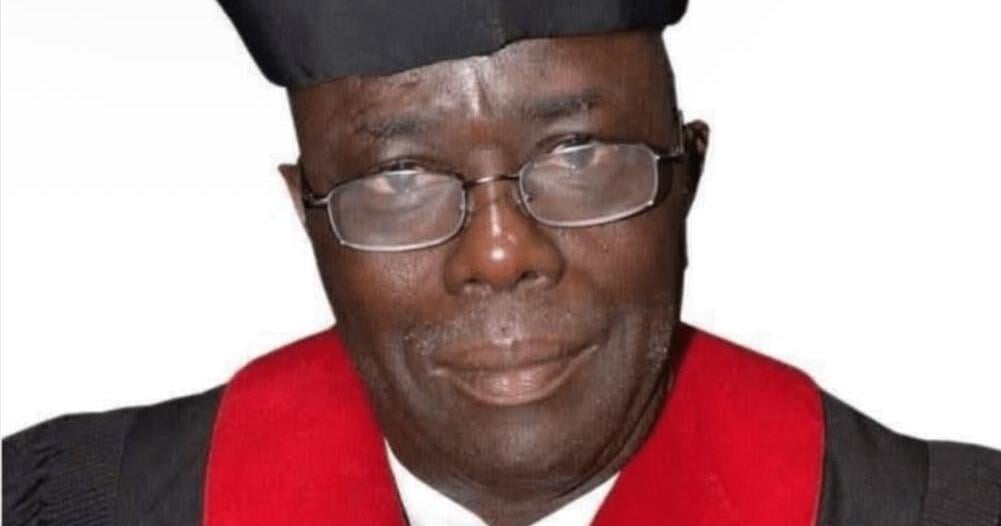
Speaking at the opening of the March term of the Supreme Court on Monday, Cllr. Yamie Quiqui Gbeisay, Chief Justice, defended the ruling and clarified the Court’s interpretation of the Constitution.
According to him, the court’s opinion made clear that vulgar language and explicit insults cannot be shielded under freedom of speech.
“We now encourage the other two branches of government to employ appropriate disciplinary measures to discipline those in their employ who may want to use vulgarity as a means of expressing themselves,” Gbeisay said, calling on officials to uphold standards of civility in public discourse.
The Chief Justice argued that the country’s constitutional guarantee of free speech was never intended to permit abusive conduct.
He cited Article 15 of the 1986 Constitution of Liberia, which provides for freedom of expression but also states that individuals must be “fully responsible for the abuse thereof.”
“Nothing in this world is absolute,” Gbeisay explained. “It is the same with Article 15 of our Constitution.”
He further referenced Article 5 of the 1986 Constitution of Liberia, which calls on the state to protect positive cultural values, and Article 14 of the 1986 Constitution of Liberia, which allows restrictions on certain freedoms to protect public order and morality.
“The use of vulgarity and profanity is certainly not a positive value to be preserved by the government,” he said.
In a striking personal reflection, Gbeisay recalled growing up in a traditional village where individuals who publicly used obscene language would be reprimanded by community elders.
“When a grown man stands in a town and utters such degree of profanity, he is immediately restrained and reprimanded,” he said, suggesting that modern society must maintain similar standards of social responsibility.
Standards of Public Discourse Matter, former President Sirleaf says
Former president Ellen Johnson Sirleaf has also weighed in on the broader debate surrounding offensive speech.
While not directly commenting on the specific ruling, Sirleaf has previously argued that societies must establish boundaries for speech in public media spaces.
“Many countries have laws that set standards of conduct for people who use the air, radio, and newspapers to say things that are false and rude,” Sirleaf noted in an earlier interview referenced in discussions about the issue.
Her comments have been interpreted by some observers as support for stronger mechanisms to regulate harmful or abusive speech, particularly in the digital era where social media has become a powerful platform for political commentary.
Veteran legal scholar and human rights advocate Tiawan Saye Gongloe has taken a more nuanced position.
While acknowledging that the behavior of Yeazean was offensive and socially unacceptable, Gongloe has warned that the judiciary must exercise caution when criminalizing speech.
Legal practitioners aligned with this view argue that while vulgarity may be morally objectionable, punishing individuals through contempt proceedings could create legal uncertainty about the scope of constitutional protections.
For Gongloe and other civil liberties advocates, the challenge is ensuring that responses to offensive speech do not unintentionally erode democratic freedoms.
The controversy also drew reactions from every spectrum of Liberian society.
Some called for greater responsibility in how public figures engage online, stressing that political discourse must remain respectful even during intense debates.
Others similarly emphasized the importance of elevating public dialogue, noting that social media has become a powerful tool capable of shaping political culture and national discourse.
For these leaders, the controversy surrounding Prophet Key reflects a deeper societal challenge about the tone and quality of public engagement in Liberia’s democratic space.
Despite these concerns about public decorum, critics of the ruling say the Supreme Court’s decision risks setting a precedent that could restrict legitimate expression.
Civil society activists and legal commentators argue that the country’s landmark Kamara Abdullah Kamara Press Freedom Act was enacted specifically to remove criminal penalties for speech-related offenses such as libel and sedition.
They warn that judicial punishment for offensive speech could undermine the spirit of those reforms.
The case therefore reopened broader debates about whether Liberia is gradually moving toward re-criminalizing certain forms of speech despite previous legal reforms.
Few observers dispute that Justin Opa Yeazean has built a reputation for provocative and often inflammatory online commentary.
His supporters describe him as a blunt critic of public officials who uses social media to challenge authority. Critics, however, say his language frequently crosses the line into explicit insults and personal attacks.
The Supreme Court case was triggered after Yeazean used graphic language on social media targeting the mother of Chief Justice Gbeisay.
For many Liberians, the episode illustrates how social media has intensified the country’s political discourse.
Ultimately, the debate over the Supreme Court ruling reflects a deeper philosophical question confronting Liberia’s democracy: Where should the line be drawn between protecting free expression and preserving civility in public discourse?
Chief Justice Yamie Quiqui Gbeisay believes the Constitution already provides the answer.
“Article 15 allows freedom of expression,” he said, “but it also requires that we be fully responsible for its abuse.”
Critics, however, caution that determining what constitutes “abuse” can be subjective and potentially open to misuse.
One point of consensus, however, remains clear among many stakeholders as the debate continues—the country’s democratic maturity will ultimately depend not only on legal interpretations but also on the willingness of citizens and leaders alike to engage each other with respect.
In a country still strengthening its democratic institutions, the controversy surrounding Prophet Key has become more than a single legal case — it is a test of how the country balances liberty, accountability, and the culture of public debate.