![A Pill to Slow Aging?... Daily Vitamins for Two Years Show Modest Effect [Reading Science]](https://www.vitaminrush.com/wp-content/uploads/2026/03/2026031008552968230_1773100529.png "A Pill to Slow Aging?… Daily Vitamins for Two Years Show Modest Effect [Reading Science]")
![A Pill to Slow Aging?... Daily Vitamins for Two Years Show Modest Effect [Reading Science]](https://www.asiae.co.kr/news/img_view.htm?img=2026031009375368389_1773103073.png)
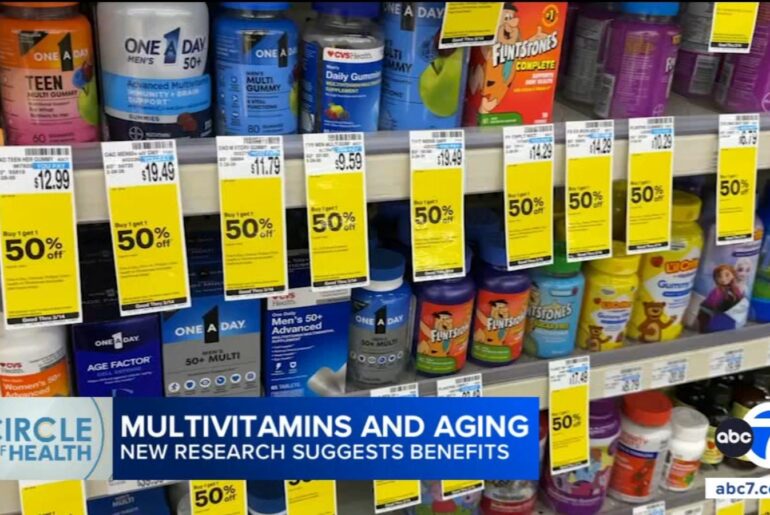
A new study has found that taking a comprehensive vitamin and mineral supplement daily
may help slow down the rate of biological aging to some extent.
However, the effect is not very large,
so experts say it is necessary to be cautious about interpreting this as a direct delay in actual aging.
![A Pill to Slow Aging?... Daily Vitamins for Two Years Show Modest Effect [Reading Science]](https://www.asiae.co.kr/news/img_view.htm?img=2026031009245168343_1773102291.png)
A research team at Harvard Medical School in the United States conducted a two-year randomized clinical trial
with 958 older adults whose average age was about 70 years.
As a result, among the group that took comprehensive vitamin and mineral supplements,
the increase in certain aging markers measured based on DNA slowed down.
The study was published in the international journal ‘Nature Medicine’ on March 10, 2026.
The research team gave participants either a comprehensive vitamin and mineral supplement, cocoa extract, or a placebo,
and analyzed DNA methylation data in their blood.
They used what is known as an “epigenetic clock,”
a marker used to estimate biological age.
![A Pill to Slow Aging?... Daily Vitamins for Two Years Show Modest Effect [Reading Science]](https://www.asiae.co.kr/news/img_view.htm?img=2026031009255768349_1773102358.png)
The results showed that, among those who took the comprehensive vitamin supplement,
the annual increase in two aging clock markers, which are used to predict mortality risk, slowed by about 2.6 months and 1.4 months, respectively.
In particular, among participants whose biological aging rate was faster than average before the study began,
a reduction of about 2.8 months was observed in some markers.
In contrast, no significant changes in aging markers were observed in the group that took cocoa extract.
The researchers explained that these results suggest
comprehensive vitamin supplements may have some influence on the biological aging process.
![A Pill to Slow Aging?... Daily Vitamins for Two Years Show Modest Effect [Reading Science]](https://www.asiae.co.kr/news/img_view.htm?img=2026031009473568450_1773103654.png)
However, experts say the results should not be overinterpreted.
Luigi Fontana, a professor at the University of Sydney in Australia,
“Although there were changes in some DNA-based aging markers,
the effect size was small and not consistently observed across all markers,” he said.
Laura Sinclair, a researcher at the University of Exeter in the UK, also noted,
“The epigenetic clock is a useful tool for measuring aging,
but it does not reflect the entire aging process,”
emphasizing the need to interpret it alongside other biological markers.
Kyungsoo Oh, professor at Chung-Ang University College of Pharmacy, expressed a similar opinion.
He said, “While taking multivitamins may be associated with a reduction in some epigenetic aging markers,
it is important to choose supplements based on an individual’s health and nutritional status.”

This study showed the possibility that comprehensive vitamin and mineral supplements may have some positive effects on aging-related markers.
However, it is important to remember that the effects are still limited, and it is too early to conclude that this actually extends healthy lifespan or delays aging.

Reporter
Kim Jonghwa justin@asiae.co.kr
subscribe icon subscribe
Edit
Kong Sumin hyunhj@asiae.co.kr
© The Asia Business Daily(www.asiae.co.kr). All rights reserved.